

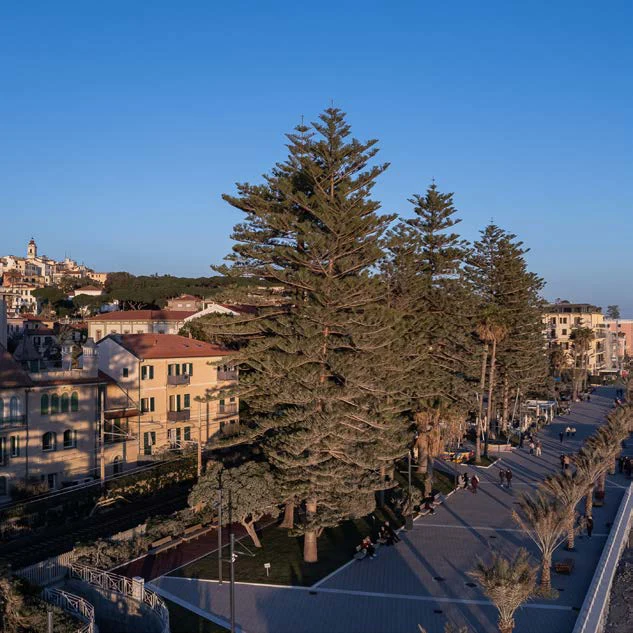
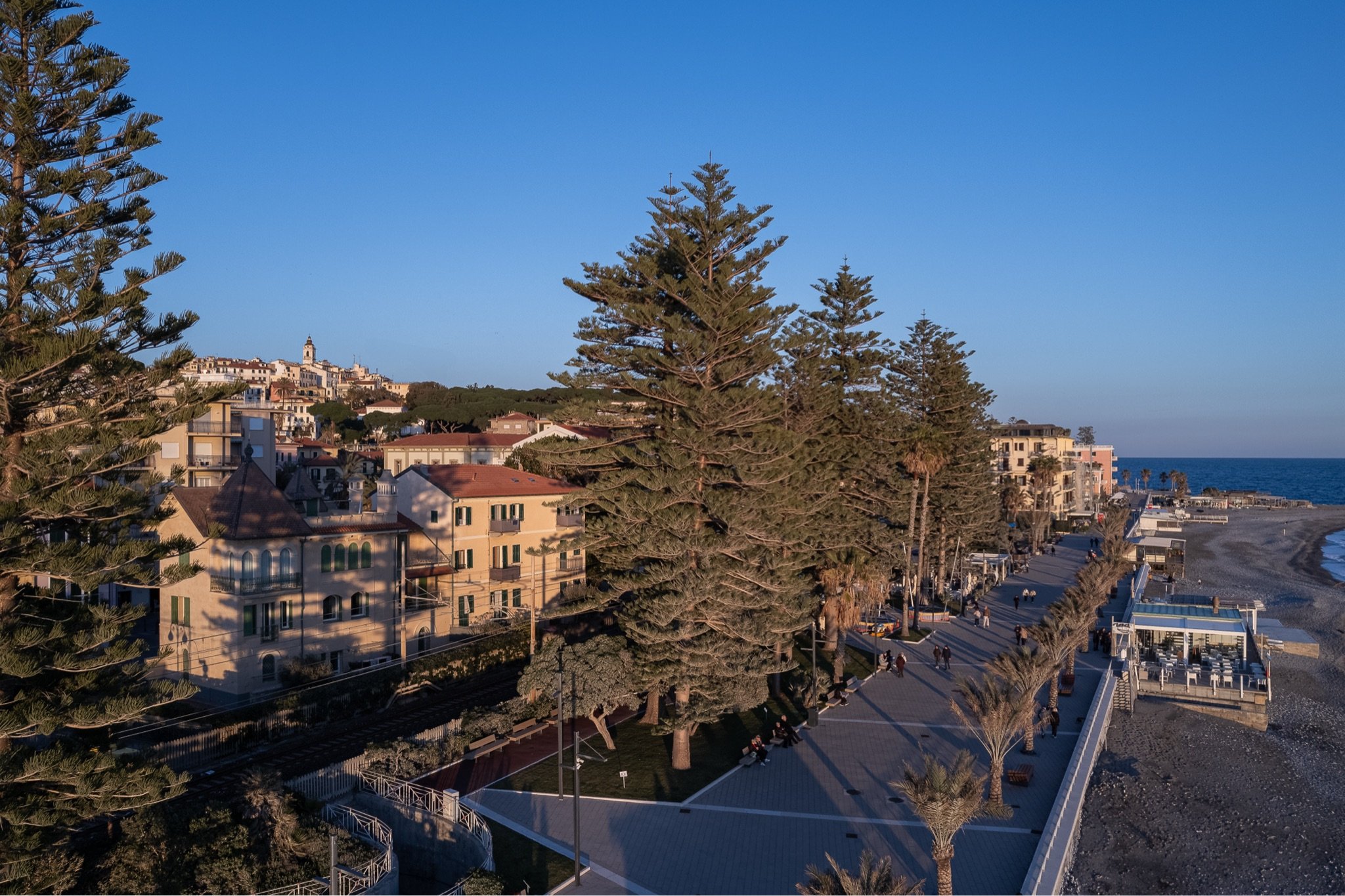
Anyone strolling along the Lungomare Argentina walks in the shade of a row of more than fifty araucarias, the pines of Norfolk Island. Trunks as straight as columns, horizontal branches arranged in regular tiers, crowns rising up to thirty metres: they give Bordighera’s seafront promenade its unmistakable profile, between the railway, the gardens and the beach.
The row is listed in Italy’s official register of monumental trees as a “homogeneous group”, meaning it is protected as a whole, for its botanical rarity and landscape value. It is one of the few monumental trees in Bordighera that you can see at any time and freely, a few steps from the centre and the station.
The promenade of the araucarias
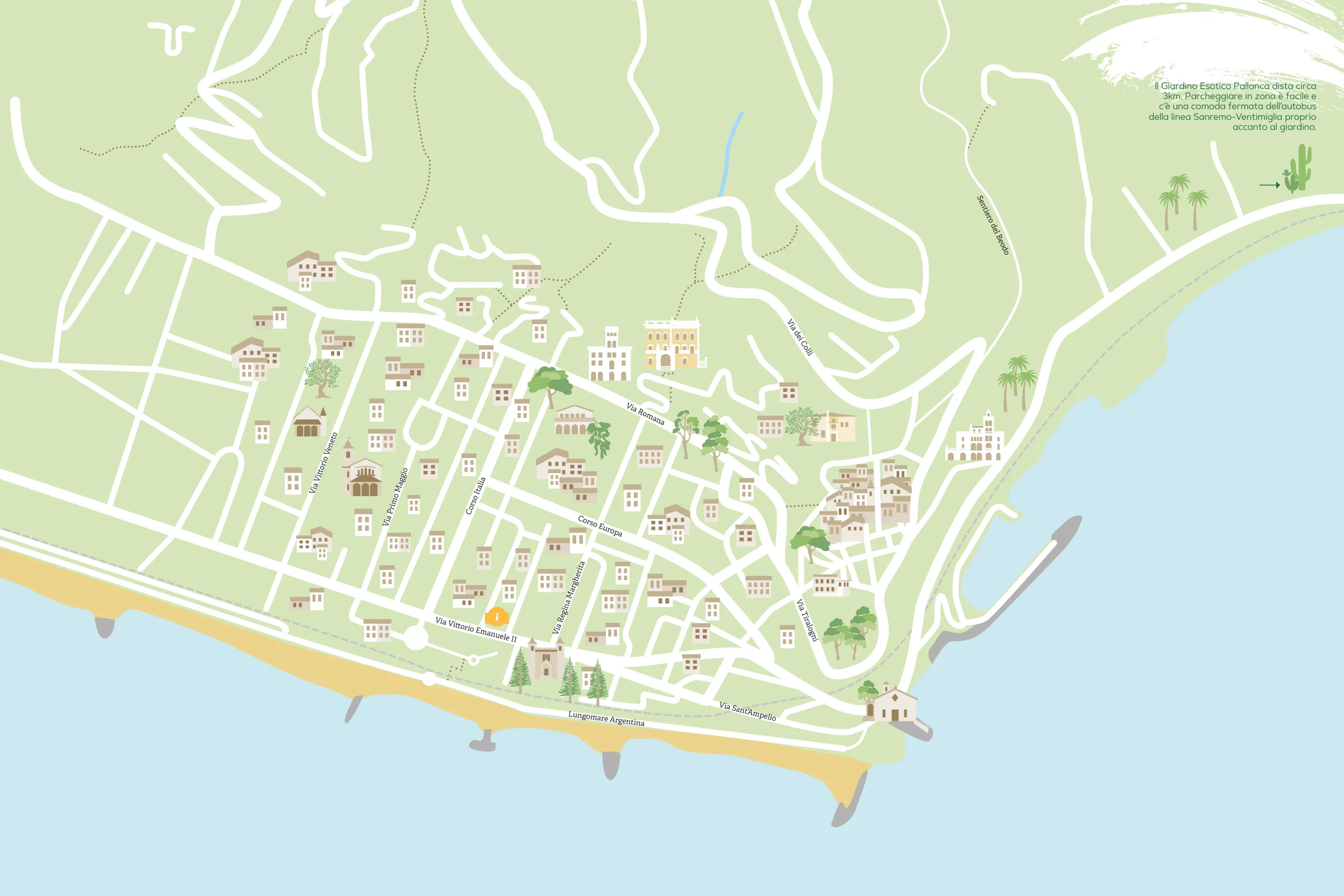
The Lungomare Argentina is the longest pedestrian seafront promenade on the Riviera: a straight stretch of about two kilometres squeezed between the railway and the beach, with gardens of succulents and flowers and, on the inland side, flowerbeds shaded by the araucarias. In July 1947 it was opened by Evita Perón, wife of the Argentine president, during her visit to Bordighera: since then it has borne the name of her country.
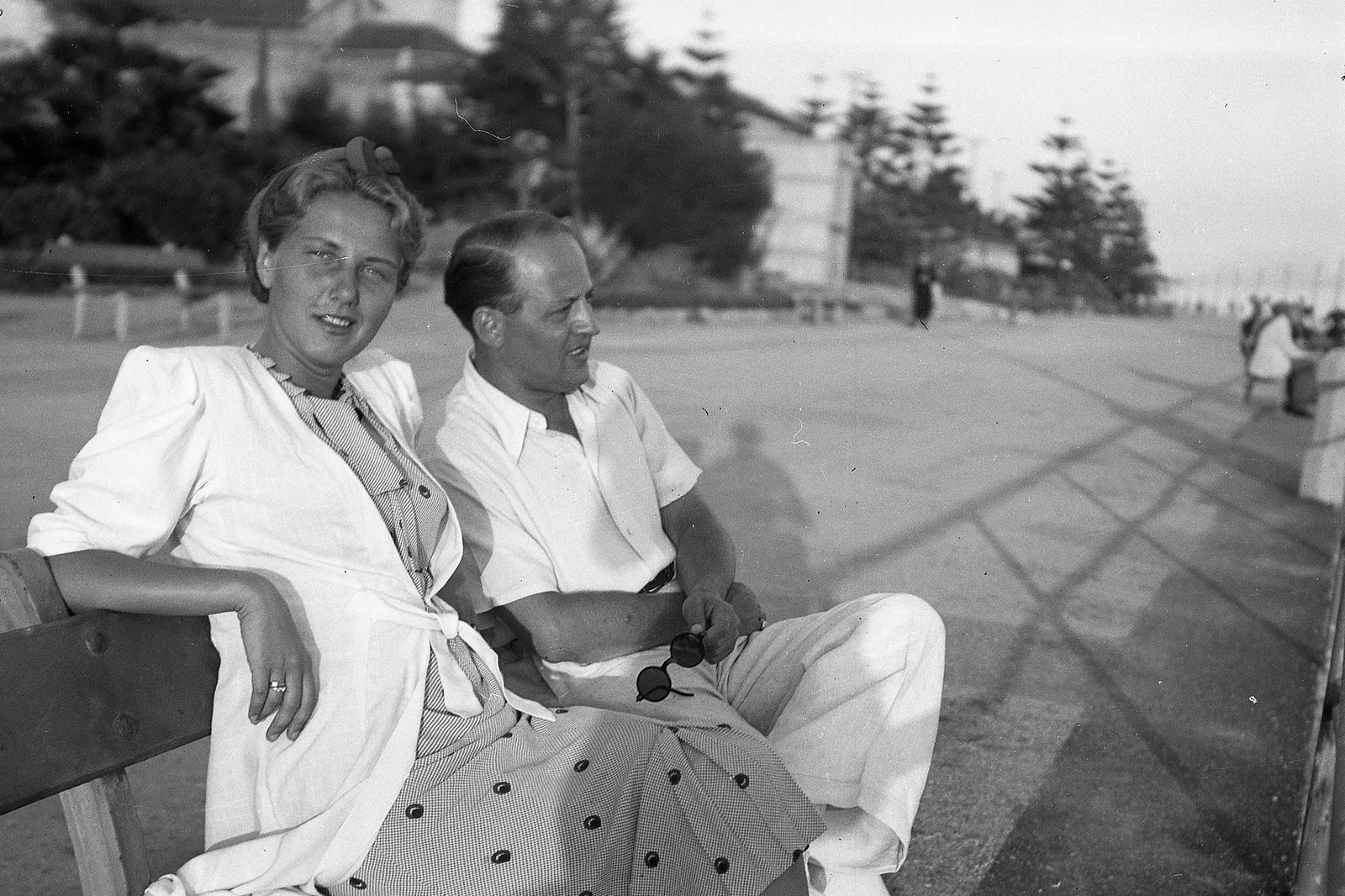
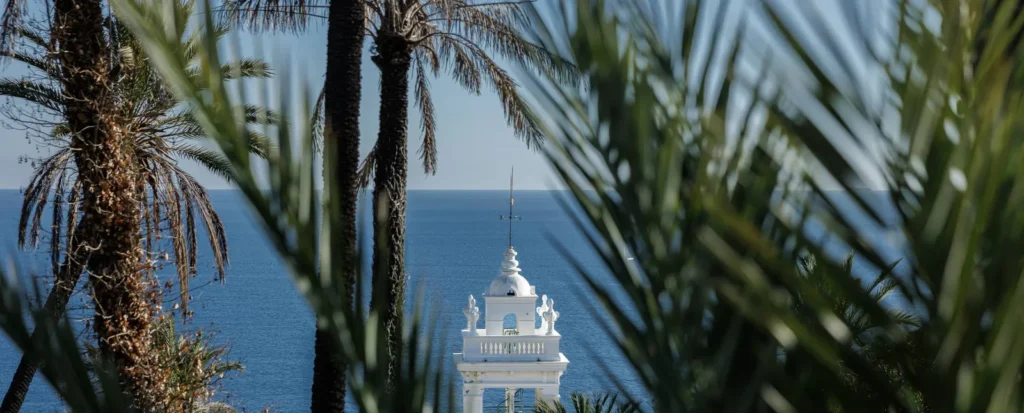
The araucarias had already been there for some time. In photographs from 1939 the promenade is lined with tall, slender trees, with the tiered silhouette that can still be recognised today: the row has flanked the seafront since before the war, and together with the bandstand it has become its most recognisable feature.
In recent years, with the project to redevelop the seafront, the protection of the row has returned to the centre of local debate. The Soprintendenza asked for the roots to be safeguarded during the works and, in 2024, for the shaded gardens along the railway to be kept as they are: the cycle path planned next to the trees was dropped in favour of a pedestrian path with seating.
The Norfolk Island pine
Despite its name, Araucaria heterophylla is not a true pine: it is a conifer of the Araucariaceae family, native only to Norfolk Island, a small Australian territory in the Pacific between New Zealand and New Caledonia. In 1774 James Cook, who first described it, hoped to use it for ships’ masts, but the wood proved unsuitable. Today the species is considered vulnerable in its natural habitat, where it exceeds fifty metres in height.
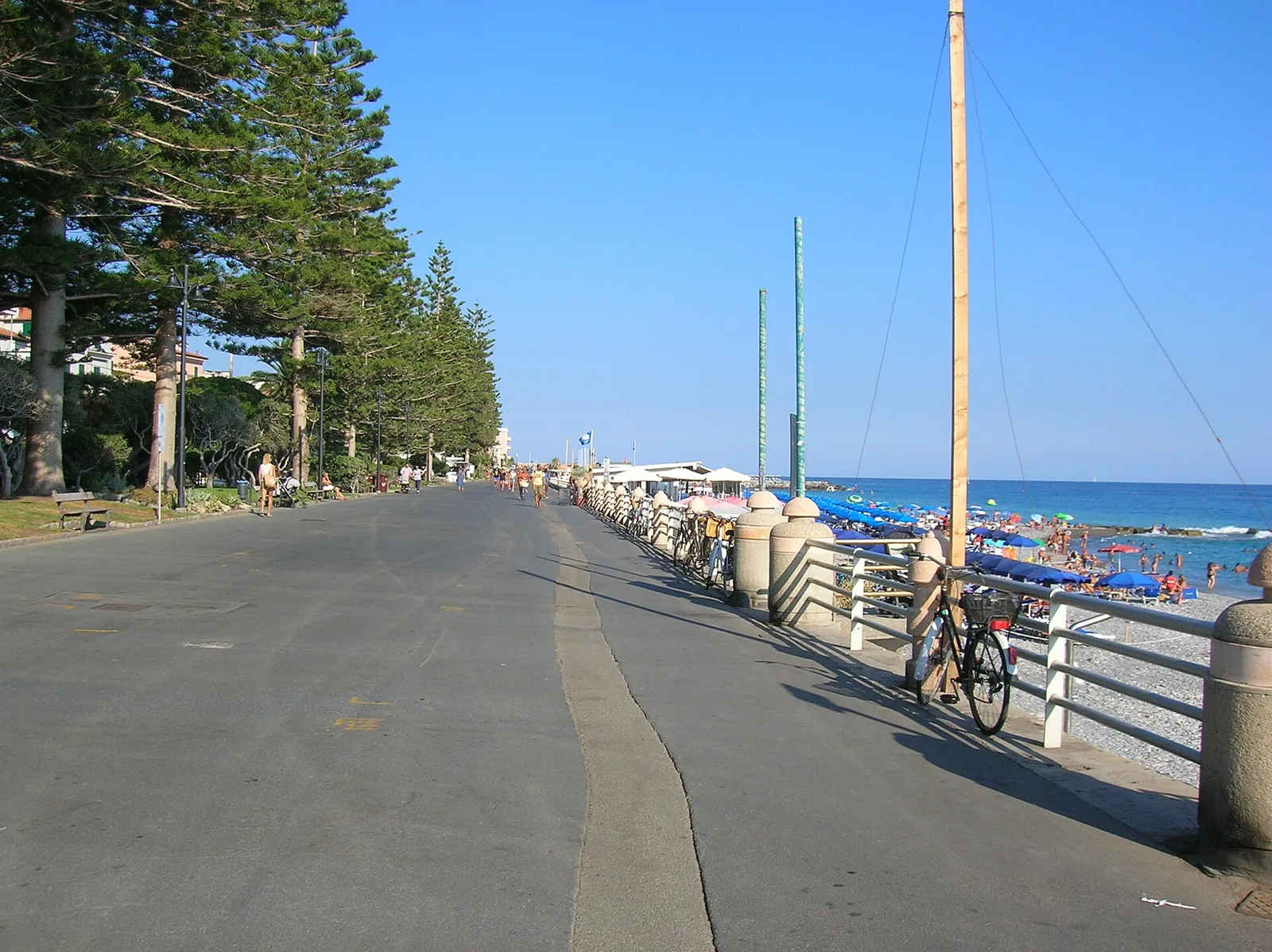
It is recognisable at first glance: the trunk rises straight and every few metres puts out a whorl of almost horizontal branches, giving the tree the shape of a tiered pagoda. The name heterophylla, “with different leaves”, recalls that the needles of young branches are soft and thin, while those of mature trees are short and scale-like. It withstands wind and sea salt well, which is why it has been planted on coasts all over the world, and in the gardens of the Riviera it is also known by its old name, Araucaria excelsa.
A monumental tree of Italy
The row is listed in the regional and national registers of monumental trees with the code 05/A984/IM/07. It is protected by the law on monumental trees and, having been declared of significant public interest for its landscape value, also by the Code of Cultural Heritage and Landscape: no work can be carried out without the approval of the relevant authorities.
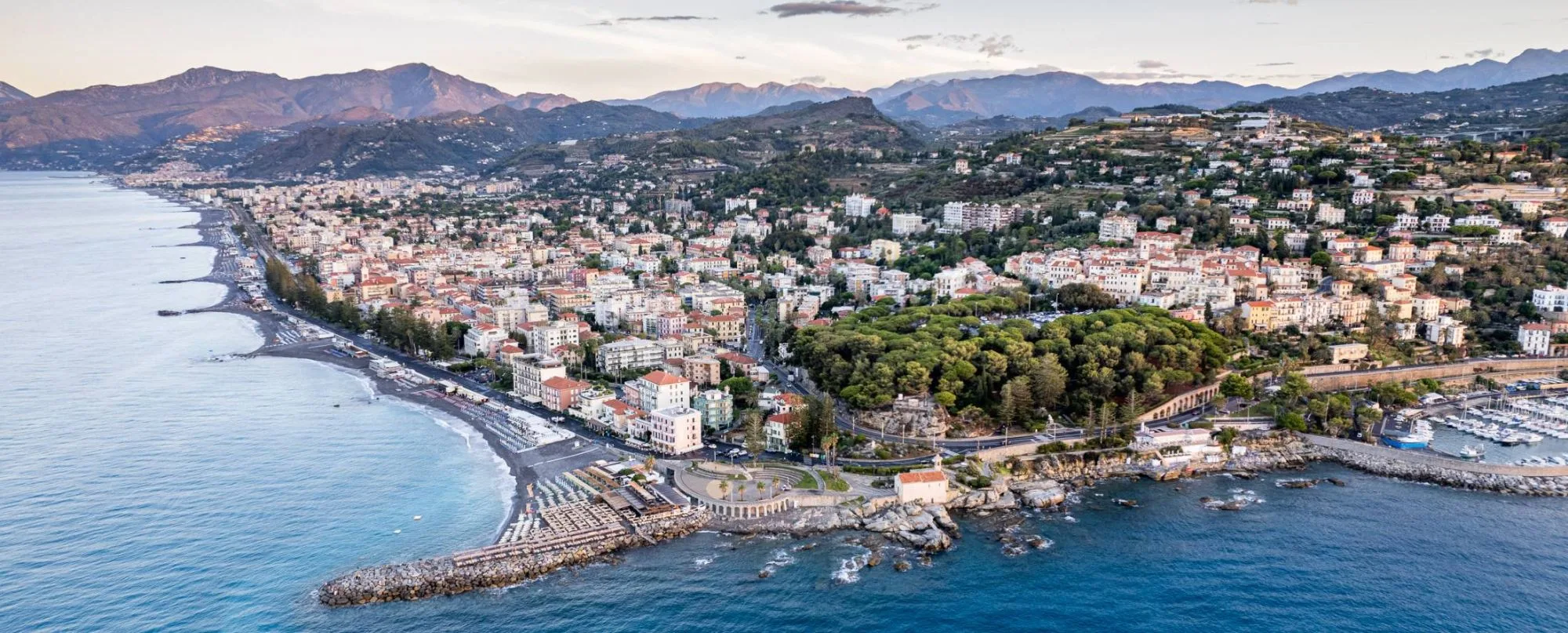
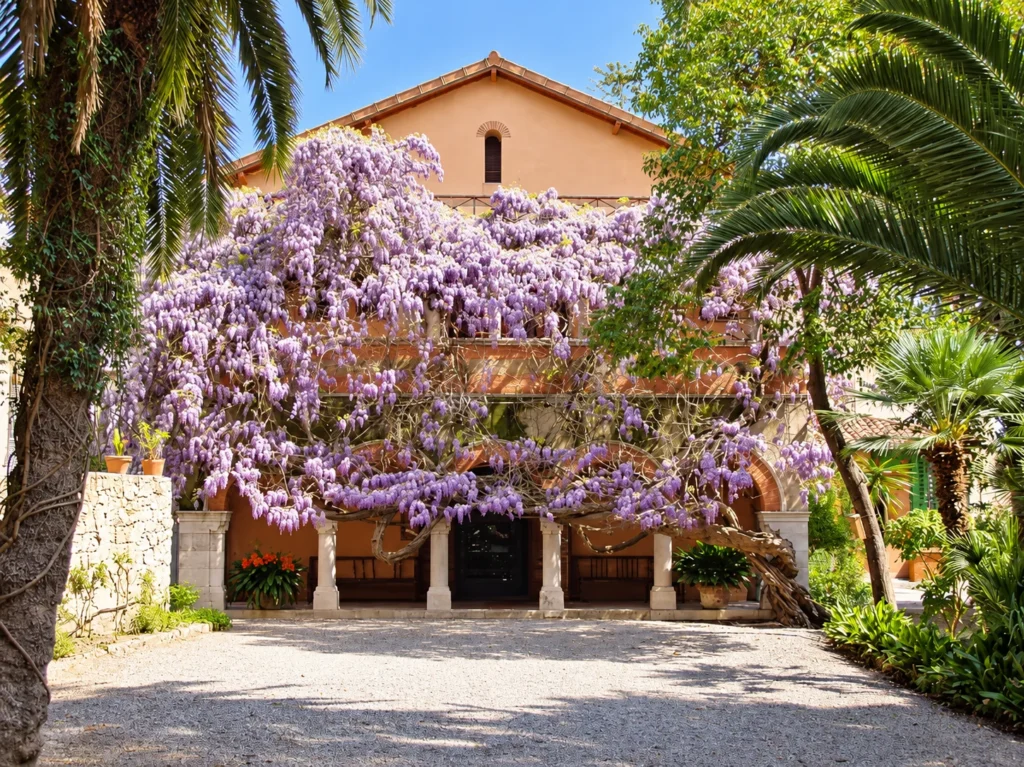
Bordighera is the town with the most monumental trees in the province of Imperia. Besides the araucarias there are the fig trees at the Museo Bicknell, the wisteria covering the museum’s pergola, the fig tree at Palazzo Garnier, the Canary Island pine on the Via Romana and Monet’s olive trees.
Botanical profile
- Scientific name: Araucaria heterophylla (Salisb.) Franco
- Common name: Norfolk Island pine, araucaria
- Origin: Norfolk Island (Australia), Pacific Ocean
- Type: homogeneous group, more than fifty specimens
- Trunk circumference at 1.30 m: 182 cm on average, up to 290 cm
- Height: 20 m on average, up to 30 m
- Monumental criteria: botanical rarity, landscape value
- Register code: 05/A984/IM/07
How to see the araucarias
You see the row by walking along the Lungomare Argentina, on foot, at any time: access is free. The araucarias grow in the gardens between the promenade and the railway; to appreciate their height, look at them from the railing on the sea side, where the row lines up against the hills and the town.
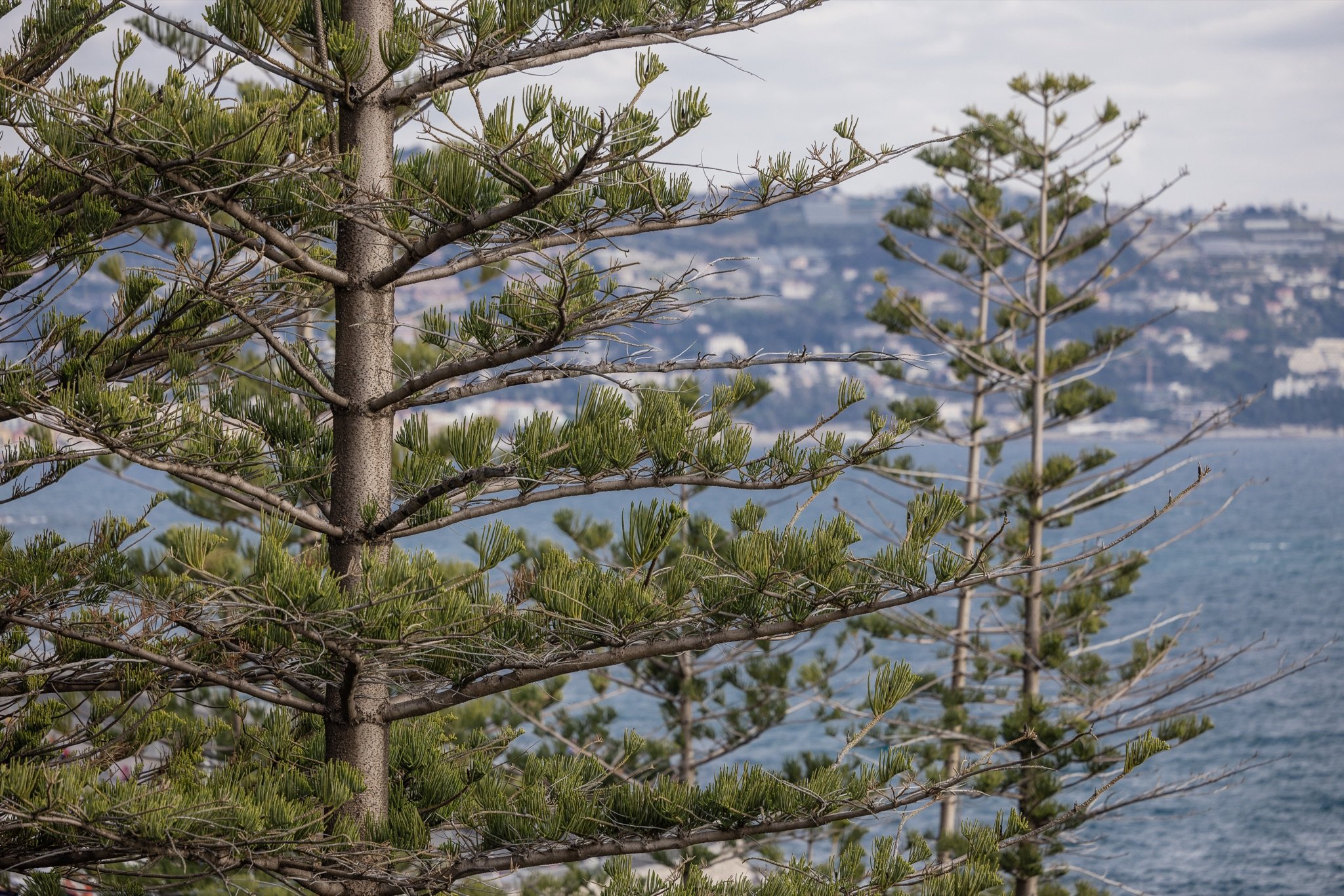
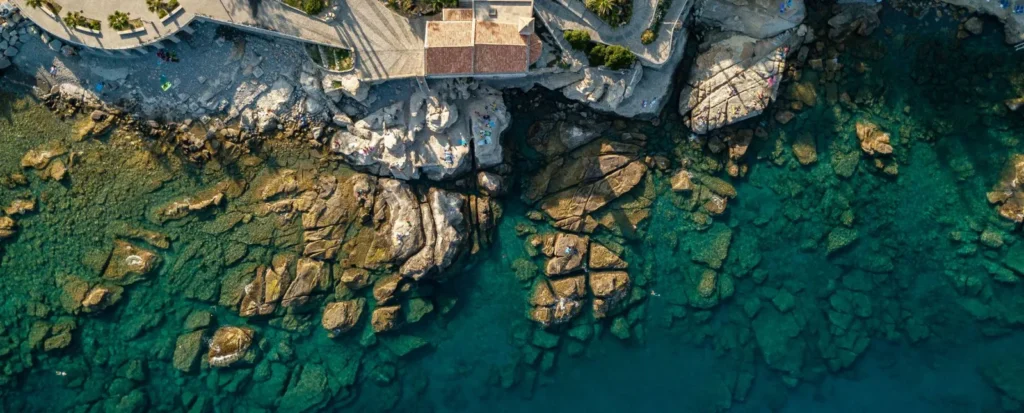
The promenade is a few minutes’ walk from the railway station and the centre. At its eastern end it reaches the Capo, below the church of Sant’Ampelio and the Capo pine wood; to the west the view opens onto the French Riviera, as far as Monte Carlo and Cap Ferrat on clear days.
The row of Norfolk Island pines on the Lungomare Argentina in pictures
Tips for your visit
- When to go: all year round. In summer the araucarias give shade in the hottest hours; at sunset the row stands out in silhouette against the sky.
- How long you need: the full walk along the promenade and back takes about an hour at a leisurely pace.
- Combine it with: the church of Sant’Ampelio on the Capo and the Capo pine wood. The araucarias are a stop on the itinerary Gardens and monumental trees.
Frequently asked questions
How many araucarias are there on the Lungomare Argentina?
The monumental row has more than fifty specimens of Araucaria heterophylla, protected together as a single “homogeneous group”.
Are araucarias pines?
No. They are called Norfolk Island pines, but they are conifers of another family, the Araucariaceae, native to Norfolk Island in the Pacific.
Why are they monumental trees?
For their botanical rarity and landscape value: the row shapes Bordighera’s seafront and has also been declared of significant public interest.
How tall are they?
About twenty metres on average, with the tallest specimens reaching thirty. The largest trunk measures almost three metres in circumference.
Can you see them freely?
Yes, the Lungomare Argentina is a public promenade open to everyone, at any time and without a ticket.