

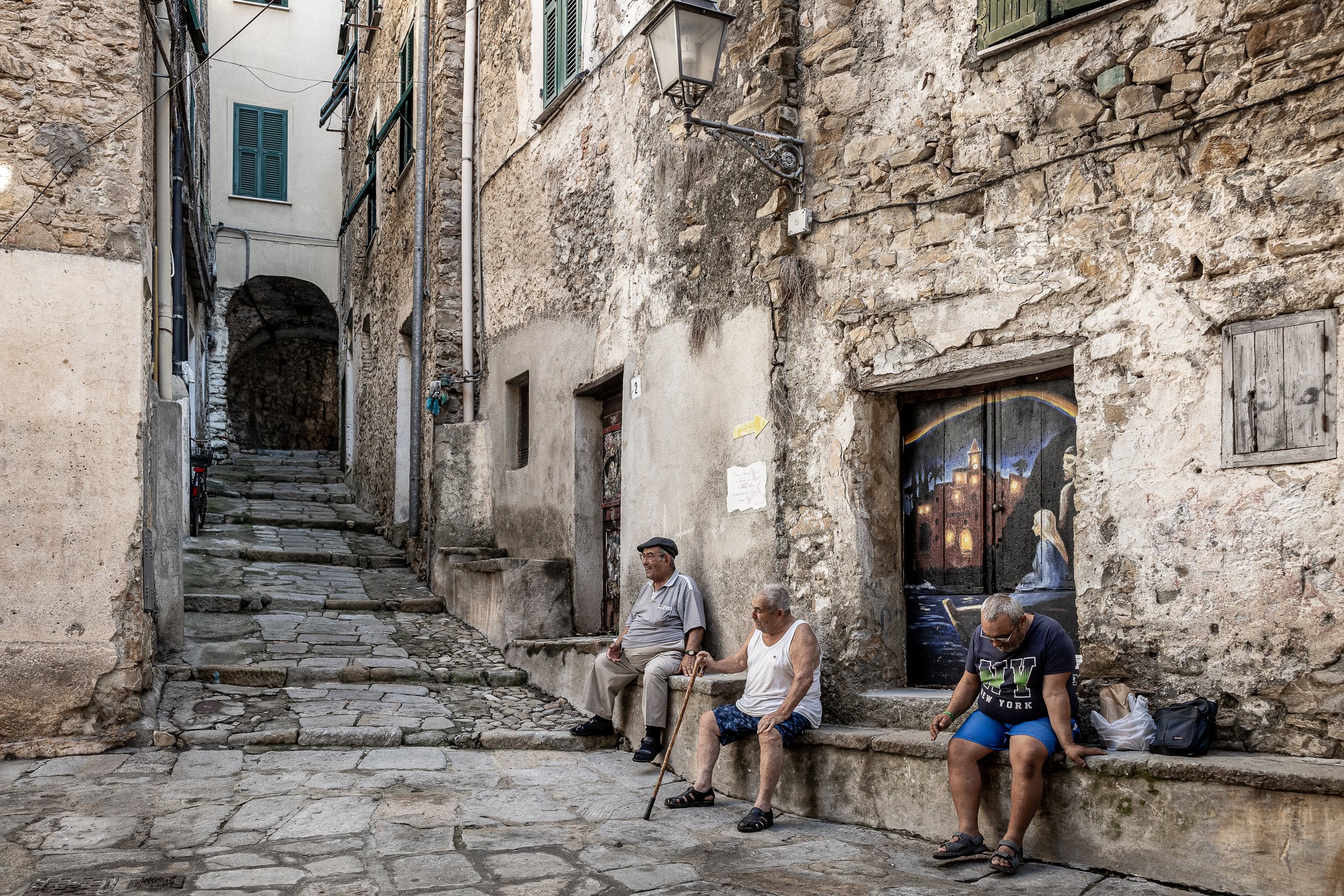
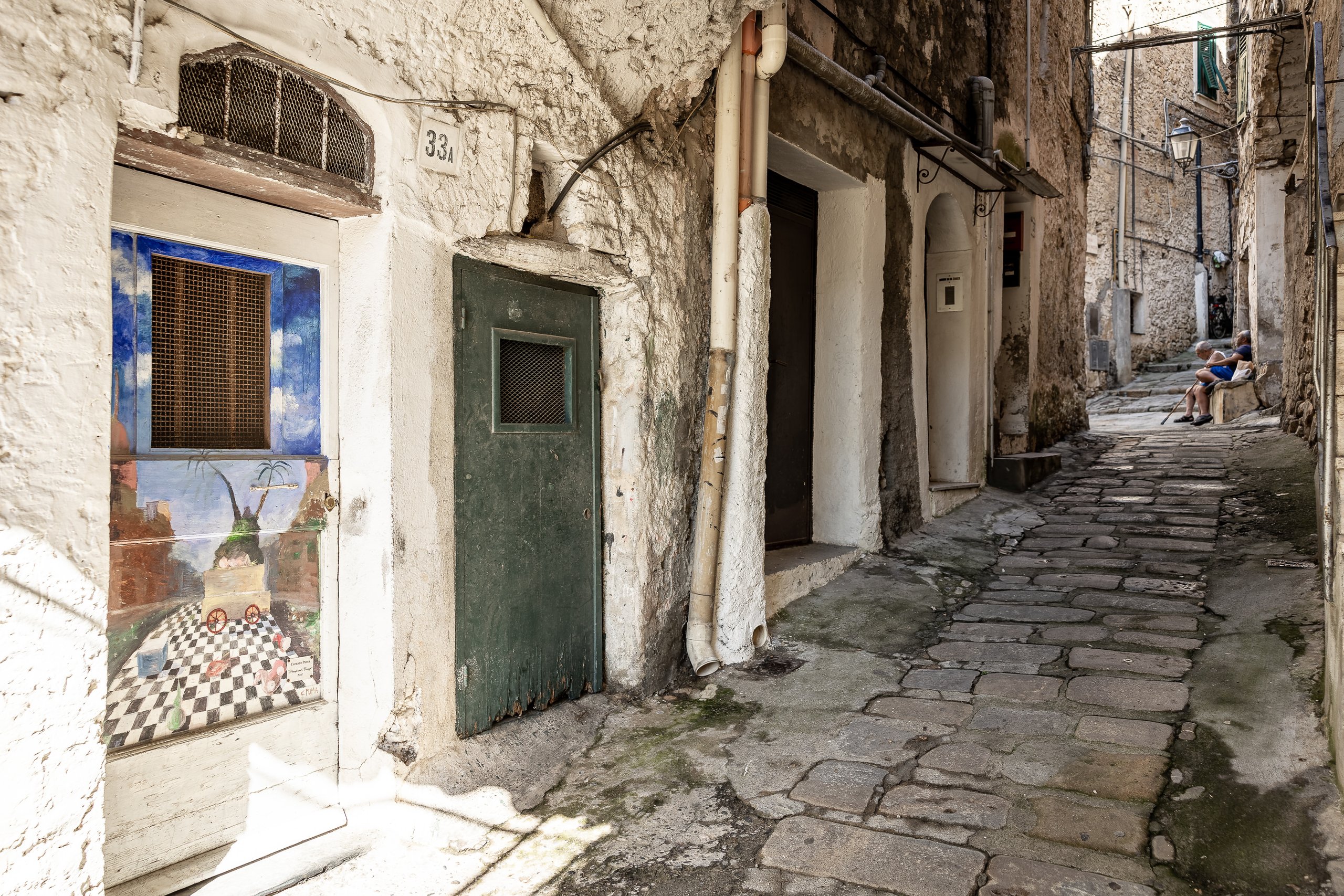
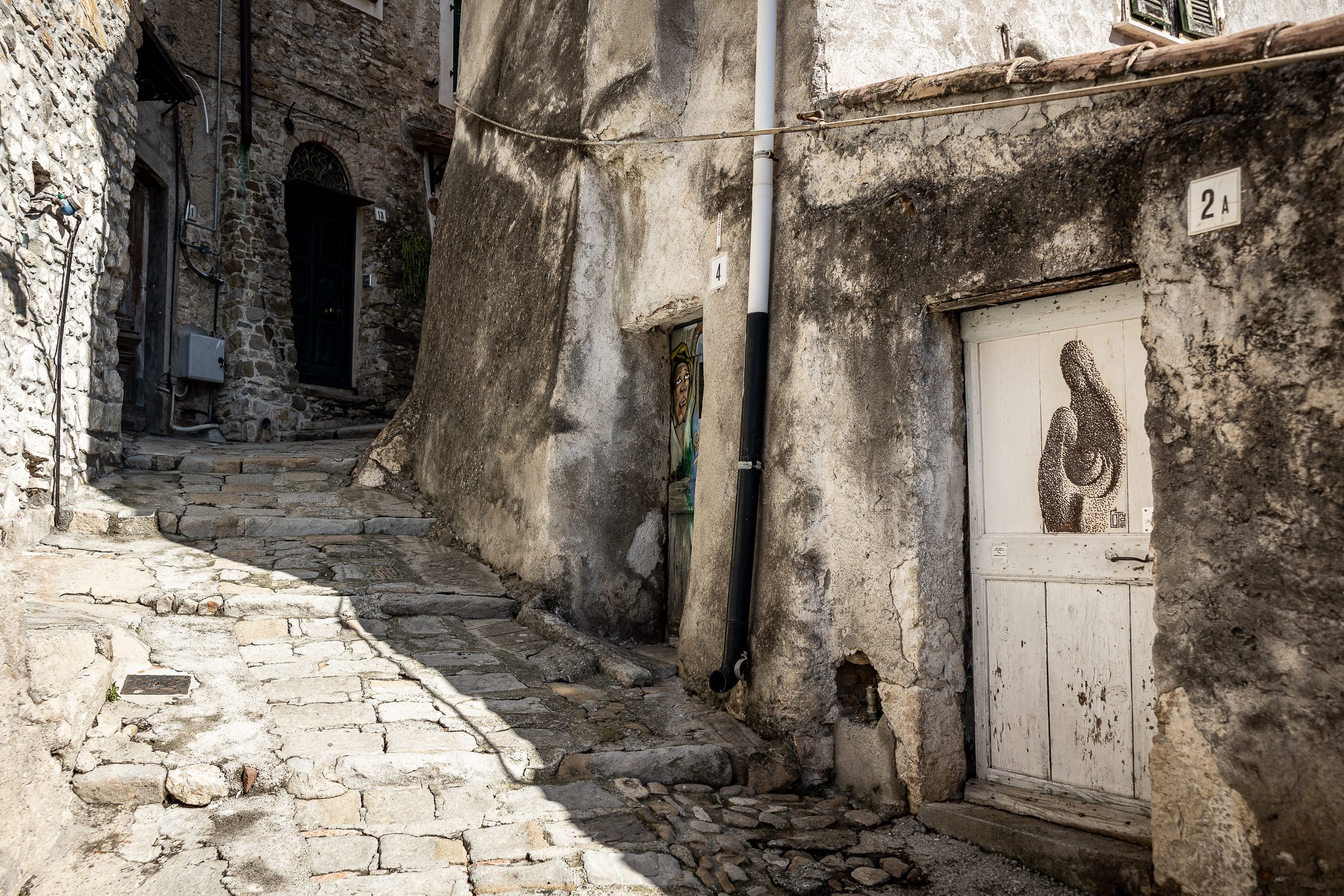
Borghetto San Nicolò is a hilltop hamlet of Bordighera, on the right bank of the Borghetto stream, along the road that climbs to Vallebona. It is a small, quiet village, with stone carruggi (narrow alleys), arches and flights of steps. One detail makes it special: many of the house doors are painted, and walking through the alleys is like visiting an open-air art gallery.
But Borghetto is also the place where modern Bordighera was born.
The village that refounded Bordighera
On 2 September 1470, in the parish church of Borghetto, the heads of thirty-two families met and decided to resettle the promontory of Bordighera, which was then uninhabited: from that decision came the village that is now Bordighera Alta. A plaque in the square commemorates the event.

In 1686 Borghetto joined the Magnifica Comunità degli Otto Luoghi, the union of the villages of the area under the Republic of Genoa. In 1861 “San Nicolò” was added to its name, to distinguish it from the other Borghettos in Italy, and in 1928 the municipality was merged with Bordighera together with Sasso.
What to see
The painted doors
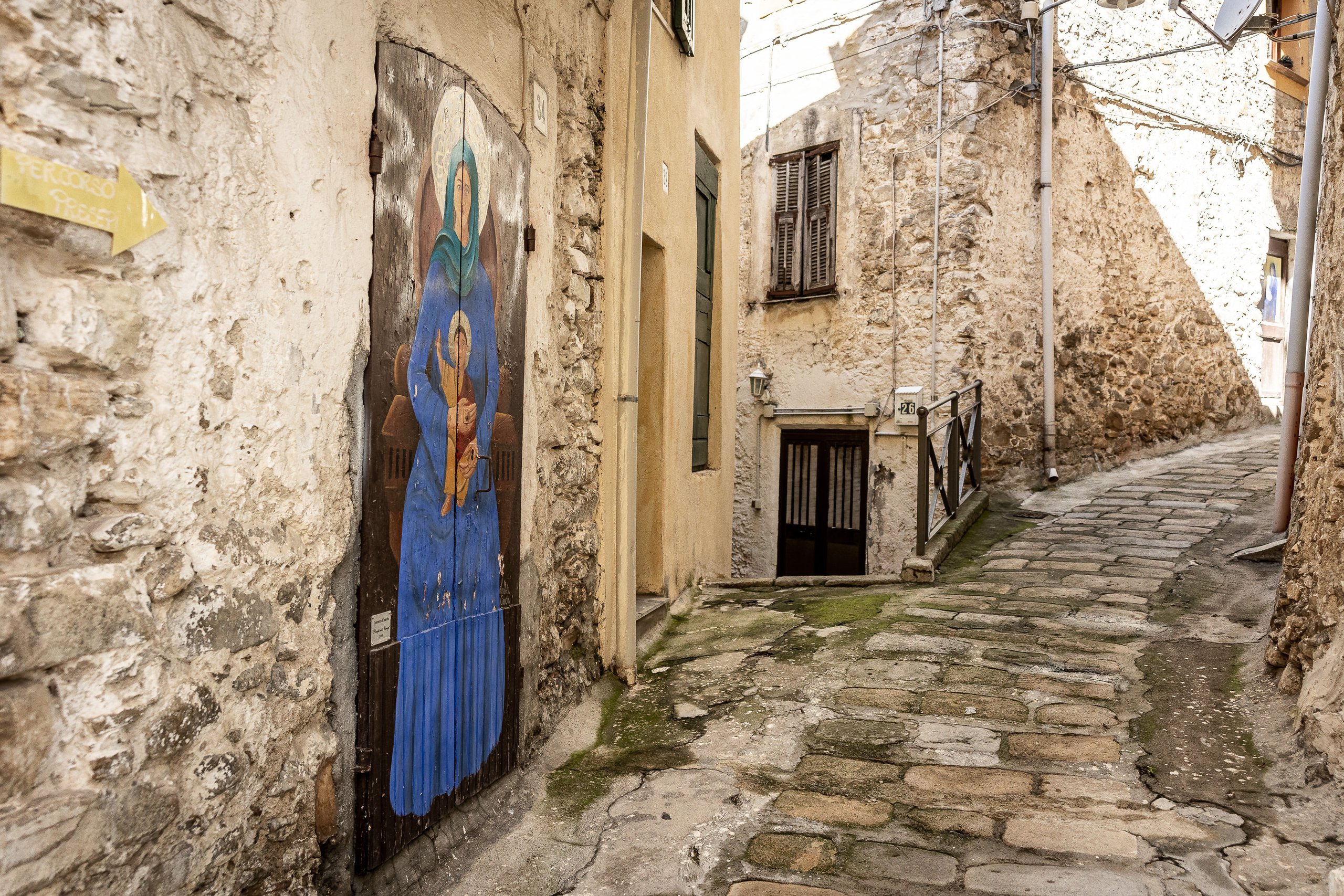
Strolling through the carruggi you discover dozens of decorated doors: Madonnas in blue cloaks, starry skies, night-time views of the village, sacred figures and brightly coloured faces. Each one is different, and hunting for the next door is the best way to explore the village, children included.
The church of San Nicolò
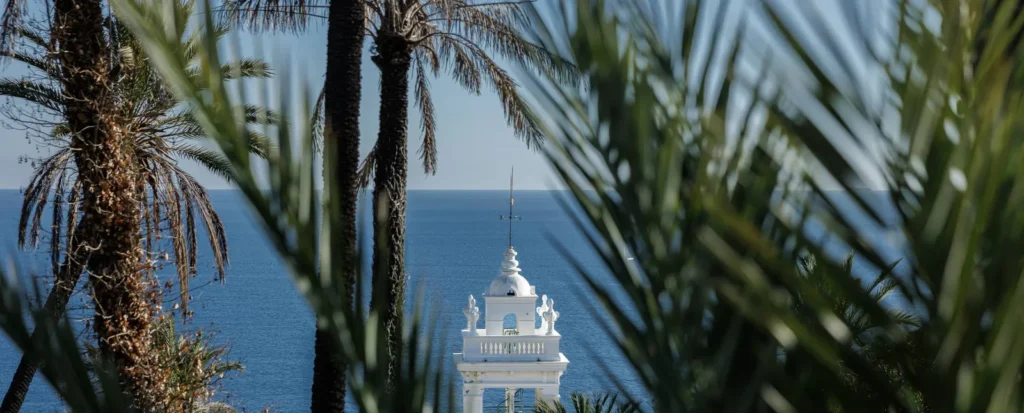
The parish church, dedicated to San Nicolò di Bari (Saint Nicholas of Bari), is the church where the refounding of Bordighera was decided in 1470. Its pale façade peeps out among cypresses and palms. The patron saint’s day is celebrated on 6 December.
The Oratorio dell’Annunziata and the carruggi
The village also has the Oratorio dell’Annunziata, in late Baroque taste. All around are paved alleys, arched passages and stone benches where locals stop to chat.
Events
At Christmas the carruggi host the “Presepi int’i carugi”, nativity scenes set up along the alleys by the villagers.
Tips for your visit
- How long you need: an hour to explore the village at a relaxed pace.
- Getting there: by car, about 4 km from the centre of Bordighera, on the road to Vallebona.
- Respect the residents: the painted doors are the entrances to people’s homes; take photos without disturbing anyone.
- Combine it with: Vallebona, a little further up the same valley, and Sasso on the neighbouring hill. On the same hill is the Piatti Tennis Center.
Frequently asked questions
Why is Borghetto San Nicolò linked to the founding of Bordighera?
Because on 2 September 1470, in its parish church, the heads of families of the village and the surrounding area decided to resettle the promontory of Bordighera, which gave rise to Bordighera Alta.
Where are Bordighera’s painted doors?
In the carruggi of Borghetto San Nicolò, the hilltop hamlet on the road to Vallebona.
When is the feast of San Nicolò?
On 6 December, the feast of the village’s patron saint.
How far is Borghetto San Nicolò from the centre of Bordighera?
About 4 km: some ten minutes by car.