

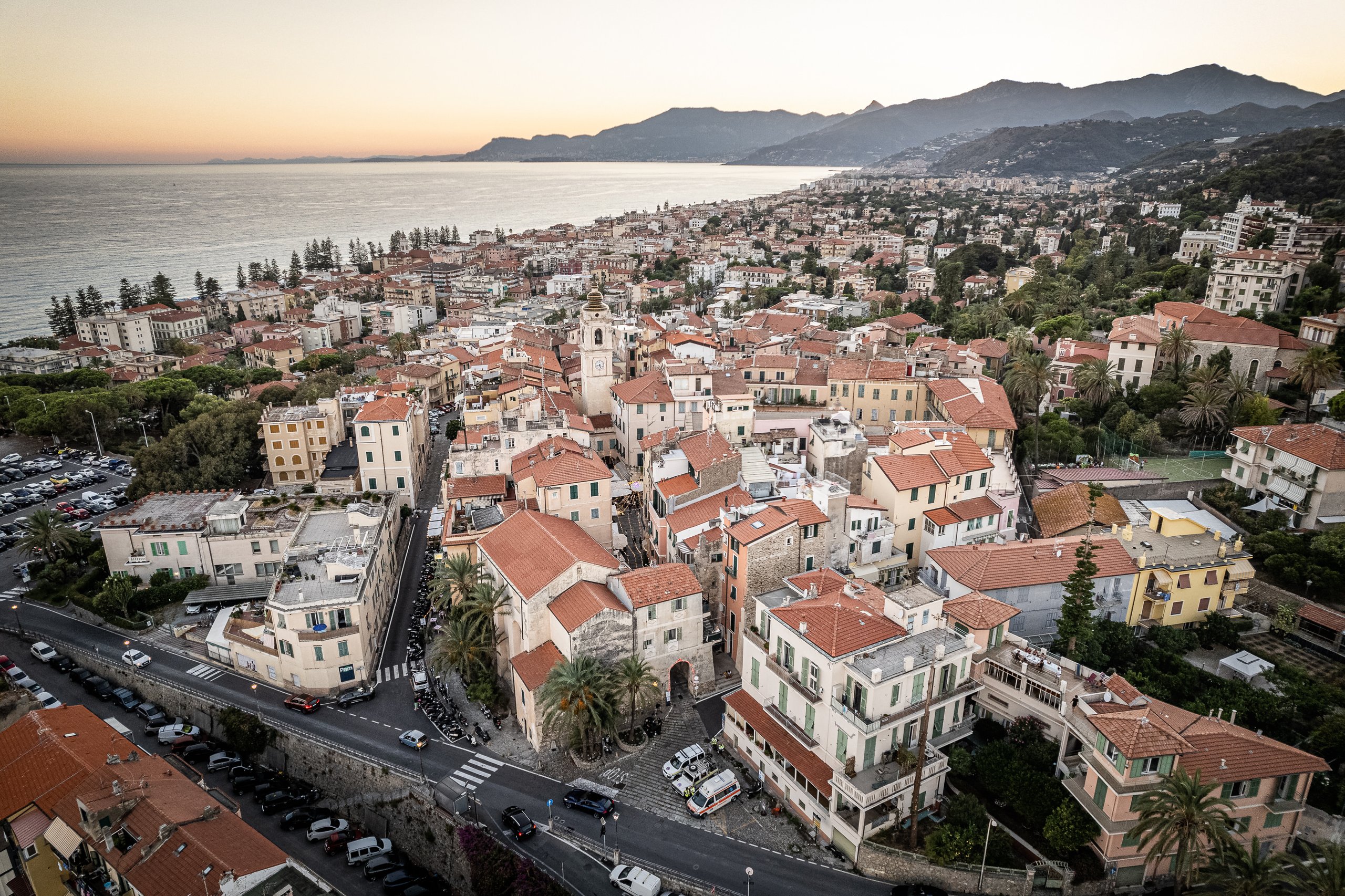
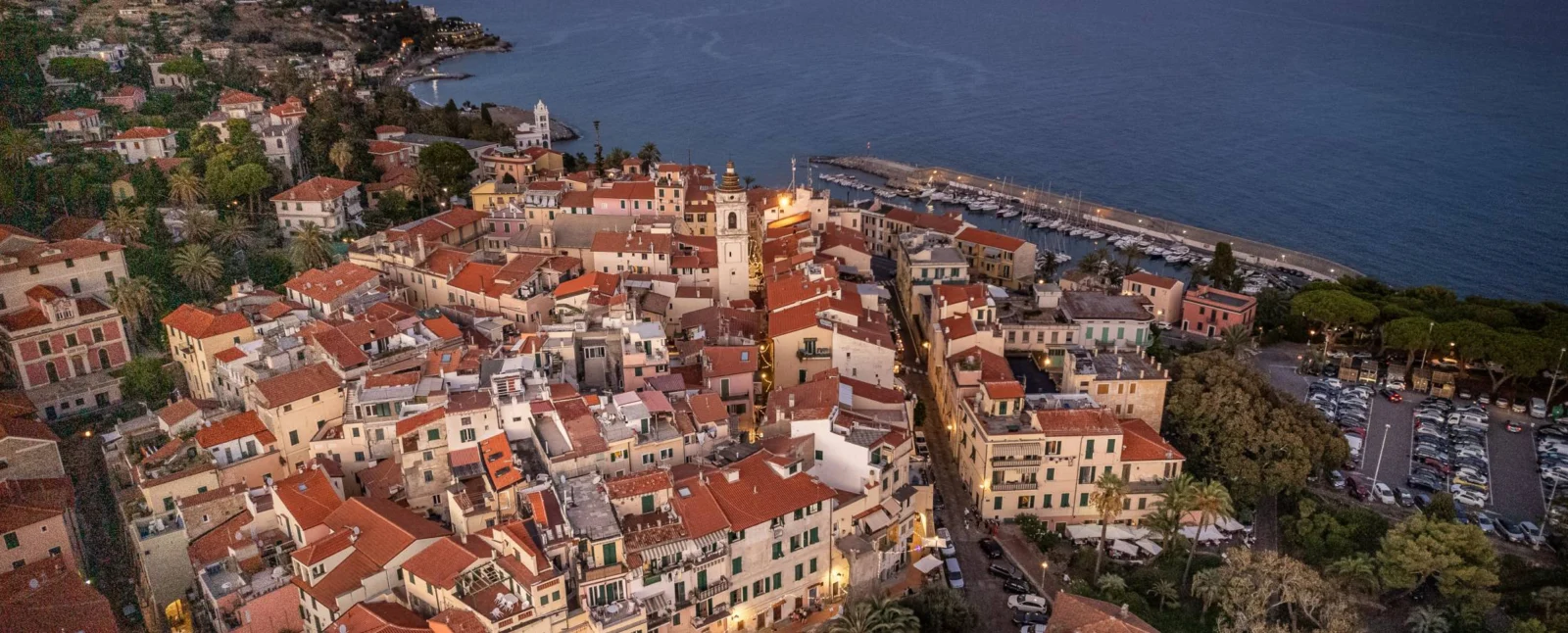
What makes Bordighera unique is the harmonious meeting between the old beauty of its medieval historic centre and the elegance of its villas. Bordighera Alta, the old town, still keeps the walls of the pentagon-shaped fortified village and a dense web of alleys and little squares to get lost in, among colourful houses joined by their characteristic supporting arches.
This is where Bordighera was born: a compact village on the hill, a few minutes’ walk from the sea and the centre, which you can explore at leisure in an hour or enjoy in the evening, when the squares and caruggi fill with tables, music and events.
A village born in 1470
On 2 September 1470 thirty-two families from Borghetto San Nicolò decided to rebuild the ancient settlement of Bordighera, long abandoned. The result was a fortified village, high on the hill and overlooking the sea, protected by late-medieval walls that were strengthened in the 16th century against pirate raids.
In 1686, in the oratory of San Bartolomeo, representatives of eight villages (Bordighera, Borghetto, Camporosso, Vallebona, Vallecrosia, San Biagio, Soldano and Sasso) founded the Magnifica Comunità degli Otto Luoghi, which governed itself independently of Ventimiglia. For centuries life in Bordighera took place here, inside the walls; only in the 19th century, with the arrival of English travellers, did the town grow towards the sea and along the Via Romana.
What to see in Bordighera Alta
The gates and the walls
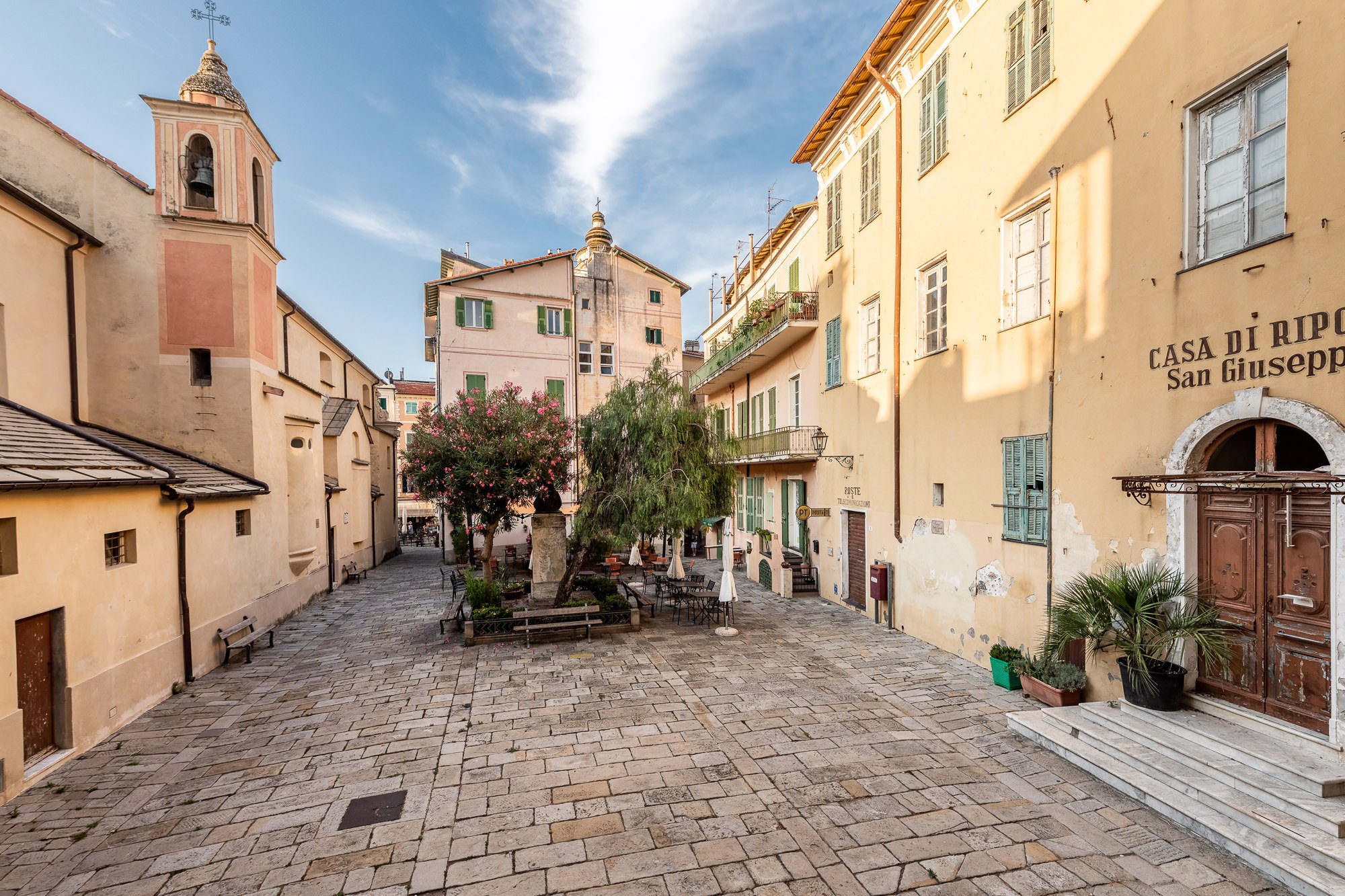
You enter the village through its old gates. The Porta Sottana, on the west side, dates from the founding in 1470 and was rebuilt in the Baroque period: above the arch you can still see the Genoese coat of arms of St George. The Porta Soprana, also called the Maddalena gate, was opened in 1780; the two floors above the arch housed the town prison until the 1950s. There is also the Porta del Capo. Bastions run along the perimeter: in some stretches, such as near vicolo San Giuseppe, you can still see parts of the original fortifications.

The caruggi, the arches and the little squares
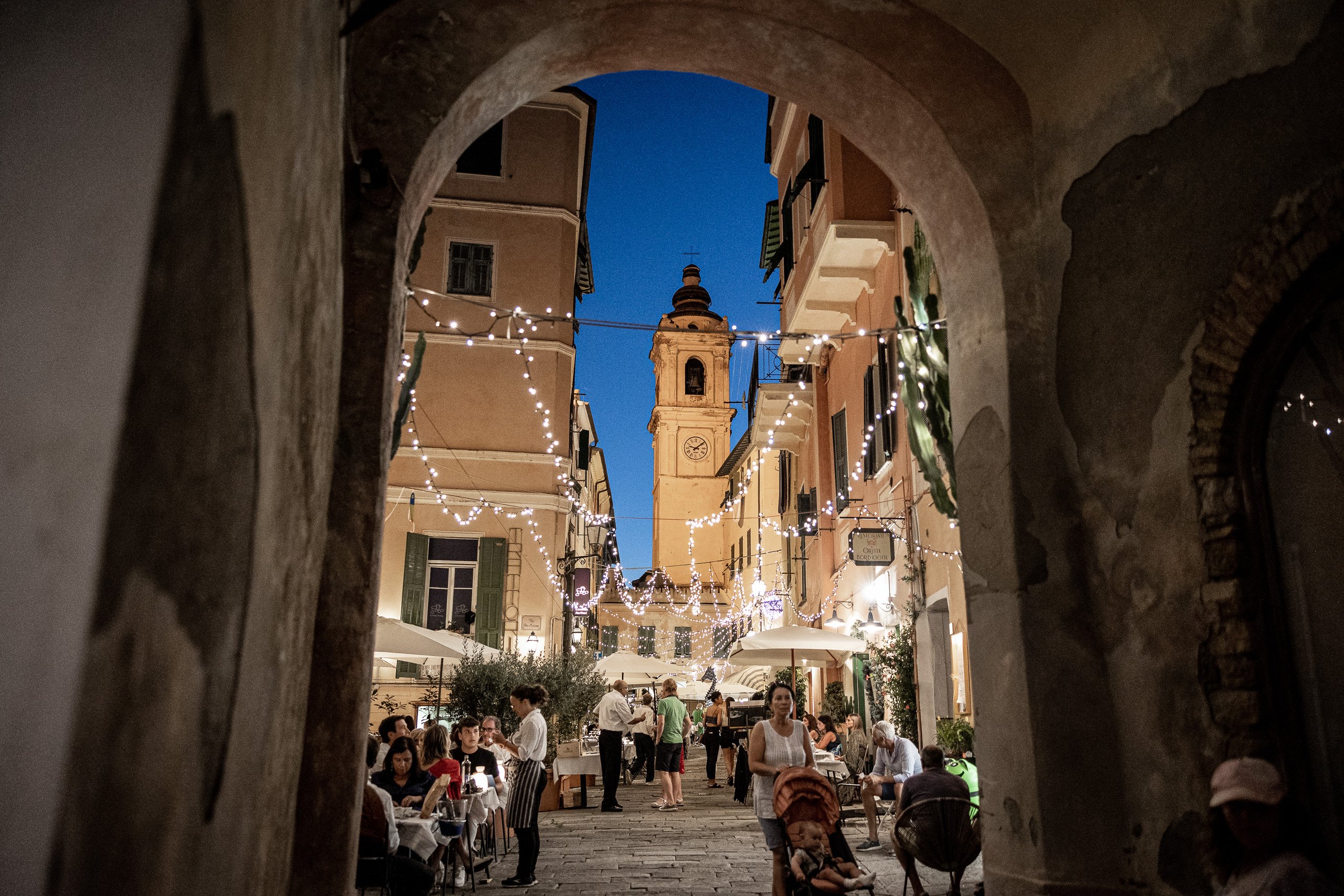
The layout is typical of Ligurian villages: two main streets, Via Dritta and Via Lunga, surrounded by a network of narrow caruggi, flights of steps and small squares. The arches linking one house to the next are not decorative: they support the buildings and make them sturdier. Look up as you walk: between the houses you catch glimpses of the bell tower and, at the end of the alleys, the sea.

Piazza del Popolo and the church of Santa Maria Maddalena
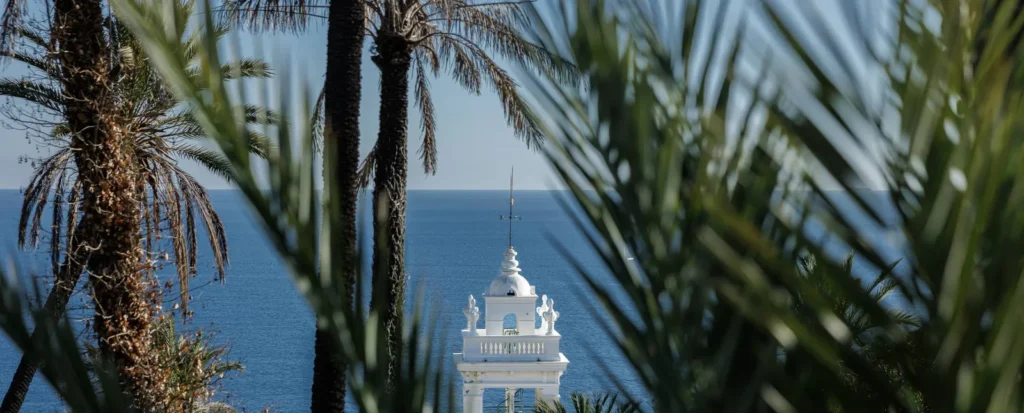
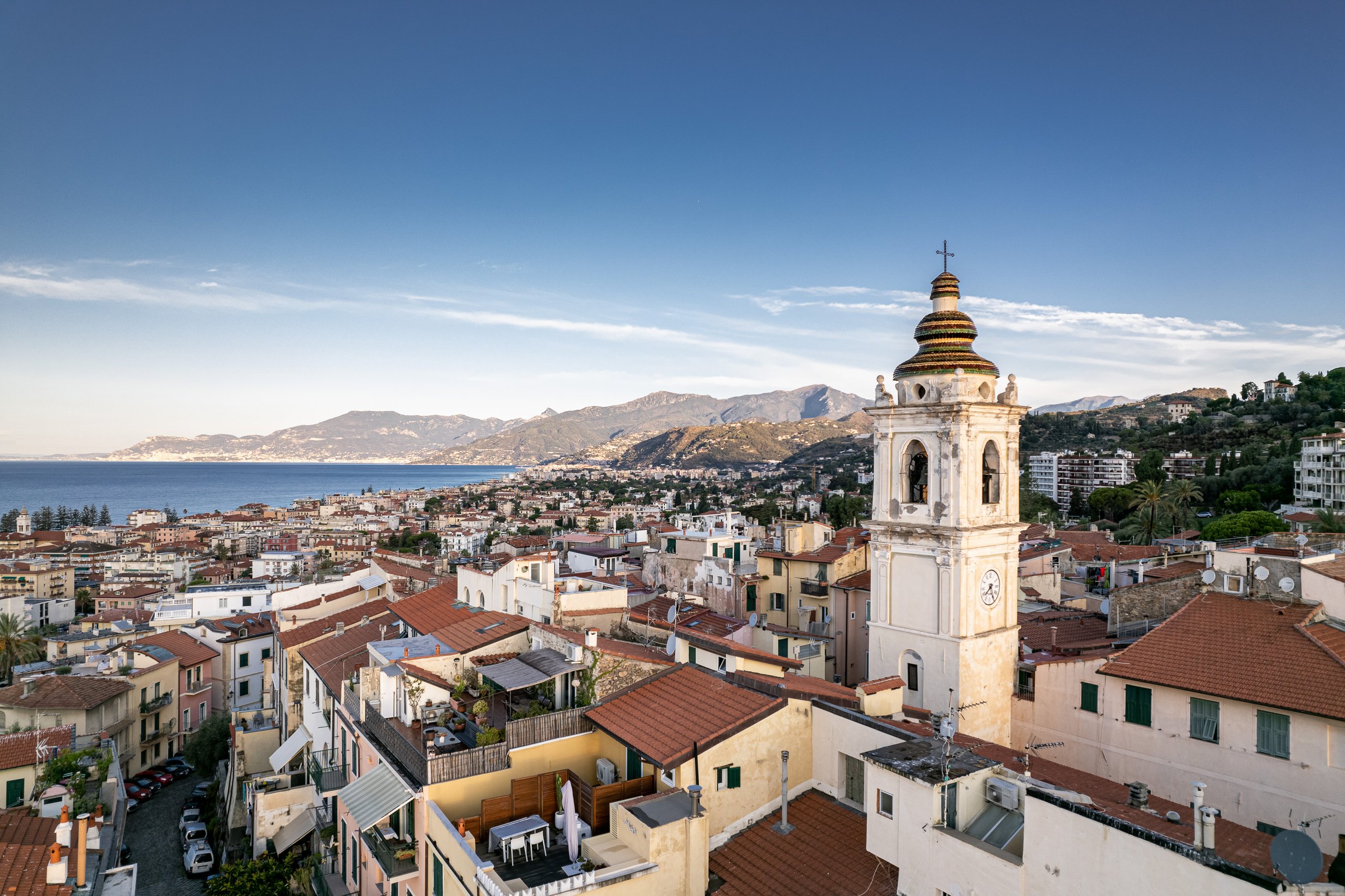
The heart of the village is Piazza del Popolo, overlooked by the parish church of Santa Maria Maddalena, consecrated in 1617. The façade is decorated with Rococo stuccowork; inside are the marble group of the Magdalene in Glory, attributed to the Genoese workshop of the Parodi family, and the relics of Sant’Ampelio, the town’s patron saint, brought back to Bordighera in 1947. The bell tower grew out of an old watchtower against pirates, raised in the 18th century and clad in colourful majolica tiles.
The bell tower painted by Monet
In 1884 Claude Monet stayed in Bordighera for three months, at the Pension Anglaise, right at the gates of the village. In his canvases the outline of the old town, with the bell tower of Santa Maria Maddalena, appears several times in the background, beyond the palms and gardens, as in Villas at Bordighera, now at the Museum Barberini in Potsdam. To find his viewpoints, follow the itinerary In Monet’s footsteps.
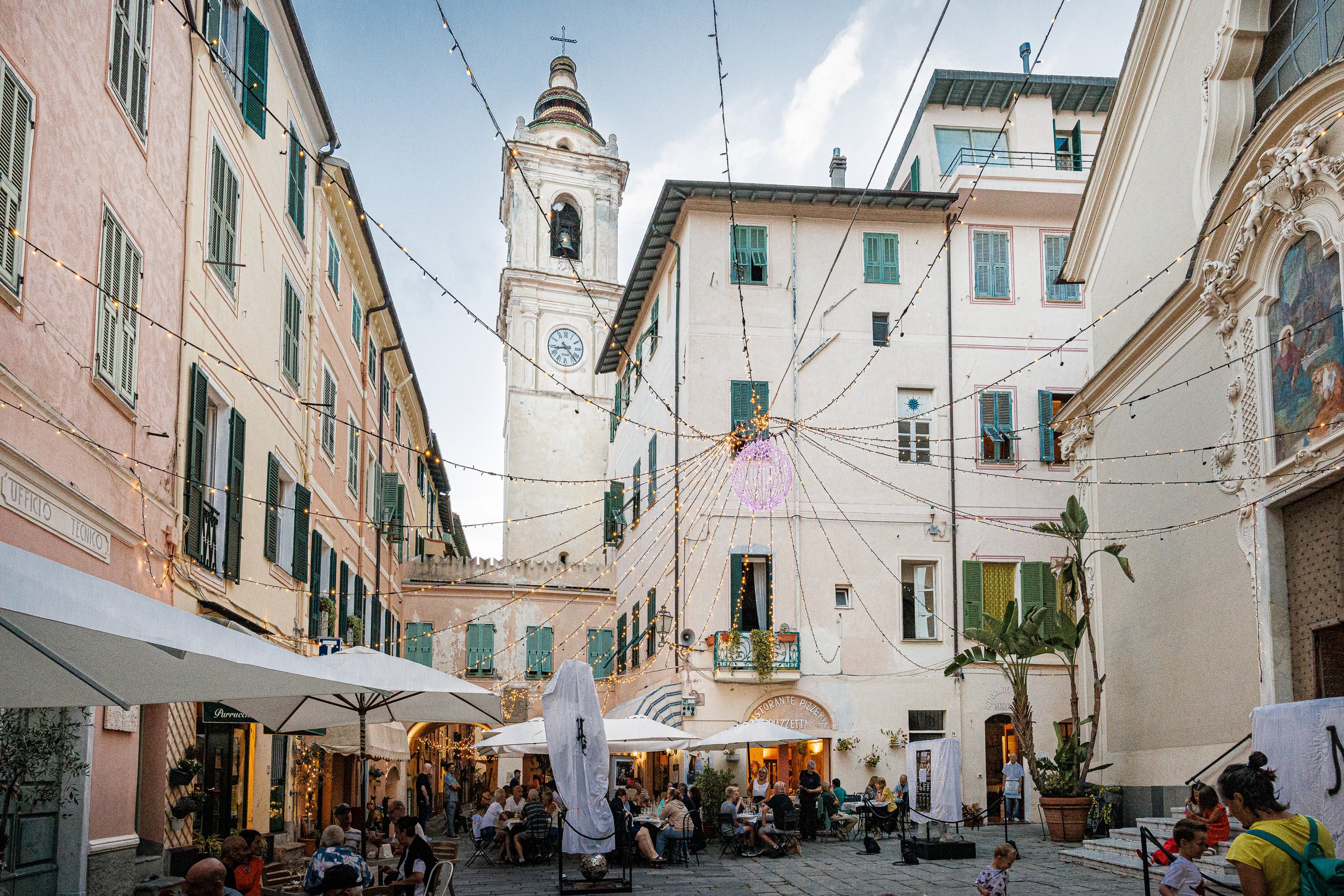
Summer in the village
In summer, among the many festivals and events, Bordighera Alta turns into a large open-air museum: paintings, sculptures and photographs bring the streets to life and make every walk through the caruggi a unique experience. In July the village celebrates its patron saint, Santa Maria Maddalena, and on summer evenings the squares host concerts and open-air dinners. You will find the upcoming events below.
Bordighera Alta in pictures
Tips for your visit
- How long you need: an hour is enough for the village; half a day if you continue to Capo Sant’Ampelio and the pine wood.
- When to go: in the morning it is quiet and bright; at sunset and in the evening it is livelier, with the bars and restaurants open.
- Getting around: the caruggi are explored on foot, with some uphill stretches and a few steps. Wear comfortable shoes; with a pushchair some passages are tricky.
- Combine it with: Palazzo Garnier and its huge ficus, the Fondazione Pompeo Mariani with the olive trees painted by Monet, the Capo pine wood and the church of Sant’Ampelio on the rocks.
Frequently asked questions
When was Bordighera Alta founded?
The village was founded on 2 September 1470 by thirty-two families from Borghetto San Nicolò, who decided to rebuild the ancient settlement of Bordighera as a fortified village on the hill.
How do I get to Bordighera Alta?
On foot: from Bordighera railway station it is about one kilometre and a 15-minute walk, partly uphill. Following the signs for the historic centre you reach Palazzo Garnier, the town hall, and from there the gates of the village. Inside the walls you can only go on foot.
How long does a visit take?
About an hour is enough for the village. If you add Capo Sant’Ampelio, the Capo pine wood and Monet’s gardens, allow half a day.
Do you have to pay to enter the village?
No, Bordighera Alta is a lived-in village: its streets and squares are always open and free. The church of Santa Maria Maddalena is a place of worship: visit it respectfully, outside service times.
What is there to see near Bordighera Alta?
A few minutes’ walk away are Palazzo Garnier, the Fondazione Pompeo Mariani, the Capo pine wood and the church of Sant’Ampelio, on the southernmost headland of Liguria. Heading down to the west you reach the Via Romana, with its Belle Époque villas and the Museo Bicknell.