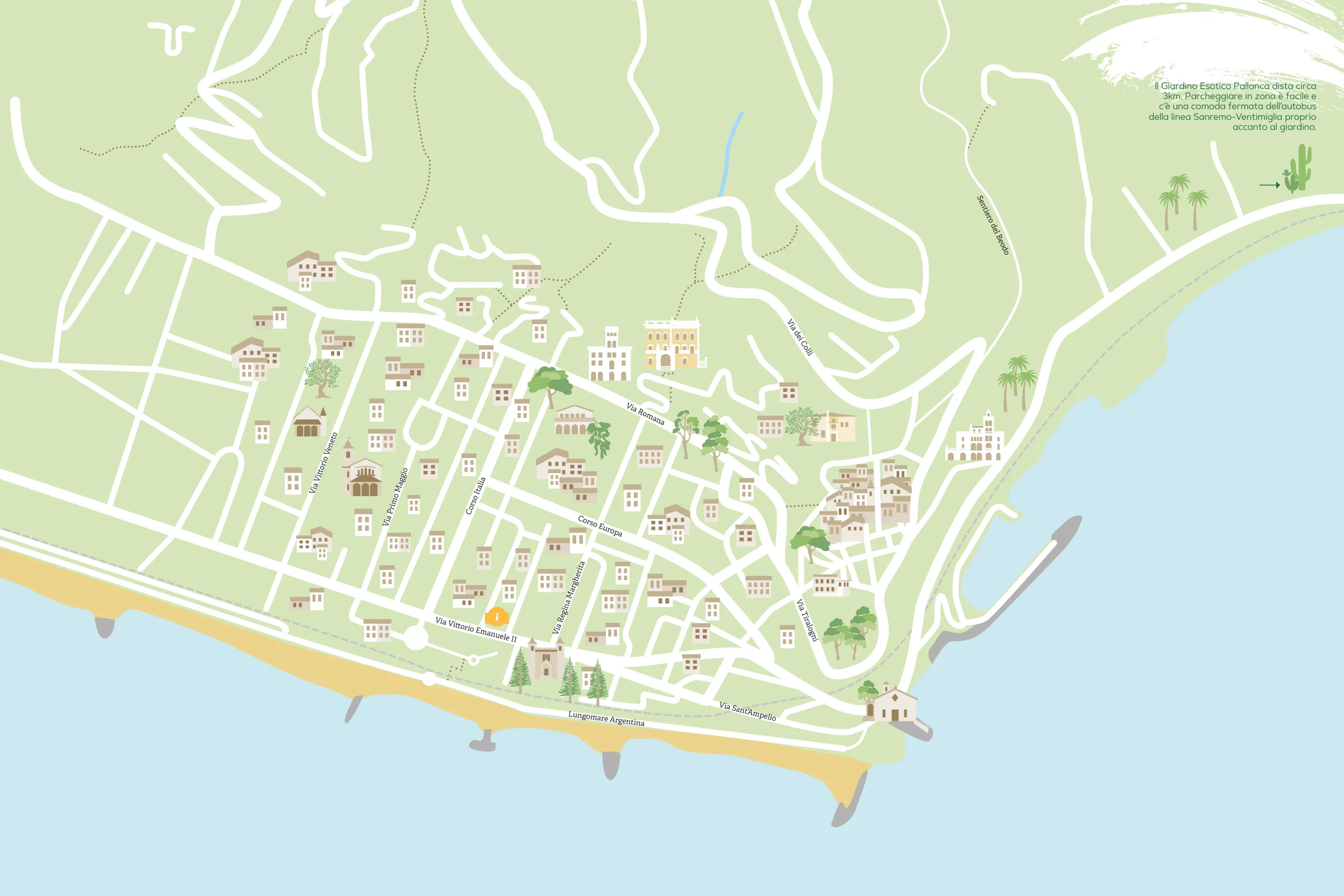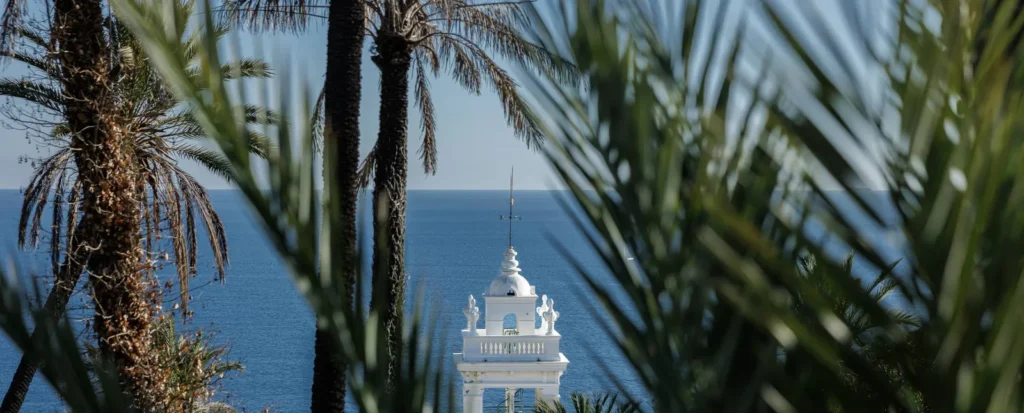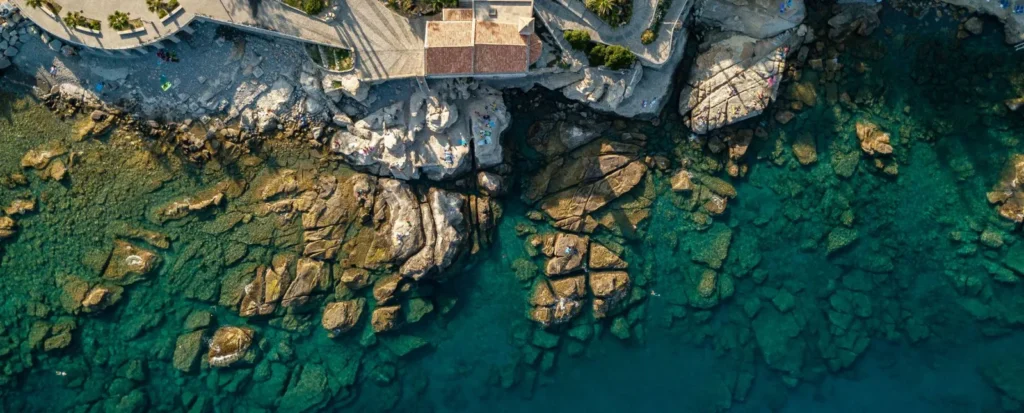


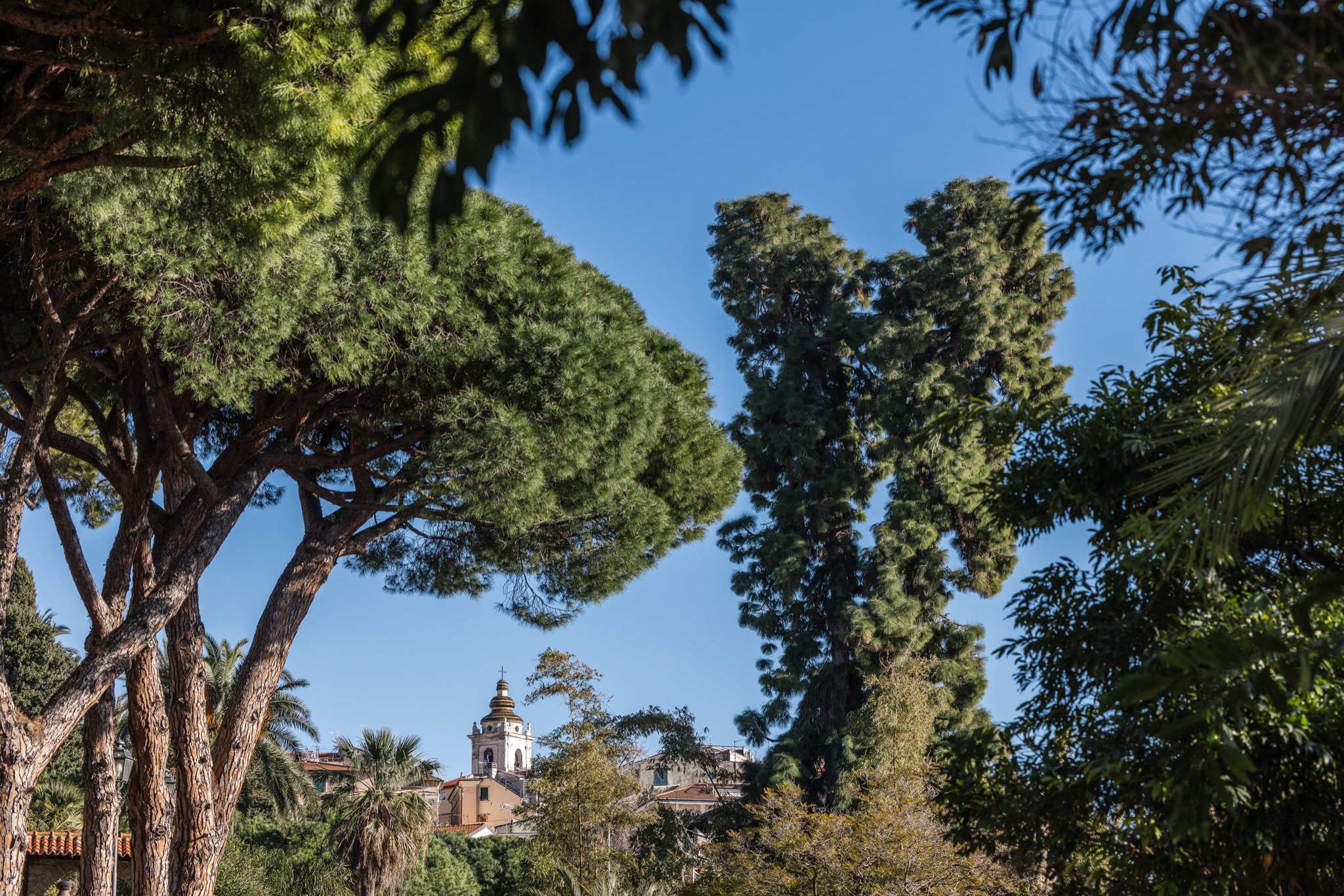
The Via Romana is the avenue of English Bordighera. For about a kilometre and a half it runs parallel to the sea, halfway up the hillside above the centre, lining up one after another the Belle Époque villas, the gardens with palms and centuries-old trees, and the library and museum created by the British residents, all the way to the foot of Bordighera Alta.
It is the street that best tells the story of the 19th-century town, when Bordighera became one of the most elegant winter destinations in Europe. You can walk it in half an hour, but it is worth taking a morning: between the villas there are a museum, an art collection and the exact spots where Claude Monet set up his easel.
From mule track to Belle Époque avenue
The name recalls the road that in Roman times linked Liguria to Gaul, the Via Julia Augusta, built under the emperor Augustus. For centuries, however, above the seafront of Bordighera there was only a mule track among vegetable plots, olive groves and palm groves.
Everything changed in the second half of the 19th century. In 1855 Giovanni Ruffini’s novel Doctor Antonio, set on the Riviera, introduced Bordighera to English readers; in 1872 the railway arrived, and with it the travellers who came to spend the winter here from October to May. Hotels, villas and gardens sprang up, and the old mule track became the backbone of the new town.
One of those behind its transformation was the banker Raphaël Bischoffsheim, who was having the villa now called Etelinda built right here: he funded the council and entrusted the design of the new avenue to Charles Garnier, architect of the Paris Opéra, who had his own villa in Bordighera. After some disagreement on the town council, Garnier’s plan was approved in 1877. In the following decades the places of the foreign community took their place along the Via Romana: the Museo Bicknell in 1888, the Hotel Angst in the same period, the International Library in 1910 and finally the queen’s villa.
What to see along the Via Romana
Here are the main stops, from west to east, that is, from the area above the station towards Bordighera Alta.
The former Hotel Angst
At the western end of the street rises the large building of the former Hotel Angst. It was founded by the entrepreneur Adolf Angst, who, after the 1887 earthquake had damaged his first hotel near the station, built here in several stages, up to 1914, one of the most luxurious hotels on the Riviera, frequented by Europe’s aristocracy. During the First World War it was used as a military hospital; closed after the Second World War, it was left abandoned for a long time. It is now the subject of a project to turn it into a residential complex: you can admire it from outside.
The Biblioteca Civica Internazionale
At number 52, a stone building with a semicircular colonnaded portico and a century-old wisteria: this is the Biblioteca Civica Internazionale, built in 1910 by the English community on the initiative of Clarence Bicknell. It still holds books in Italian, English, French and German and is open to everyone. In spring, with the wisteria in bloom, it is one of the most photographed views on the street.
Villa Etelinda
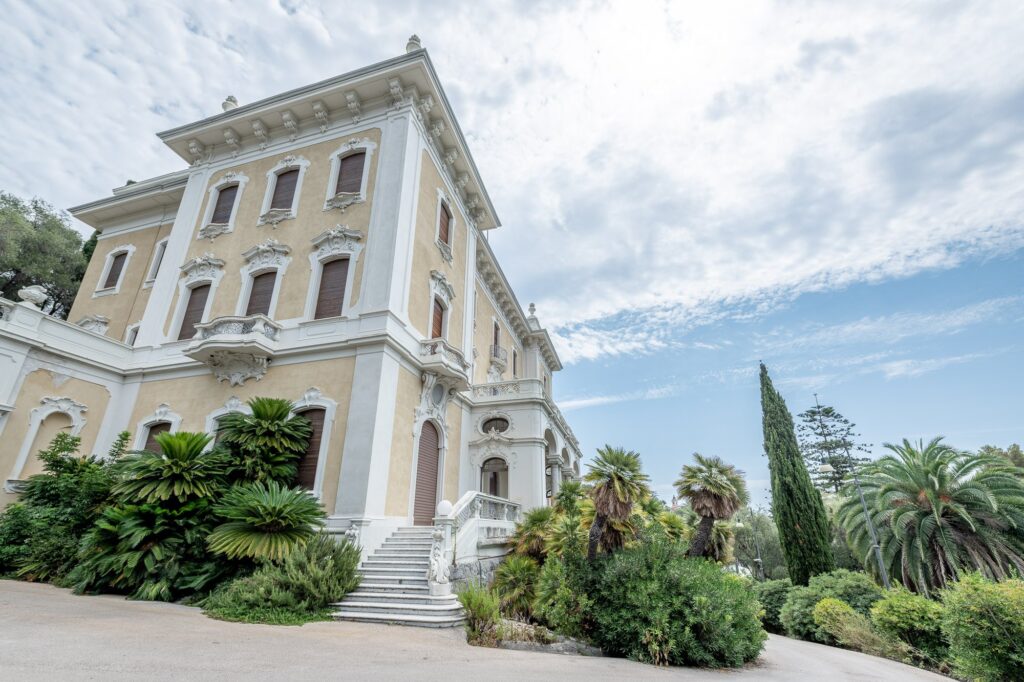
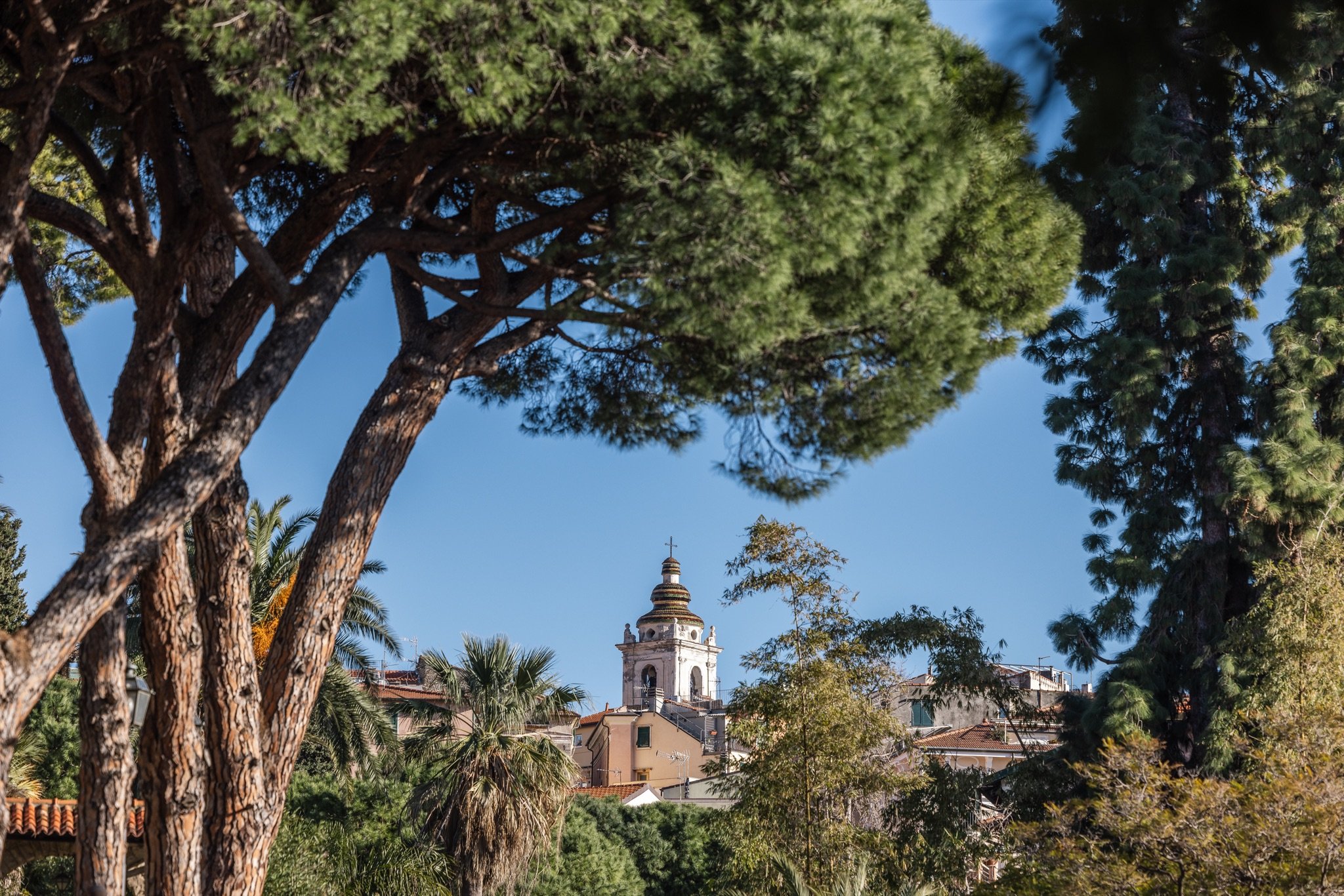
At number 38, Villa Etelinda is recognisable by its slender tower and the colourful mosaics on the façade, which recall Moorish decoration. Charles Garnier designed it for Raphaël Bischoffsheim from 1873, with a garden by Ludwig Winter. In 1896 it passed to Claude Bowes-Lyon, Earl of Strathmore, who named it Etelinda after the opera composed by his daughter; among his guests was the young Elizabeth Bowes-Lyon, the future Queen Mother. In 1914 it was bought by Queen Margherita of Savoy, who had first stayed here in 1879.
Villa Regina Margherita
In the park of Villa Etelinda, on higher ground, the queen had a new residence built between 1914 and 1916, designed by the Milanese architect Luigi Broggi in neo-Baroque style: Villa Regina Margherita. Margherita of Savoy died there on 4 January 1926; in February 1941 the villa hosted the meeting between Mussolini and General Franco. Bought by public bodies in 2008 and restored, from 2011 it housed a museum with part of the Fondazione Terruzzi collection, with paintings from the 14th to the 19th century, furniture, porcelain and silverware. It is currently closed to the public.
The Museo Bicknell
Almost opposite, two enormous fig trees wrap around the gate of a stone building covered in wisteria: this is the Museo Bicknell, founded in 1888 by the English clergyman, botanist and scholar Clarence Bicknell to house his collections. Today it is home to the Istituto Internazionale di Studi Liguri. The two Moreton Bay figs and the wisteria are listed in Italy’s register of monumental trees.
The Giardini Monet and the Canary Island pine
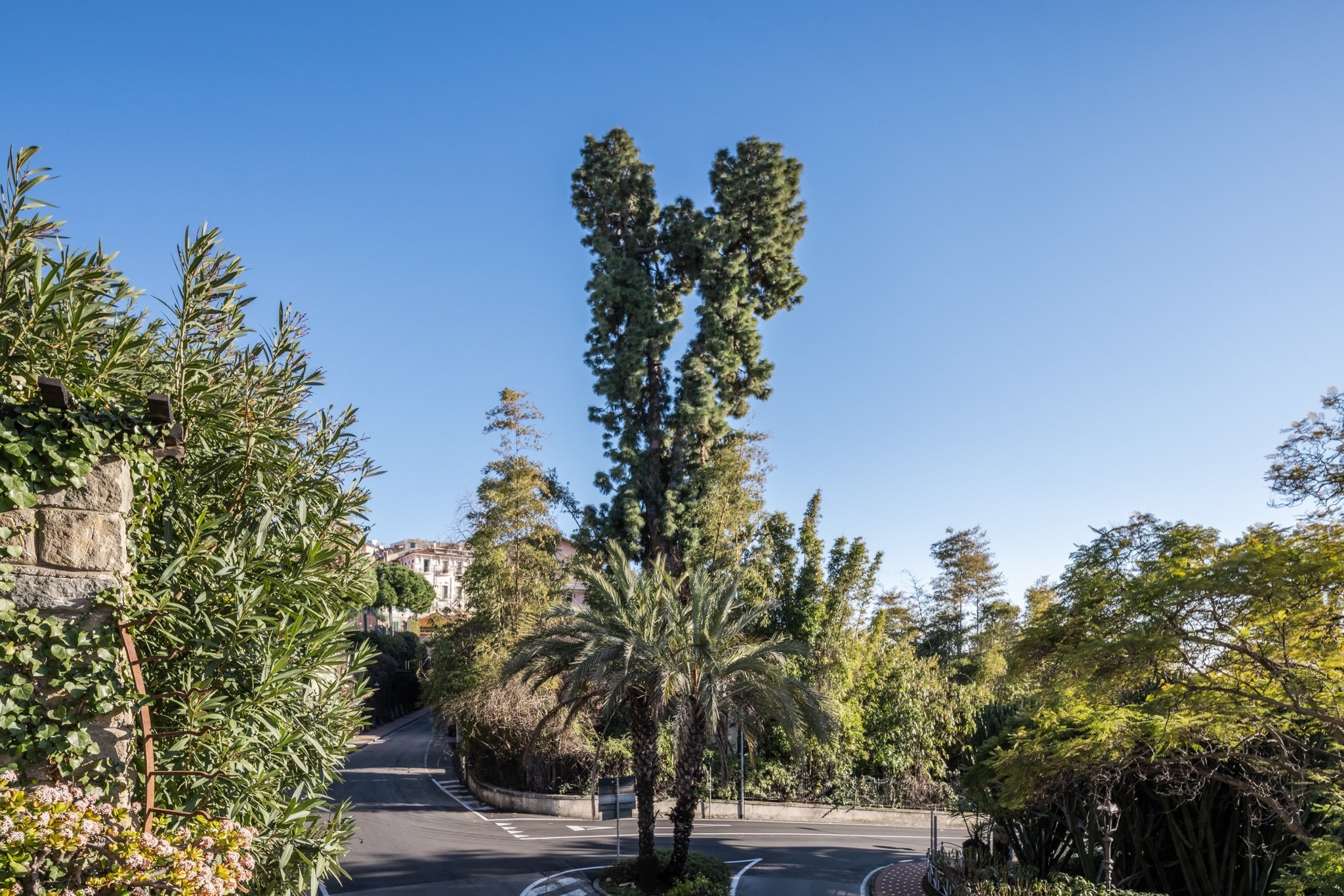
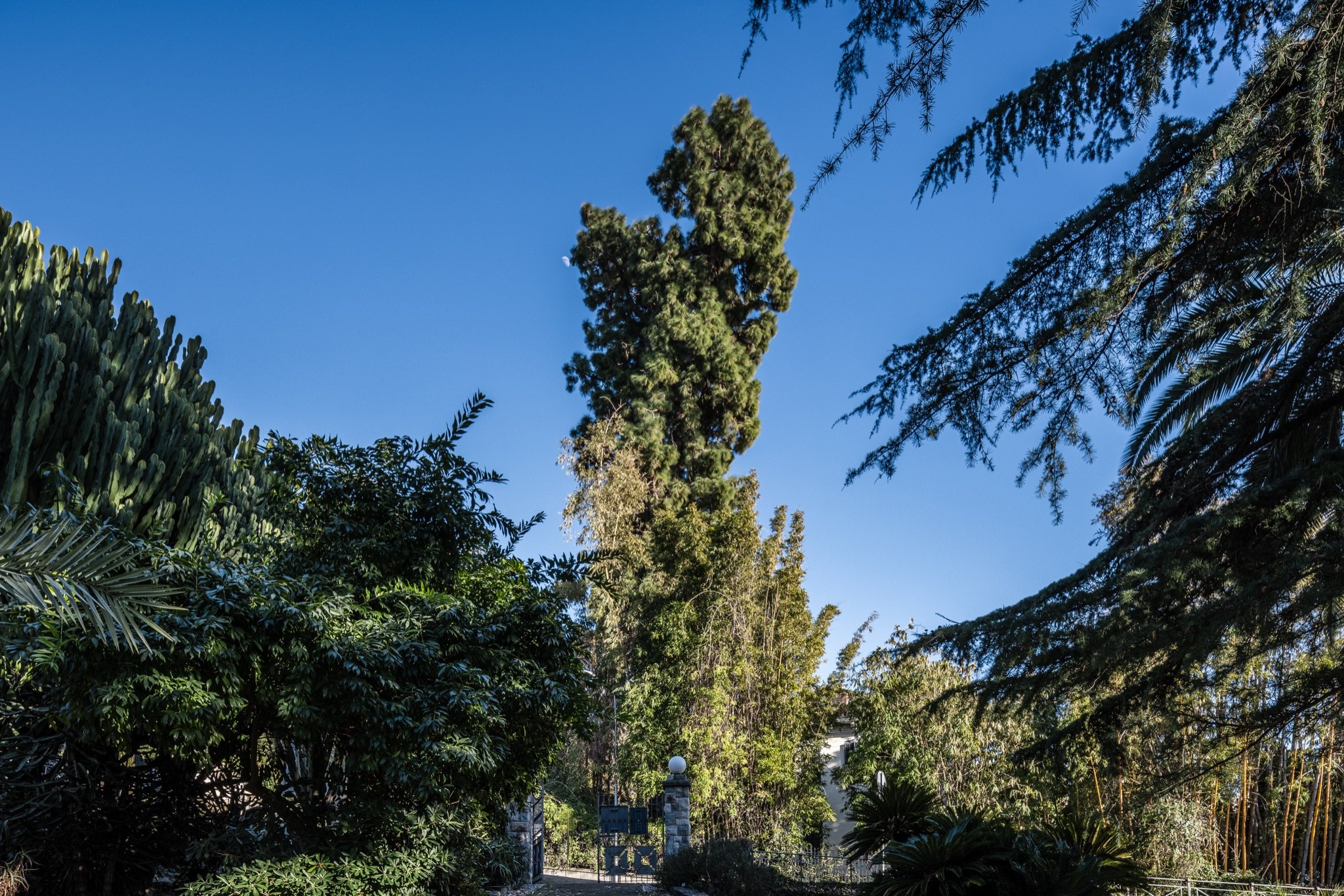
Continuing east you come to the Giardini Monet, the last public fragment of the famous Moreno Gardens, which at the end of the 19th century stretched from the sea up to the old town. Next to them, in the private garden of Villa Schiva, towers a Canary Island pine about 40 metres tall, also a monumental tree.
The Via Romana through Monet’s eyes
In 1884 Claude Monet spent three months in Bordighera and painted the Via Romana in three canvases. In Via Romana at Bordighera, now at the Museum Barberini in Potsdam, the road is deserted, dominated by a palm and flowering bushes that hide the houses. Along the street, the “M” signs on the ground mark the spots from which the painter looked at the landscape: you will find them described on the page Via Romana through Monet’s eyes and on the itinerary In Monet’s footsteps.
Nearby: the English quarter
The streets running down from the Via Romana towards the sea form the English quarter. A few steps away are the former Anglican church, now a cultural centre, the Waldensian church and the Giardini Lowe, with their centuries-old olive trees.
Tips for your visit
- How long you need: half an hour to walk its full length; a morning if you visit the Museo Bicknell.
- Where to start: from Bordighera station, walking uphill, you reach the Via Romana in about 10 minutes. Walk it from west to east and at the end climb up to Bordighera Alta.
- When to go: in April and May, when the wisterias at the library and the Museo Bicknell are in bloom.
- Take care: it is a road open to traffic; walk on the pavements.
Frequently asked questions
Why is it called Via Romana?
The name recalls the ancient Roman road that linked Liguria to Gaul, the Via Julia Augusta. The avenue we see today, however, dates from the 19th century, when the old mule track was transformed to a design by Charles Garnier, approved in 1877.
Which villas are on the Via Romana?
The best known are Villa Etelinda, designed by Charles Garnier, and Villa Regina Margherita, residence of Italy’s first queen. Along the street there are also the Museo Bicknell, the Biblioteca Civica Internazionale and the former Hotel Angst.
Can you visit the villas?
The Museo Bicknell and the Biblioteca Civica Internazionale are open to the public; check opening times and tickets on their pages. Villa Regina Margherita is currently closed, and the other villas are private and can be admired from the street.
How long is the Via Romana?
About a kilometre and a half, from the area above the station to the foot of Bordighera Alta. On foot, without stopping, about twenty minutes is enough.
Which paintings did Monet make of the Via Romana?
In 1884 Monet painted the Via Romana in three views. The best known, Via Romana at Bordighera, is at the Museum Barberini in Potsdam, Germany.