

Castelvittorio is a fortified village at about 420 metres above sea level, clustered on a hill in the upper Val Nervia, opposite Pigna. Its tall, narrow houses are threaded by steep alleys and covered passages.
From Bordighera it takes about 50 minutes by car.
The history of Castelvittorio
The village grew up in the Middle Ages as a fortified settlement along the roads to France and Piedmont. It was called Castel Dho; it then became Castelfranco, the “free castle”, when it gained independence from Triora under the Republic of Genoa. For centuries it was the Genoese stronghold facing Savoyard Pigna. In 1862, after the Unification of Italy, it took the name Castel Vittorio, now Castelvittorio, in honour of King Victor Emmanuel II.
What to see
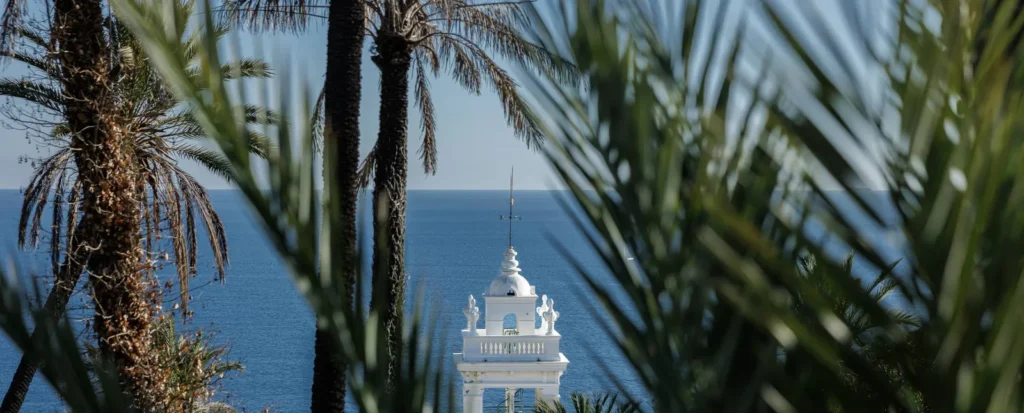
The church of Santo Stefano and the bell tower
The parish church, rebuilt in Baroque style in the 18th century, holds a wooden crucifix by the Genoese sculptor Anton Maria Maragliano. The bell tower stands apart from the church and is topped by an onion dome covered in colourful “harlequin” tiles.
The alleys and the zeppi
Via Vittorio Emanuele, the main street, was the street of shops and workshops. Around it is a tangle of tall, narrow, covered alleys. In Via Burca you can see the “zeppi”, the old prison cells with windows closed by thick iron bars.
Details to look out for
In the square, the black slate capitals of the old church have been reused as seats; on the façades there is a sundial.
What to taste
The village dish is turtun, a simple, tasty savoury vegetable pie, to which a festival is dedicated in summer. Beans, chestnuts and mushrooms are also typical.
Tips for your visit
- How long you need: an hour or a little more; it pairs well with Pigna, on the other side of the valley.
- Getting there: about 26 km by car from Bordighera, up the Val Nervia.
- Combine it with: on the way back down to the sea, stop at Dolceacqua.
Frequently asked questions
Why is it called Castelvittorio?
The village was called Castelfranco; in 1862 it took the name Castel Vittorio, now Castelvittorio, in honour of King Victor Emmanuel II.
What is there to see in Castelvittorio?
The onion-domed bell tower of Santo Stefano with Maragliano’s crucifix, the covered alleys and the zeppi, the old prison cells.
What is Castelvittorio’s typical dish?
Turtun, a savoury vegetable pie.