

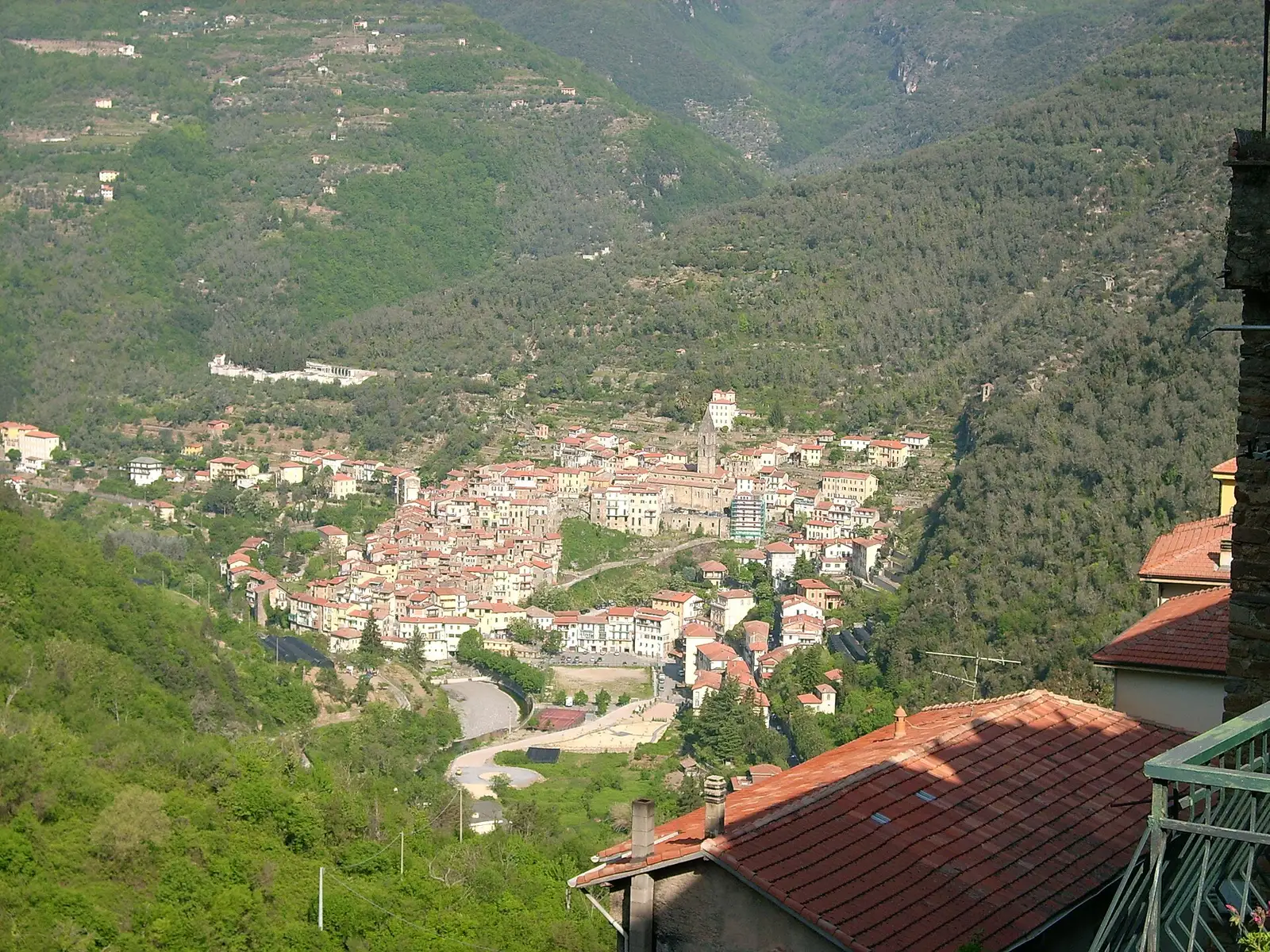
Pigna is the most important village in the upper Val Nervia, at the gateway to the Ligurian Alps: an old centre of alleys and covered passages, facing its old rival Castelvittorio.
It holds the Bandiera Arancione (Orange Flag) of the Touring Club Italiano. From Bordighera it takes about 40 minutes by car.
The history of Pigna
The area was already inhabited in Roman times. In the Middle Ages it belonged to the counts of Ventimiglia and then to Provence, until in 1388 it passed to the House of Savoy: for centuries it was a Savoyard outpost facing Genoese Castelvittorio. In the autumn of 1944 Pigna was the centre of a short-lived partisan republic, which lasted from the end of August to the beginning of October.
What to see
The church of San Michele
The 15th-century parish church has a façade with a large rose window and holds the polyptych of San Michele, a masterpiece by the painter Giovanni Canavesio.
The church of San Bernardo
The church of San Bernardo is decorated with a cycle of frescoes by Canavesio himself.
The chibi and the loggia
The old centre is crossed by the “chibi”, covered walkways that pass beneath the houses. Higher up, Piazza Castello has palazzi with slate doorways; the 15th-century loggia of the Piazza Vecchia is one of the loveliest corners of the village.
The ruins of San Tommaso
Below the village stand the ruins of the parish church of San Tommaso, founded in the Romanesque period, with remains that are still clearly visible.
The sulphur springs
In the Lago Pigo area, sulphurous water gushes out at about 30 degrees; it has been used for spa treatments since the 19th century, but the spa building is now closed.
What to taste
The Pigna white bean, grown for centuries on the terraces around the village, is its signature product: traditionally it is cooked with goat and dressed with extra virgin olive oil from Taggiasca olives.
Nearby
A little further up, the hamlet of Buggio has the only church in the world dedicated to San Siagrio. A path lined with the chapels of the Stations of the Cross climbs to the sanctuary of the Madonna di Passoscio. Opposite, on the other side of the valley, is Castelvittorio.
Tips for your visit
- How long you need: two hours for the village; half a day with Castelvittorio.
- Getting there: about 22 km by car from Bordighera, driving the whole way up the Val Nervia beyond Dolceacqua.
- Museums: Pigna’s museum complex, including the ethnographic museum, can be visited by appointment.
Frequently asked questions
What is there to see in Pigna?
The church of San Michele with its rose window and Canavesio’s polyptych, the church of San Bernardo, the covered chibi, the loggia of the Piazza Vecchia and the ruins of San Tommaso.
How far is Pigna from Bordighera?
About 22 km, some forty minutes by car.
What is Pigna’s typical product?
The Pigna white bean, traditionally cooked with goat.