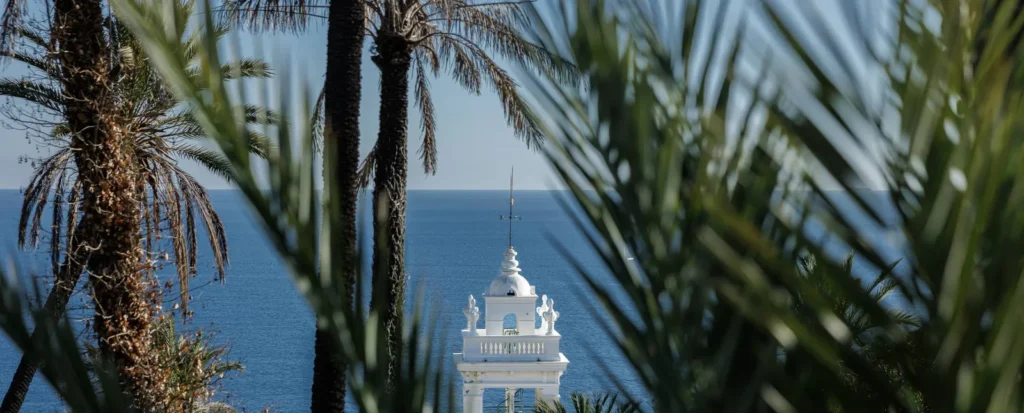


In the Capo pine wood, above the little church of Sant’Ampelio, stands a small stone building with a white dome: this is the Marabutto, Bordighera’s old powder magazine. Next to it are three old cannons with nicknames the locals know well, and in front of it opens one of the most beautiful viewpoints in town, high above the sea.
It is a short but pleasant stop, perfect while you stroll between the pine wood, Bordighera Alta and the Capo. Come in the late afternoon: the light is warm, the pines give shade and the view sweeps along the coast as far as France.
The history of the Marabutto
The name comes from Arabic: “marabouts” are the tombs of Muslim holy men, small square buildings topped by a dome. Bordighera’s Marabutto has exactly this shape, and the name stuck.
Its origins are not precisely documented. It is dated to the period of Turkish and Saracen raids along the Riviera, probably after 1543, when the coast filled with towers and defences against pirates. The use we know of is as a powder magazine: gunpowder was stored here for the cannons of the coastal battery that protected the Capo and the town.
In May 2015 the town council restored the building and landscaped the whole area. The project by the architects Aldo Panetta and Alessandro Liotta turned the old powder magazine into a kind of small museum, closed to the public but there to be discovered from outside.
What to see
The Marabutto can be seen in a few minutes, but every detail tells you something about the Bordighera of the past.
The domed powder magazine
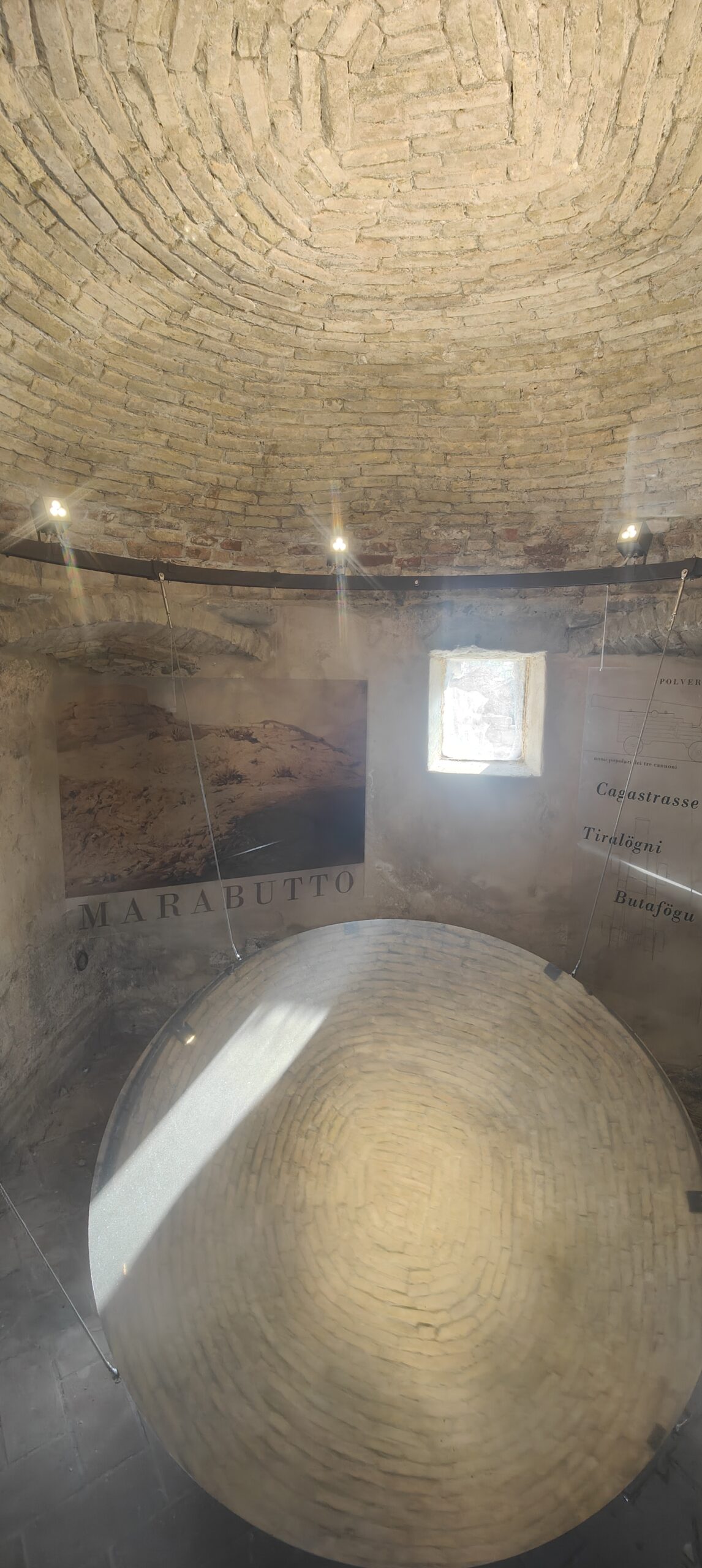
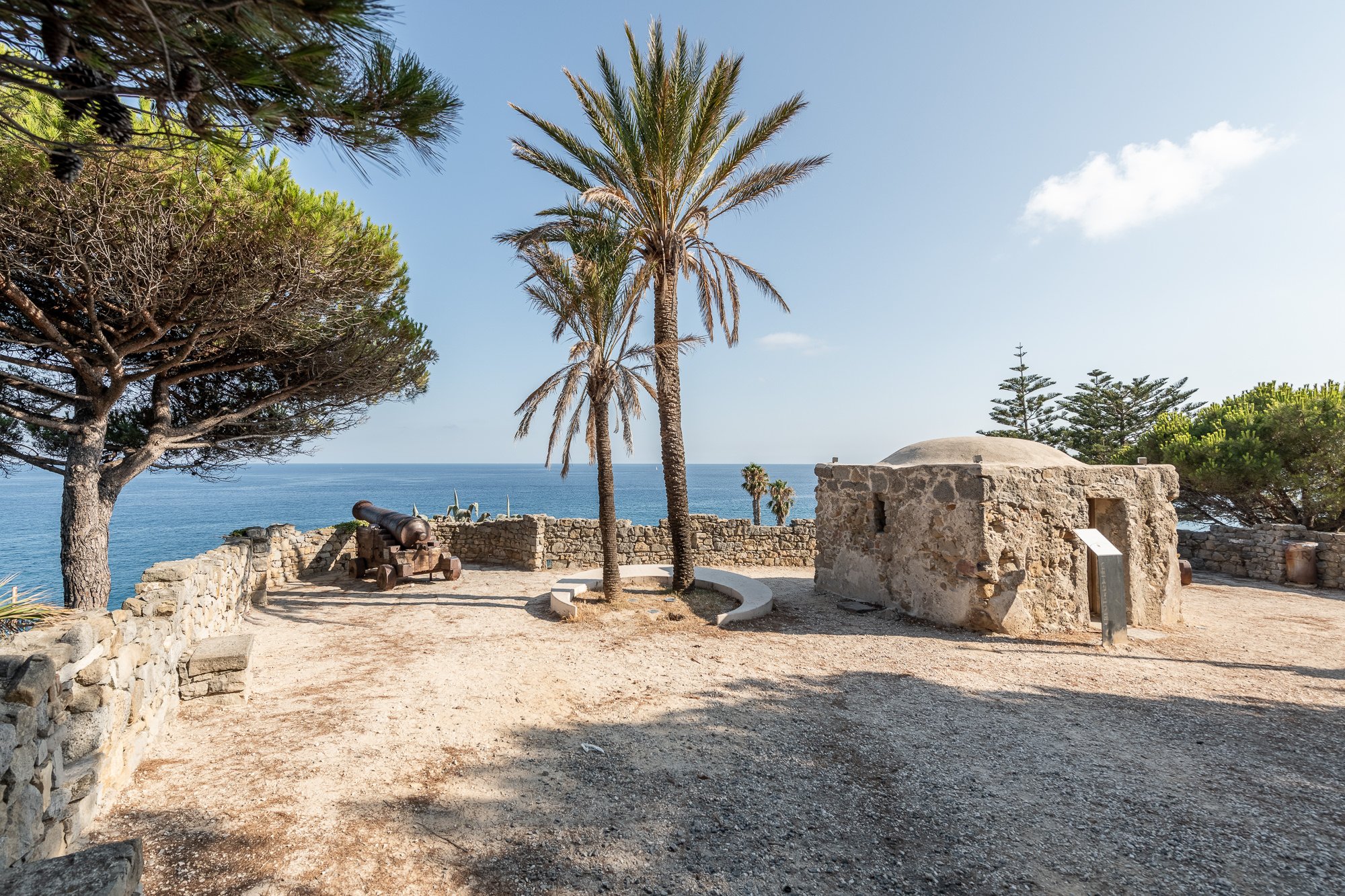
The small stone building, square in plan with a rounded dome, stands on a terrace overlooking the sea, among palms, agaves and maritime pines. Inside, the dome is brick, and the walls have just one small window: as was right for a gunpowder store.

A museum to look at from outside
The interior cannot be visited: you discover it by looking through the openings. A large, round, tilted mirror reflects the dome and the panels with pictures and stories of the place, such as the names of the cannons and the legend of Magiargé and the Saracen pirate Boabil, much loved in Bordighera.
Butafoegu, Tiralogni and Cagastrasse
On the terrace are the three iron cannons of the old coastal battery, which defended the town against pirates. The locals call them by three nicknames in dialect: Butafoegu, Tiralogni and Cagastrasse. Two are mounted on wooden carriages and point out to sea; the third is hidden beneath the pines.

The viewpoint over the Capo
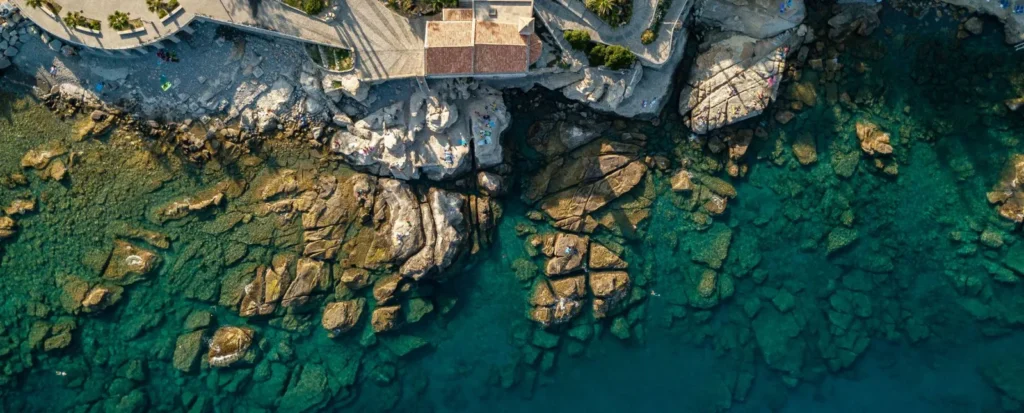
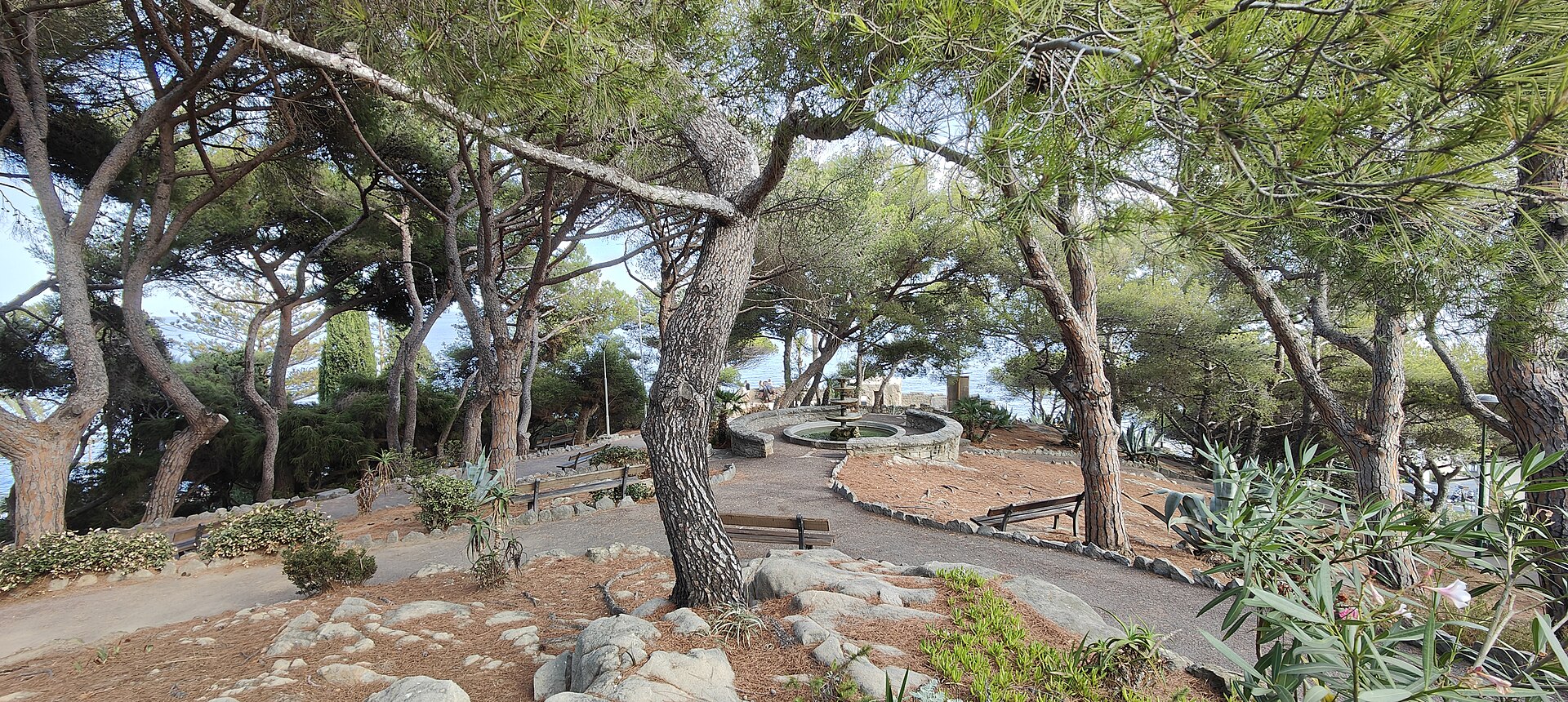
From the stone parapet the view is wide: below is the church of Sant’Ampelio with its rocks, ahead the open sea, and to the west the coast as far as Ventimiglia and the French Riviera. Behind you stretches the Capo pine wood, with its shady paths and benches.

Tips for your visit
- How long you need: a quarter of an hour for the Marabutto and the cannons; longer if you stop to read or rest in the pine wood.
- When to go: at sunset for the light on the sea; in summer, in the hottest hours, the pine wood provides shade.
- Getting around: everything is on foot. From the terrace of the Capo you enter the pine wood and walk down to the viewpoint.
- Combine it with: walk down to the Church of Sant’Ampelio, up into the village of Bordighera Alta, or carry on along the Lungomare Argentina.
Frequently asked questions
What is Bordighera’s Marabutto?
It is an old domed stone powder magazine in the pine wood of Capo Sant’Ampelio. The name recalls the tombs of Muslim holy men, which have the same shape.
Can you go inside the Marabutto?
No. After its restoration in 2015 it became a small museum closed to the public: you look at the interior from outside, through the openings.
What are the three cannons called?
Butafoegu, Tiralogni and Cagastrasse. They are the dialect nicknames of the cannons of the old coastal battery that defended Bordighera against pirates.
How do I get there?
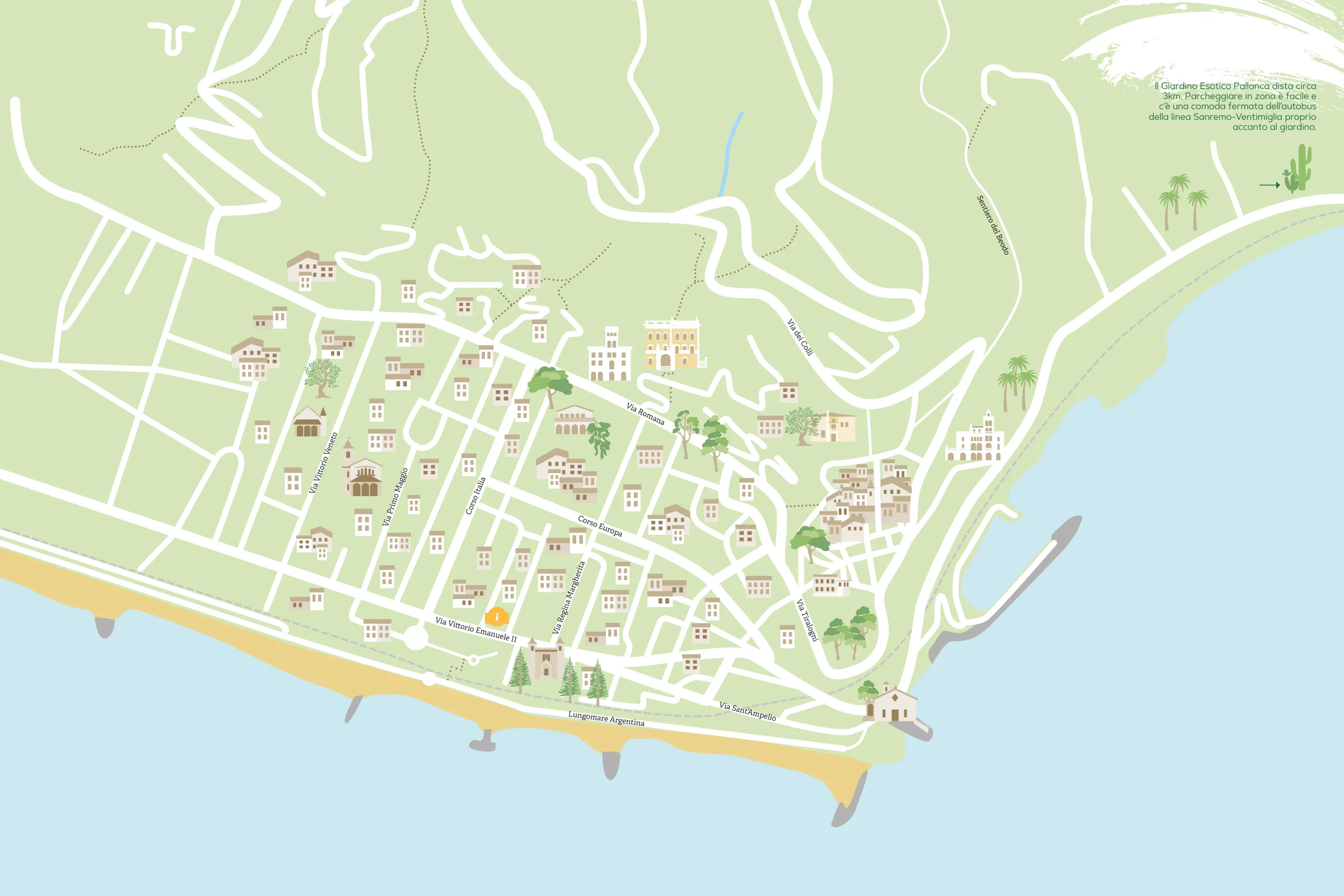
On foot: from the terrace of the Capo, at the gates of Bordighera Alta, walk through the pine wood to the terrace over the sea. The church of Sant’Ampelio is just below.
Is there an admission fee?
No, the terrace with the Marabutto and the cannons is part of the Capo pine wood, with free access.