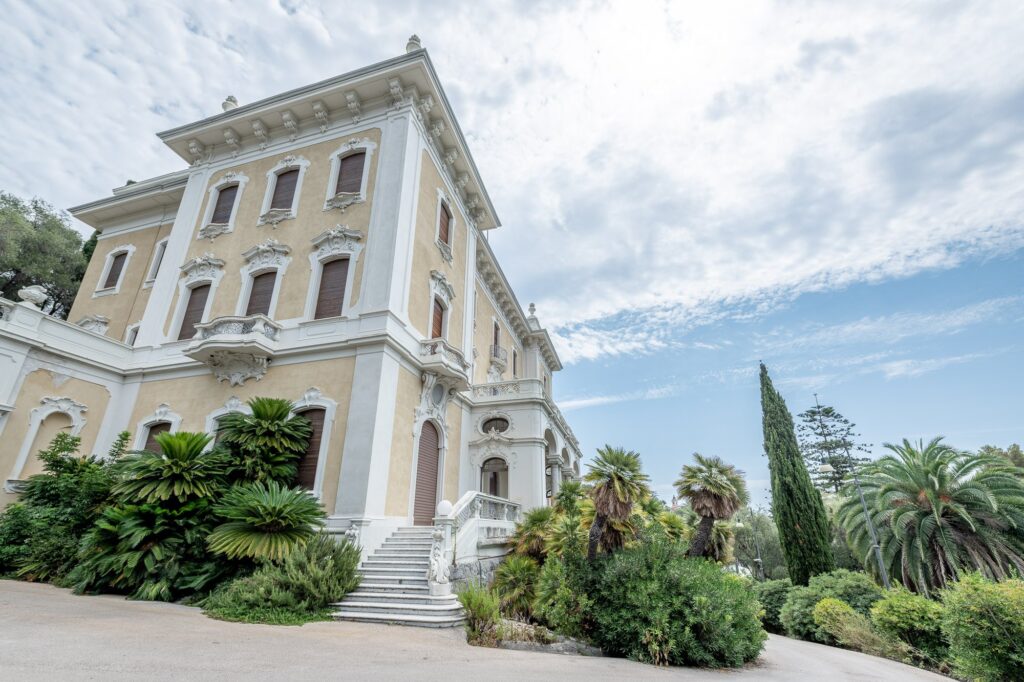


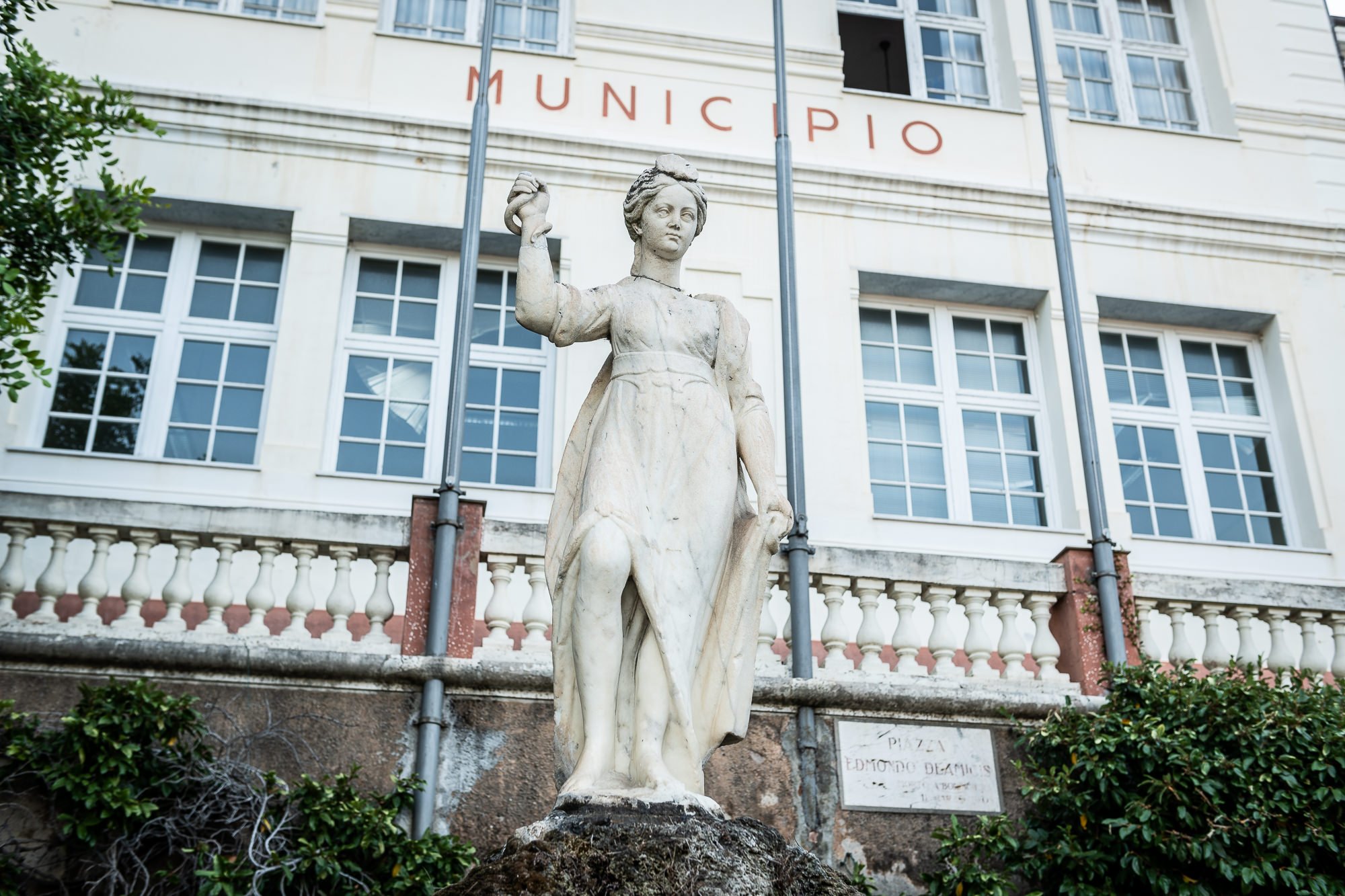
At the gates of Bordighera Alta, where the new town meets the old village, stands an elegant classical building: Palazzo Garnier, Bordighera’s town hall. It was designed by Charles Garnier, architect of the Paris Opéra and the Monte-Carlo Casino, who chose to live in Bordighera.
Built as a school and later the seat of the town council, it is one of the symbols of 19th-century Bordighera. You pass it on the way to the village, the Capo pine wood and the sea; around it lies a garden of exotic plants and great fig trees.
From school to town hall
In 1871 Charles Garnier left Paris, shaken by the days of the Commune, and looked for land in Bordighera on which to build his home. The spot he wanted was occupied by the town school. Garnier then proposed a deal to the council: he would buy the school land, offering a sum to build a new one and giving the design of the new building himself.
The design was modern for its time: alongside the boys’ section, which replaced the old school, it included a girls’ section and one for younger children. Work dragged on and only in 1878 was a first part of the building completed. In 1886, when a new school opened in town, the council decided to move into the building, which has been Bordighera’s town hall ever since.
The lion and the pine: the town’s coat of arms
Bordighera’s coat of arms is carved on the façade: a rampant lion leaning against a maritime pine. It is said that the town would have liked a palm, the symbol of Bordighera, but that neighbouring Sanremo had already chosen it for itself.

What to see at Palazzo Garnier
The classical façade
The building has classical forms, sober and elegant, designed to sit well next to the houses of the old village. It is a different Garnier from the lavish one of the Opéra: restrained, functional, suited to a small seaside town. The building is protected as an architectural heritage site by the Soprintendenza.
Paintings by Bordighera’s artists
Inside, the town hall keeps paintings by artists who lived in or visited Bordighera, including Pompeo Mariani, Giuseppe Ferdinando Piana, Giuseppe Balbo and Friedrich von Kleudgen: a small gallery of the painting that, between the 19th and 20th centuries, captured the light of the Riviera.
The garden and the fig trees
Around the building grow agaves, palms and succulents, and a great Moreton Bay fig listed in Italy’s official register of monumental trees. Not far away, at the entrance to the village, is the Scibretta, the other gigantic fig tree that the locals consider a symbol of the town.

Garnier in Bordighera
The town hall is one of the stops for discovering Charles Garnier’s legacy in the town. Besides Villa Garnier, the architect designed Villa Etelinda and the church of Terrasanta. In the Capo pine wood, just below the building, a monument has honoured him since 1935.
Tips for your visit
- How long you need: a few minutes for the façade and the garden; it is a natural stop on the way to Bordighera Alta.
- How to see it: the building is the seat of the town council: you can admire it freely from outside, while the interior houses public offices.
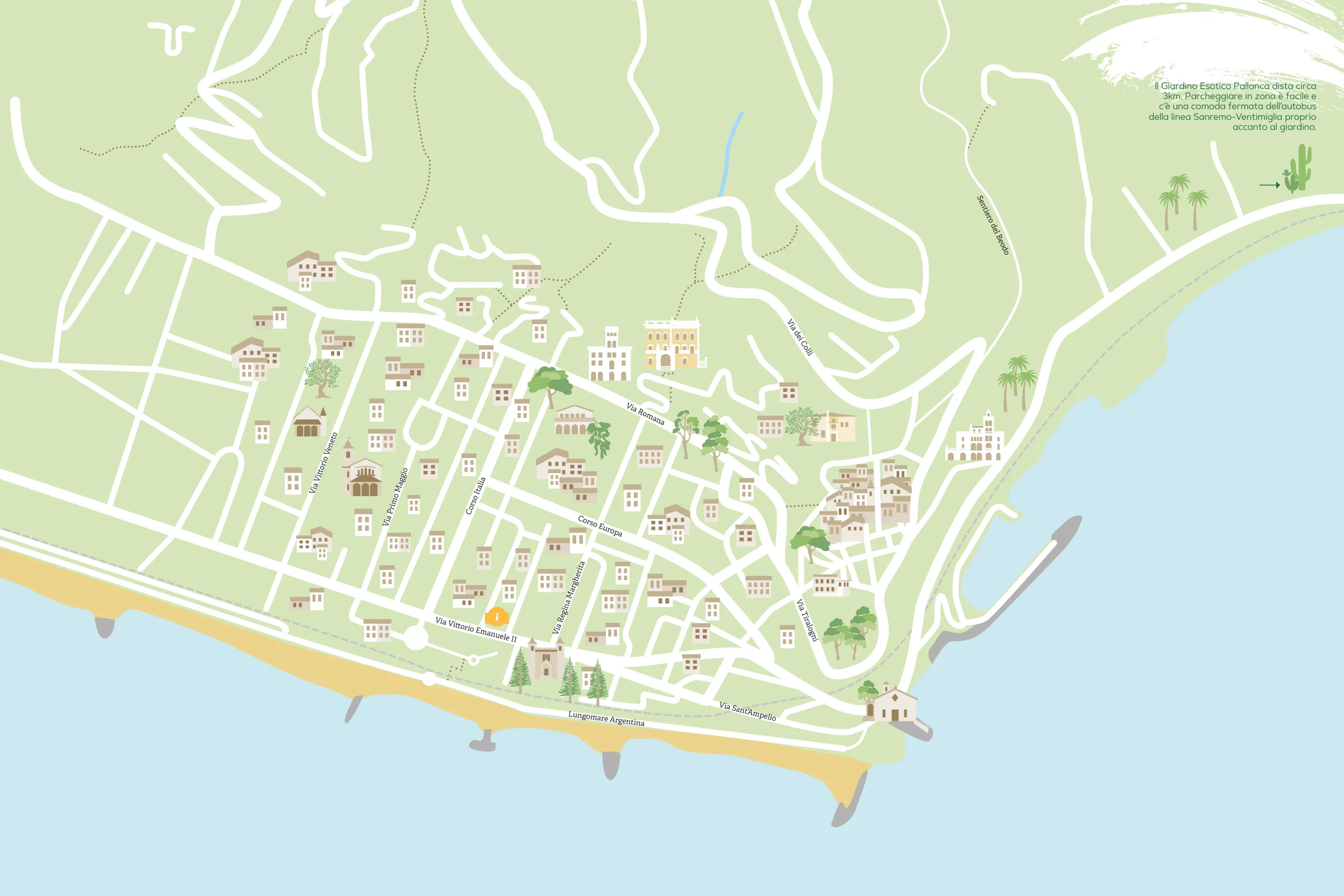
- Getting there: on foot from the railway station it takes about 15 minutes, partly uphill, following the signs for the historic centre.
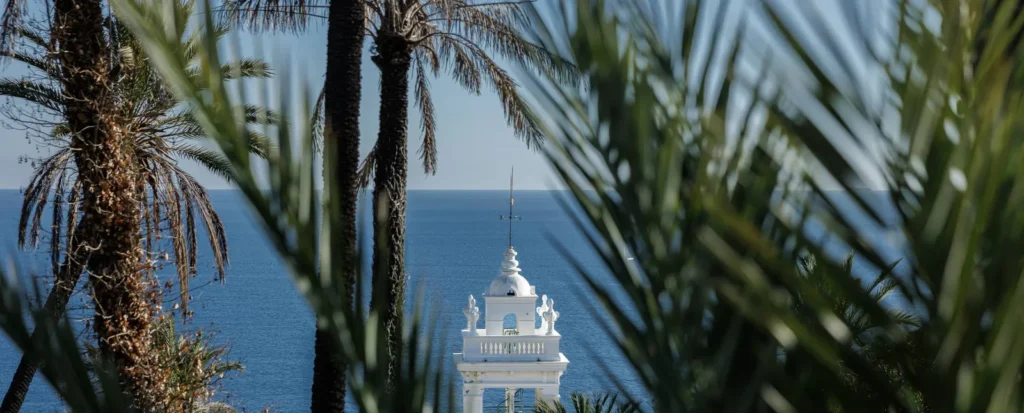
- Combine it with: the caruggi of Bordighera Alta, the Capo pine wood with the Marabutto, the church of Sant’Ampelio and the Fondazione Pompeo Mariani.
Frequently asked questions
Who designed Palazzo Garnier?
Charles Garnier, the French architect of the Paris Opéra and the Monte-Carlo Casino, who lived in Bordighera from 1871.
Why is Palazzo Garnier the town hall?
The building began life as a school, built to a design donated by Garnier. In 1886, when a new school opened, the council moved its offices there, where they still are.
Can you visit it?
The façade and the garden can be seen freely and at no cost. The interior houses the council offices.
Where is it?
At Via XX Settembre 32, at the entrance to Bordighera Alta, above the Capo pine wood.
What is there to see near Palazzo Garnier?
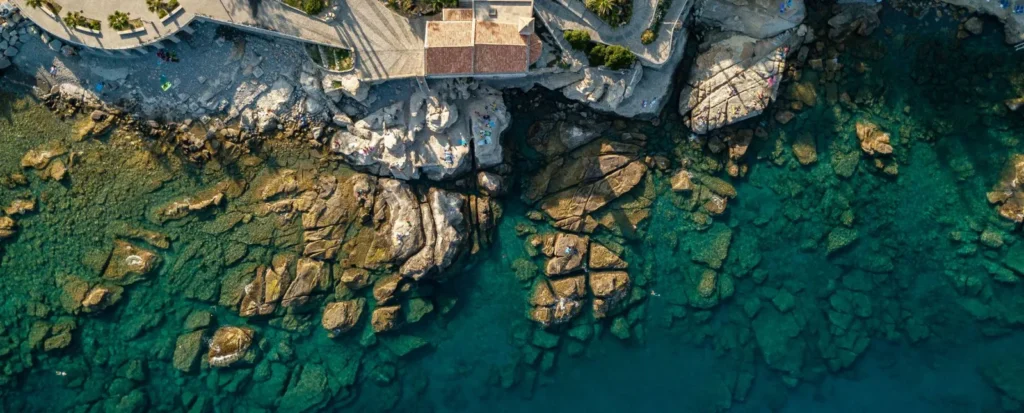
Bordighera Alta, the Scibretta, the Capo pine wood with the Marabutto and, heading down to the sea, the church of Sant’Ampelio.