

In brief
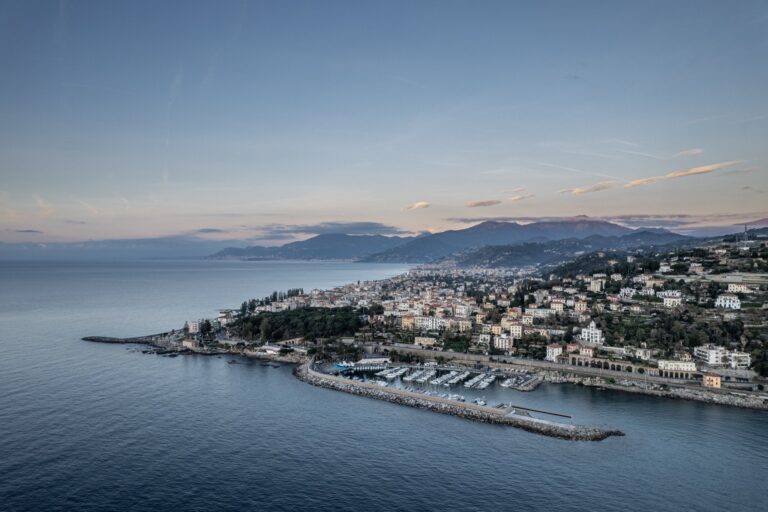
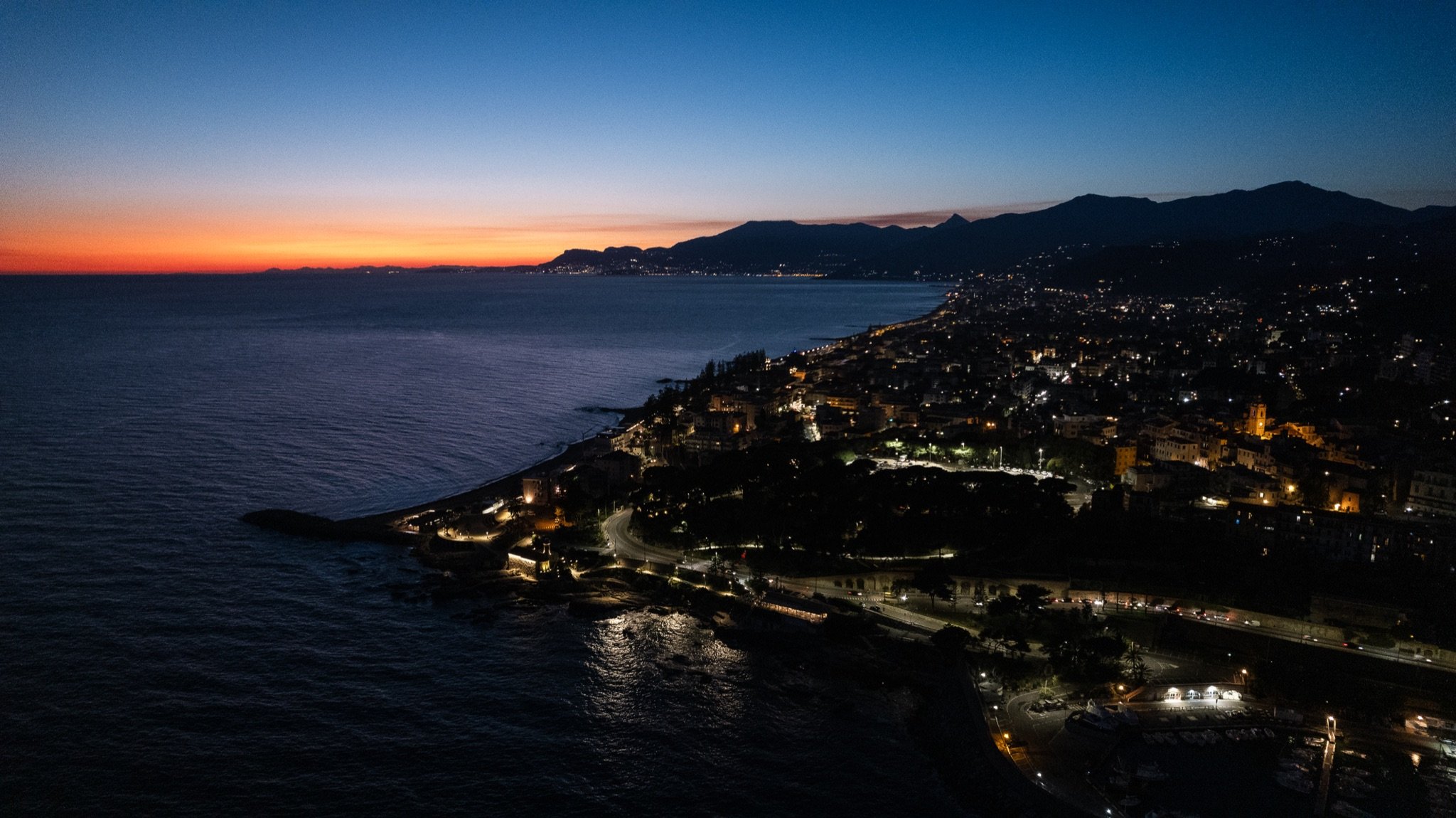
The Riviera di Ponente is the stretch of the Ligurian coast that runs west of Genoa to the French border: the western half of the Italian Riviera. Coming from Nice or Menton, it is the first Italian coast you reach: a string of seaside towns, beaches, olive-covered hills and hilltop villages, with the Ligurian Alps behind.
“Ponente” means “where the sun sets”: this is the Riviera of the sunset, as opposed to the Riviera di Levante east of Genoa, home to Portofino and the Cinque Terre. More open, less steep and less crowded, it is divided into two stretches with names of their own: the Riviera dei Fiori and the Riviera delle Palme.
Bordighera sits at the far western end, a few kilometres from France. This guide starts here and takes you along the whole coast, from the French border to the edge of Genoa.
Where is the Riviera di Ponente?
The Riviera di Ponente runs from Ventimiglia on the French border to the western districts of Genoa, along about 150 km of coast. It covers the provinces of Imperia and Savona and the western part of the metropolitan city of Genoa.
Here the mountains leave the sea a little more room than on the Levante: long beaches, rocky headlands and small farmed plains alternate along the coast, and behind every town a valley climbs towards stone villages. To get your bearings, see our map of Liguria, with both Rivieras and the distances from Bordighera.
The Riviera dei Fiori: the province of Imperia
The Riviera dei Fiori, the “Riviera of Flowers”, is the coast of the province of Imperia, from France to Cervo. It owes its name to the flower growing that made it famous, and its mild winters turned it into a winter resort for the British as early as the 19th century.
- Ventimiglia and the border: the old hilltop town of Ventimiglia Alta, the Hanbury Botanical Gardens at La Mortola and the prehistoric caves of the Balzi Rossi, right next to Menton.
- Bordighera: the town of palm trees, with its seafront promenade, its English villas and its old quarter, Bordighera Alta. Monet painted here in 1884.
- Ospedaletti and Sanremo: the Riviera dei Fiori cycle path follows the sea along the old railway line; in Sanremo you will find the Pigna old town and the Corso Imperatrice.
- Taggia, Imperia and Cervo: further east, Taggia with its medieval centre, Imperia, created in 1923 by merging Oneglia and Porto Maurizio, and Cervo, a hilltop village around its Baroque church, listed among “I Borghi più belli d’Italia”, the most beautiful villages in Italy.
The Riviera delle Palme: the province of Savona
After Cervo comes the Riviera delle Palme, the “Riviera of Palms”, the coast of the province of Savona. Sandy beaches are more common here and the towns are larger.
- Alassio and Laigueglia: a long sandy beach, the “budello”, the shopping street running parallel to the sea, and in Alassio the famous Muretto, a wall of ceramic tiles signed by celebrities.
- Albenga: Roman in origin, it keeps a medieval centre bristling with towers, on the edge of the largest plain in Liguria.
- Finale Ligure: a town beach and, just behind it, Finalborgo, a walled village listed among the most beautiful in Italy; the hinterland is well known to climbers and mountain bikers.
- Noli and Savona: Noli, once a maritime republic, with its castle and lanes; Savona, the provincial capital, with the Priamar fortress.
- Varazze and Arenzano: the last beaches before Genoa.
The hill villages
The real treasure of the Ponente is often just a few kilometres from the sea. Behind Bordighera, the Val Nervia and the nearby hills hold villages you can reach by car in fifteen to thirty minutes:
- Dolceacqua, with its humpback bridge and the Doria castle, both painted by Monet;
- Apricale and Perinaldo, two hilltop villages listed among the most beautiful in Italy;
- Seborga, on its hill overlooking the sea;
- higher up, Triora, the “village of witches”, in the Valle Argentina.
You will find them all in Hinterland villages; for mountains, trails and huts, see the Ligurian Alps.
Beaches and sea
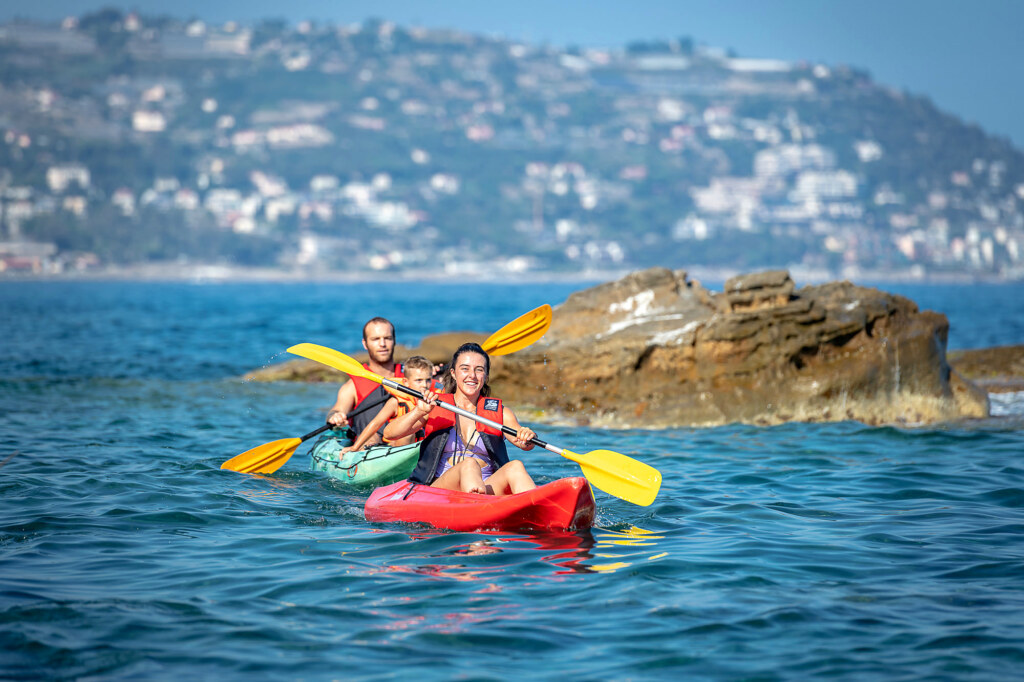
Liguria is the Italian region with the most Blue Flag towns, and the Ponente has a good share of them. Bordighera has been awarded it every year since 2003 (what it means). In the west, around Bordighera, you will find pebble beaches and rocks; towards Alassio and Finale Ligure, more sand. Free beaches and beach clubs alternate almost everywhere. For Bordighera’s own beaches, see Beaches in Bordighera.
Offshore, the Ligurian Sea is part of the Pelagos Sanctuary, home to whales and dolphins: read our guide to whale watching in Liguria.
Climate: when to go
Sheltered to the north by the mountains and facing south, the Riviera di Ponente has some of the mildest winters in northern Italy. Spring and autumn are ideal for walking, villages and gardens; summer is the season for the sea, with livelier towns and busier beaches. In winter much stays open and sunny days are common: read Bordighera in winter and Bordighera’s climate.
Food and wine of the Ponente
The Ponente is the land of the Taggiasca olive and of a mild, fruity oil (Ligurian olive oil and Taggiasca olives). For wine, the Riviera Ligure di Ponente DOC includes Vermentino and Pigato among others, and Rossese di Dolceacqua is the area’s best-known red (wines of Liguria). For what to taste locally, read Flavours of Bordighera.
Riviera di Ponente or Riviera di Levante?
The Levante, east of Genoa, is higher and more rugged: Portofino, the Cinque Terre, villages clinging to the cliffs, but also more crowds in season. The Ponente is more open and more varied: long beaches, historic resort towns, a hinterland of villages and mountains, and the French Riviera right next door. From Bordighera to the Cinque Terre it is about 250 km and over three hours by road.
Getting here and getting around
- By air: the closest airport to the Ponente is Nice Côte d’Azur; Bordighera is about 48 km from Nice (read From Nice to Bordighera).
- By train: the coastal line links Ventimiglia to Genoa and stops at every main town of the Ponente, almost always right by the sea.
- By car: the A10 motorway runs the whole length of the Riviera di Ponente, from the French border to Genoa; for the hill villages, a car is still the most practical option.
All the practical details are in Getting to Bordighera.
Why Bordighera makes a good base
At the western end of the Ponente, Bordighera is about twenty minutes from Sanremo, fifteen minutes from the border and less than an hour from Nice and Monaco. The Val Nervia villages are close by, Imperia is about 40 km away and Alassio an hour. You can spend a weekend here or use it as a base for day trips along the Riviera dei Fiori and to the French Riviera.
Frequently asked questions
Where is the Riviera di Ponente?
In Liguria, in north-west Italy: it is the coast between the French border at Ventimiglia and Genoa. It covers the provinces of Imperia and Savona.
What is the difference between the Riviera di Ponente and the Riviera dei Fiori?
The Riviera dei Fiori is part of the Riviera di Ponente: its westernmost stretch, the coast of the province of Imperia, with Ventimiglia, Bordighera, Sanremo and Imperia. The stretch in the province of Savona is called the Riviera delle Palme.
What towns should I visit on the Riviera di Ponente?
From west to east: Ventimiglia, Bordighera, Sanremo, Taggia, Imperia, Cervo, Alassio, Albenga, Finale Ligure, Noli, Savona and Varazze. Add at least one hill village, such as Dolceacqua or Apricale.
Which airport is closest to the Riviera di Ponente?
For the western part, Nice Côte d’Azur, about 48 km from Bordighera. For the eastern part, towards Savona, Genoa airport is more convenient.
Can you visit the Riviera di Ponente without a car?
Along the coast, yes: the train links Ventimiglia to Genoa and stops at every seaside town, Bordighera included. For the hill villages a car is more practical, although local buses reach some of them.
When is the best time to visit the Riviera di Ponente?
All year round: summer for the sea, spring and autumn for walking and the villages, winter for the mild climate and the quiet.