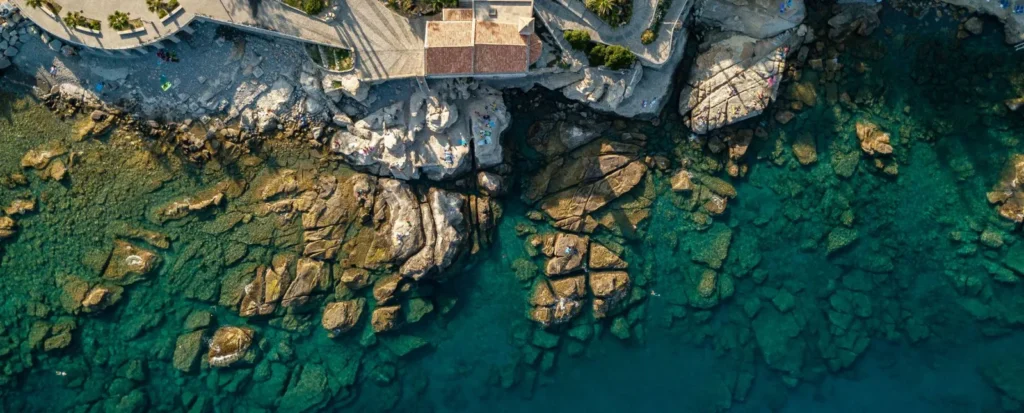


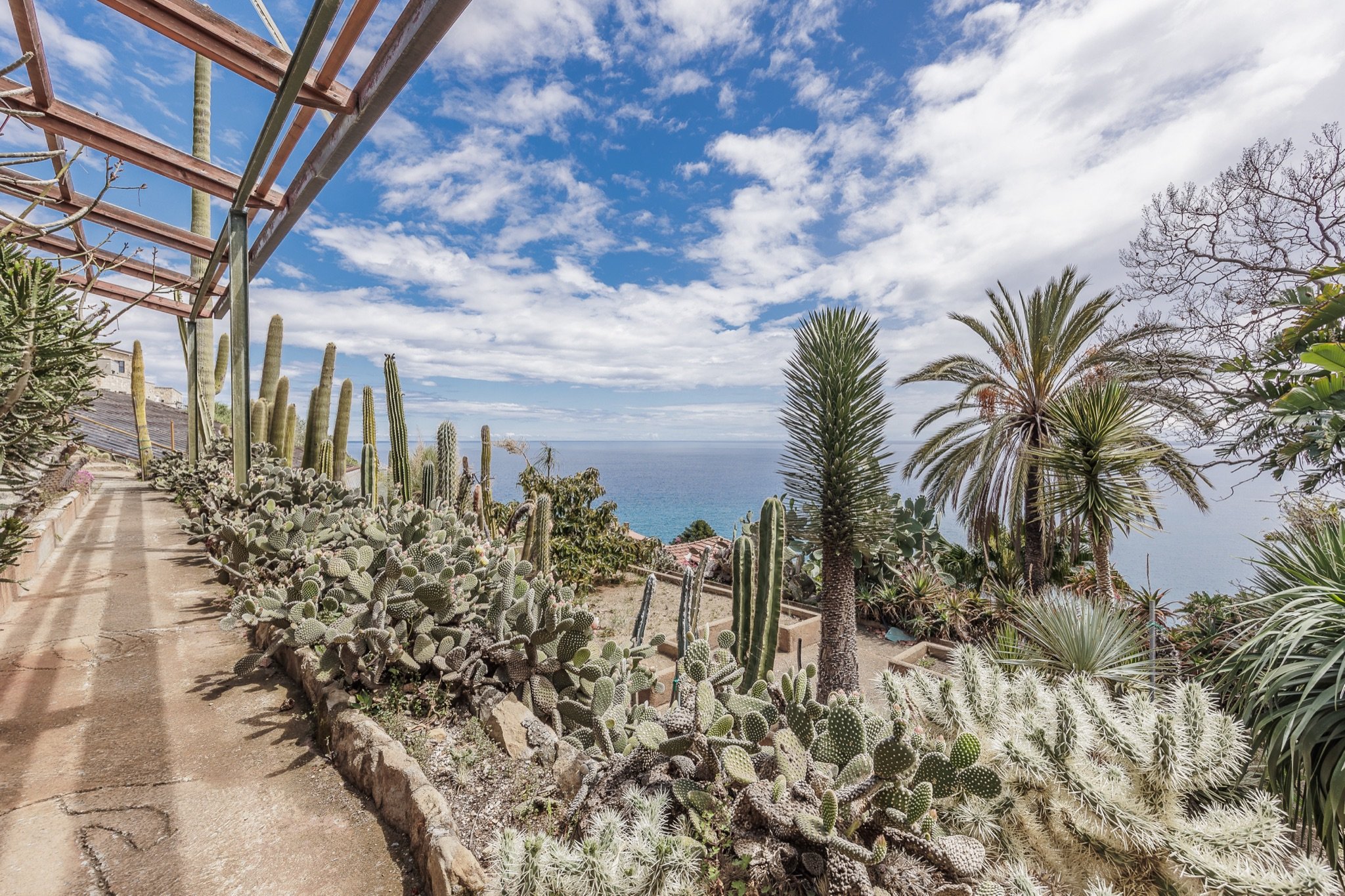
On the Arziglia hill, where the last slopes of Monte Nero run down to the sea, the Giardino Esotico Pallanca holds one of the richest collections of cacti and succulents in Europe: more than 3,000 varieties spread over 10,000 square metres of terraces and little stairways cut into the rock. It is a private botanical garden, the work of four generations of the Pallanca family, and has been open to the public since 1989.
A family story four generations long
It all began in 1861, when Giacomo Pallanca left the family olive groves in Airole, in the Roya valley, to work in Bordighera alongside the German botanist Ludwig Winter, the landscape gardener who gave the Riviera many of its most famous gardens. He worked with Winter for over twenty years, and his son Bartolomeo grew up at his side.
In 1910 Bartolomeo Pallanca set up on his own and created a nursery of ornamental plants and flowers. After the interruption of the war years he resumed the business with his son Giacomo, and together they decided to specialise in succulents. The nursery soon became a point of reference: several plants from the Pallanca collection even ended up in the cactus gardens on Montjuïc in Barcelona, the Jardins de Mossèn Costa i Llobera.
In 1989 Barth Pallanca, Giacomo’s son, opened the garden to visitors, turning it into a private botanical museum. Today it is run by the Associazione Culturale Botanica Giardino Esotico Pallanca, founded by the family, while the nursery business continues next door.
A rock garden on Monte Nero
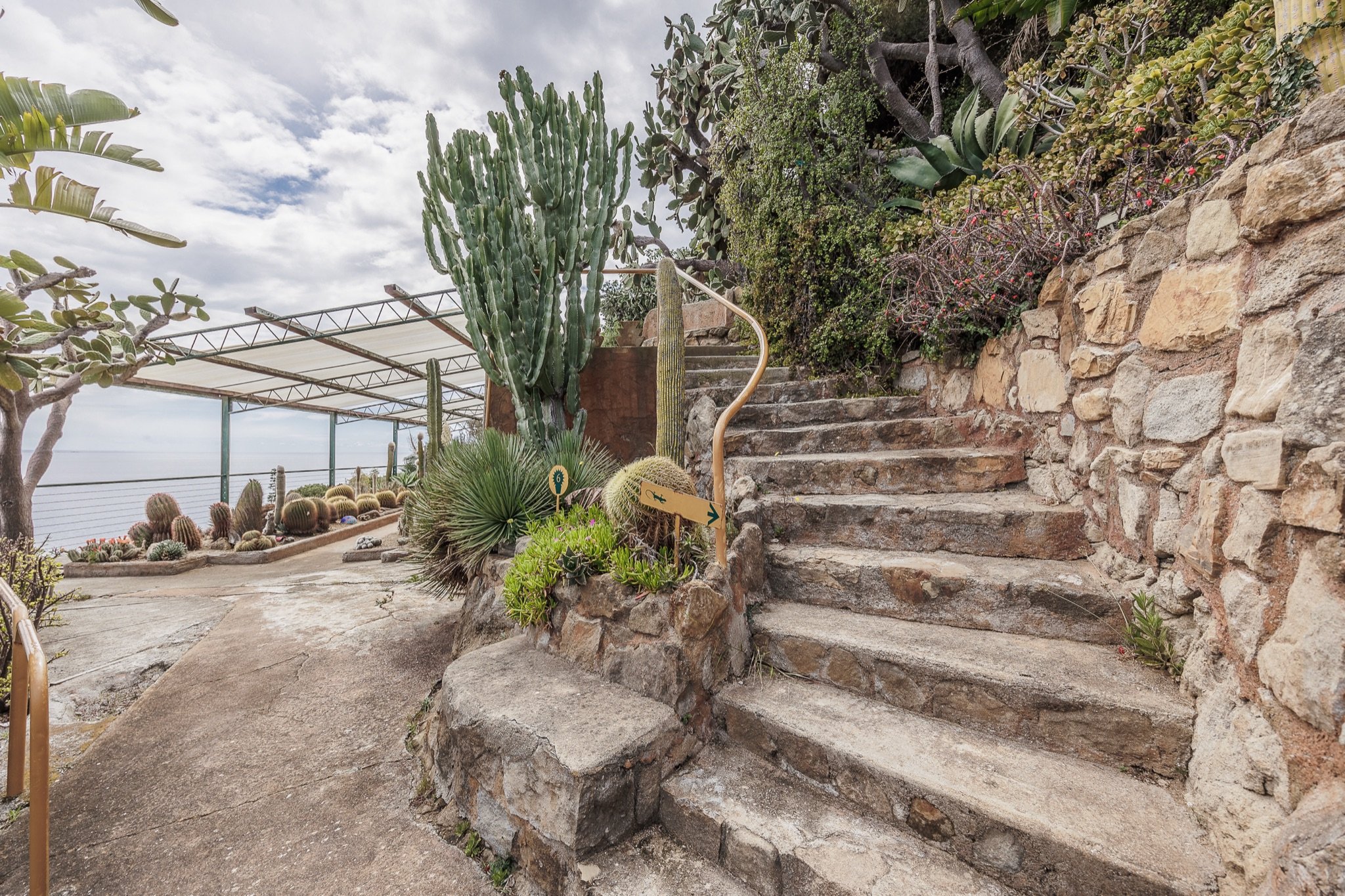
The garden spreads across the ochre-coloured sandstone rocks of Monte Nero. Terraces, low walls and steps carved into the stone give the collection the look of a large rock garden, where paths alternate with shady areas, spots to rest and viewpoints over the sea and the bay of Bordighera. The plants are arranged by area of origin, and the mild climate of the Riviera allows them to be grown outdoors all year round.
What to see
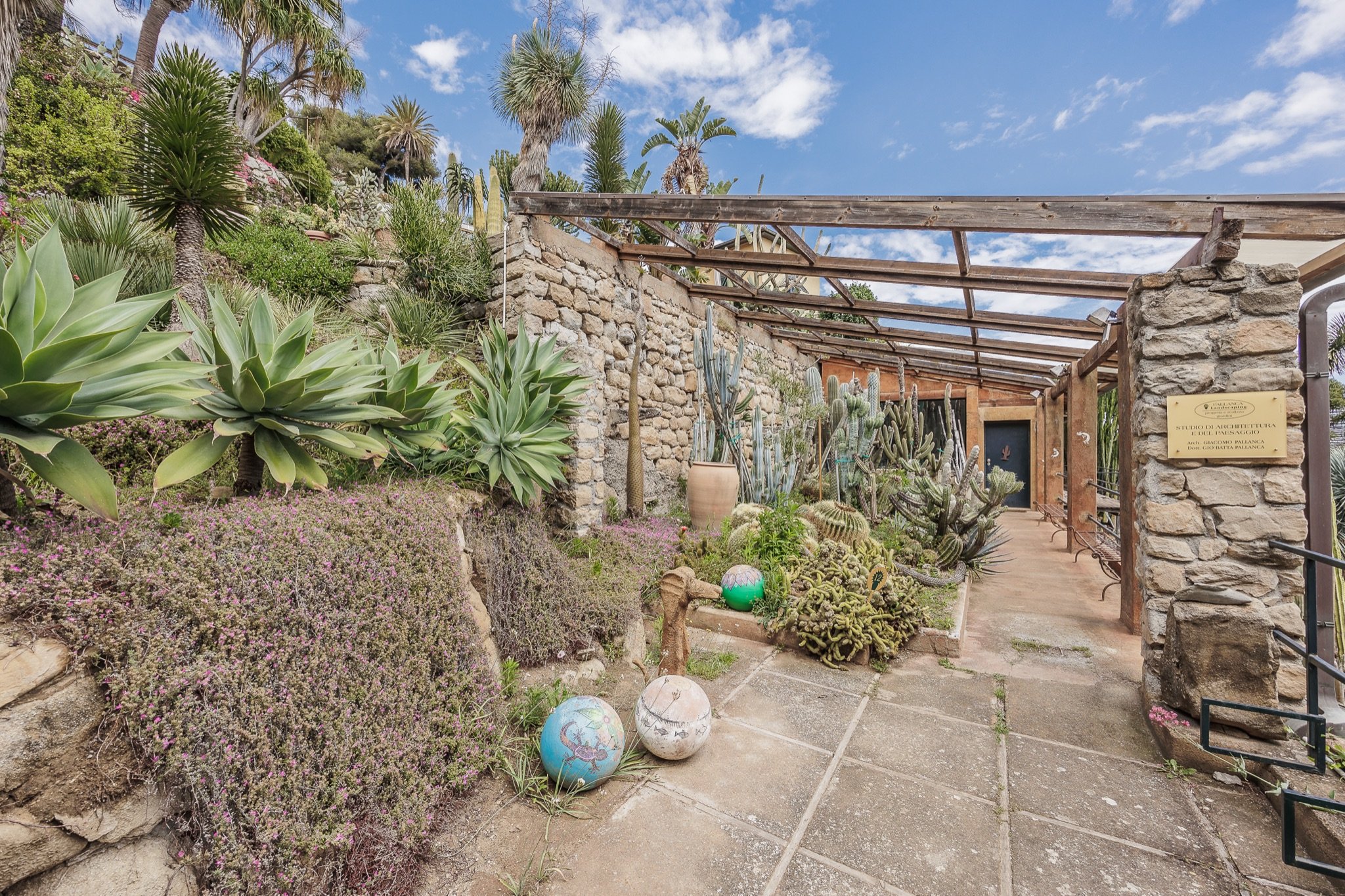
- The Copiapoa over 300 years old: the garden’s “patriarch”, a cactus native to Chile that grows extremely slowly and has passed three centuries of life.
- The Neobuxbaumia polylopha: Mexican columnar cacti about six metres tall, among the most spectacular specimens in the collection.
- Cacti and succulents from all over the world: more than 3,000 varieties from the Americas, Africa, Asia and Australia, many of exceptional size and some rare in Europe.
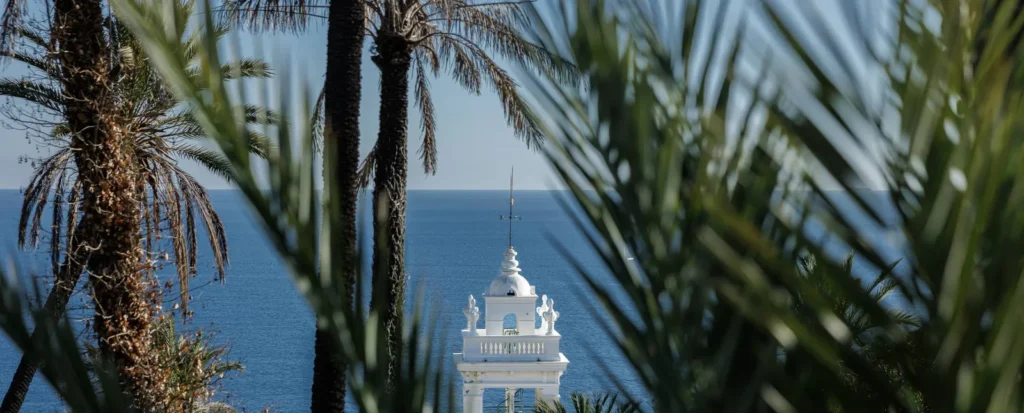
- The view: from the highest terraces you take in the sea, the coast and the bay, with the succulents in the foreground.
- The botanical library: the garden has a specialist library, which can be consulted by appointment.
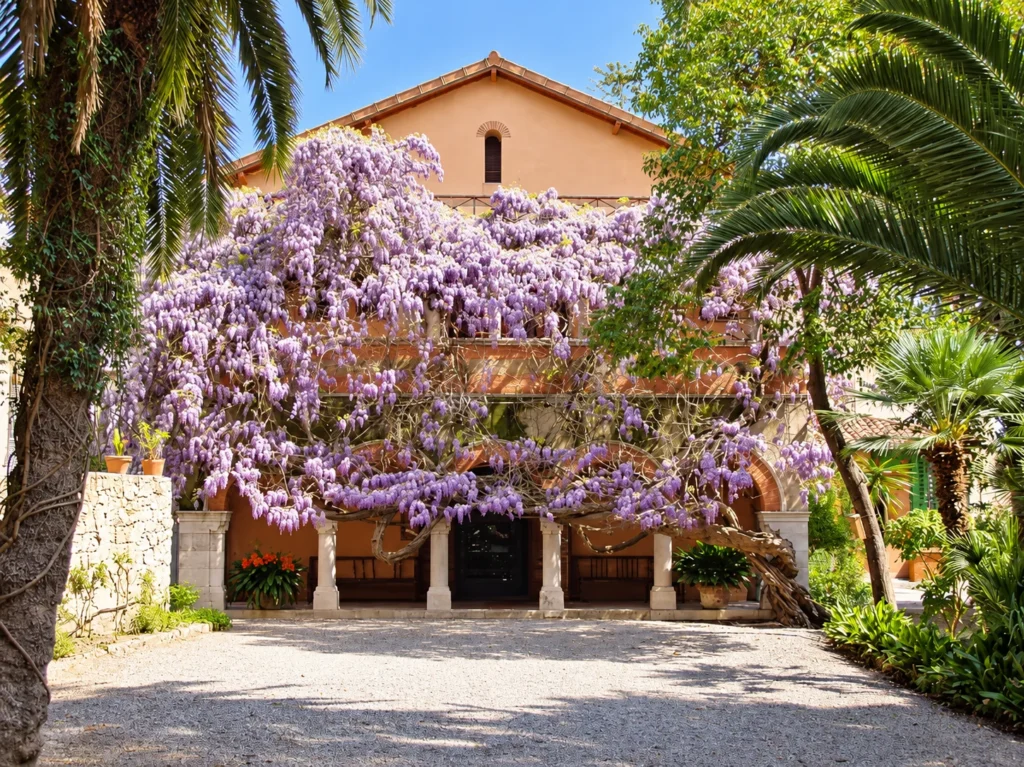
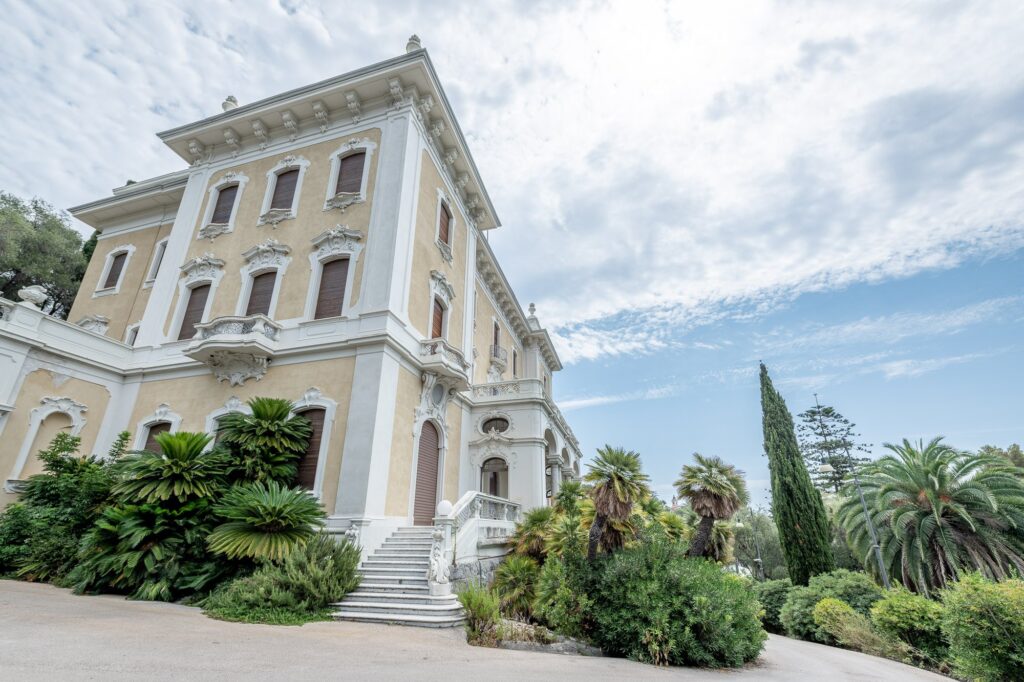
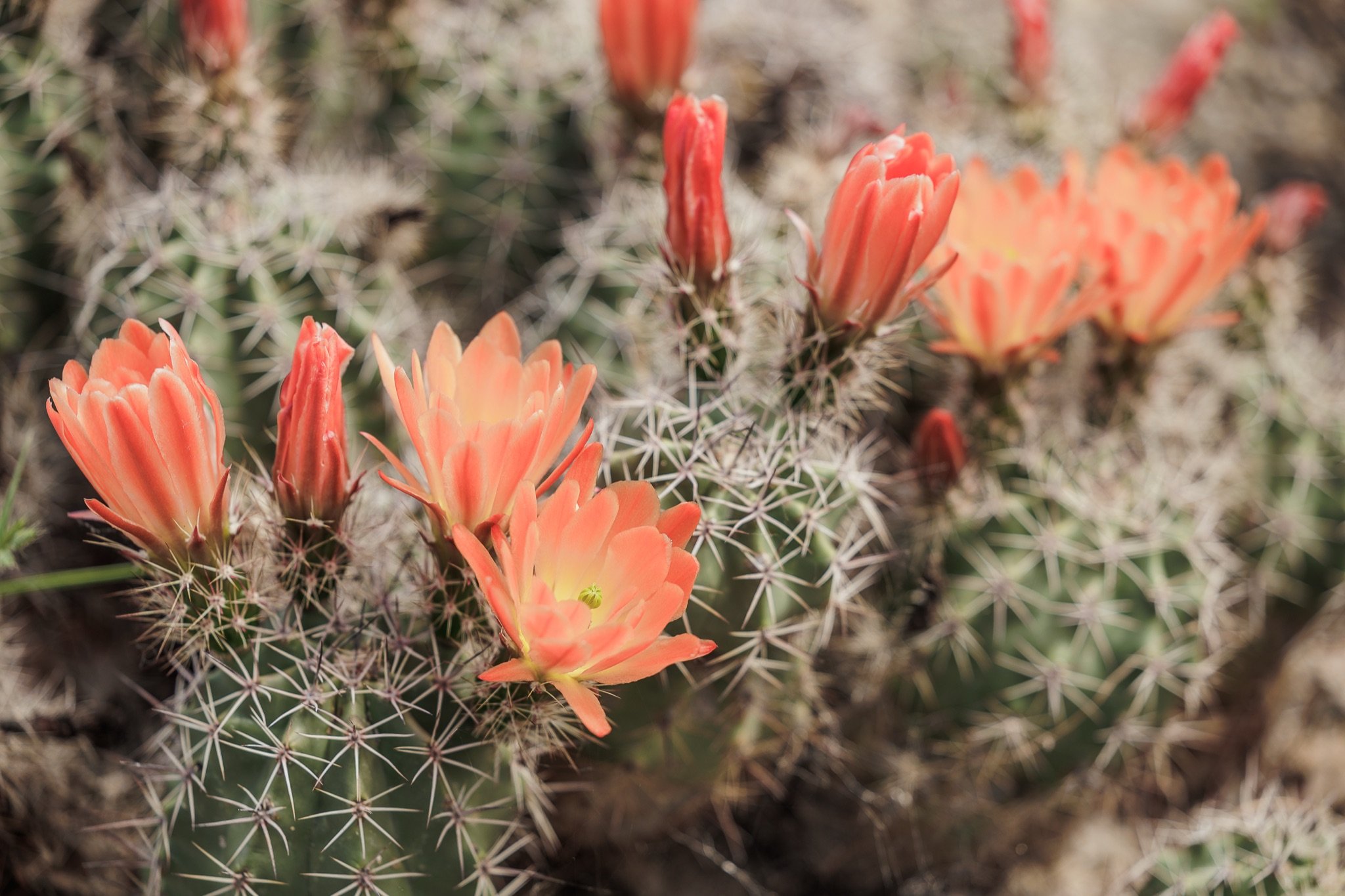
Giardino Esotico Pallanca in pictures

Opening hours
- Tue–Sun9:15–12:3014:30–19:00
- MonClosed
- Annual closure from 5 November to 5 December.
- Tickets: adults €8, children 8–14 €4, affiliated groups (min. 10 people) €7.
- Opening times may vary: check the official website before your visit.
Practical information
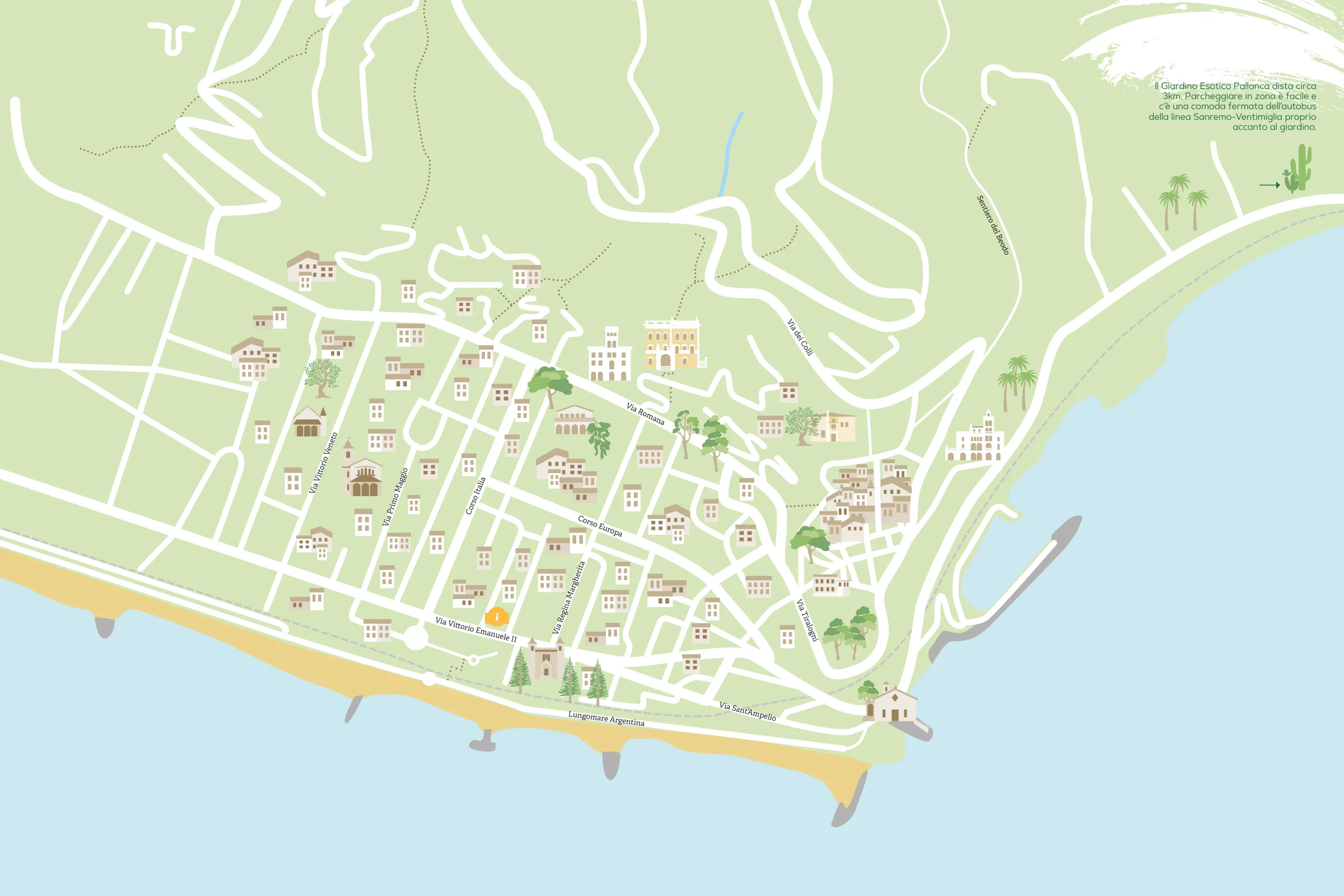
The garden is at Via Madonna della Ruota 1, in the Arziglia district, about 3 km east of the centre of Bordighera towards Sanremo. Parking is easy in the area, and a stop on the Sanremo–Ventimiglia bus line is right next to the entrance.
The route winds along terraces, steps and sloping paths: wear comfortable shoes and expect a fair amount of up and down. Opening times and prices change during the year and the garden closes for an annual break in autumn, so check the official website before you go. Discounted rates are available for groups.
Nearby
The garden lies at the foot of Monte Nero and the Cian d’Innamurai, the viewpoint on the hill from which you can see as far as Menton, Monaco and Nice. In the same Arziglia area you can discover Villa Garnier, the Giardini Winter, dedicated to Giacomo Pallanca’s mentor, and the palm grove, or walk along the Sentiero del Beodo. The garden is also a stop on the itineraries Gardens and monumental trees and Among villas and gardens.