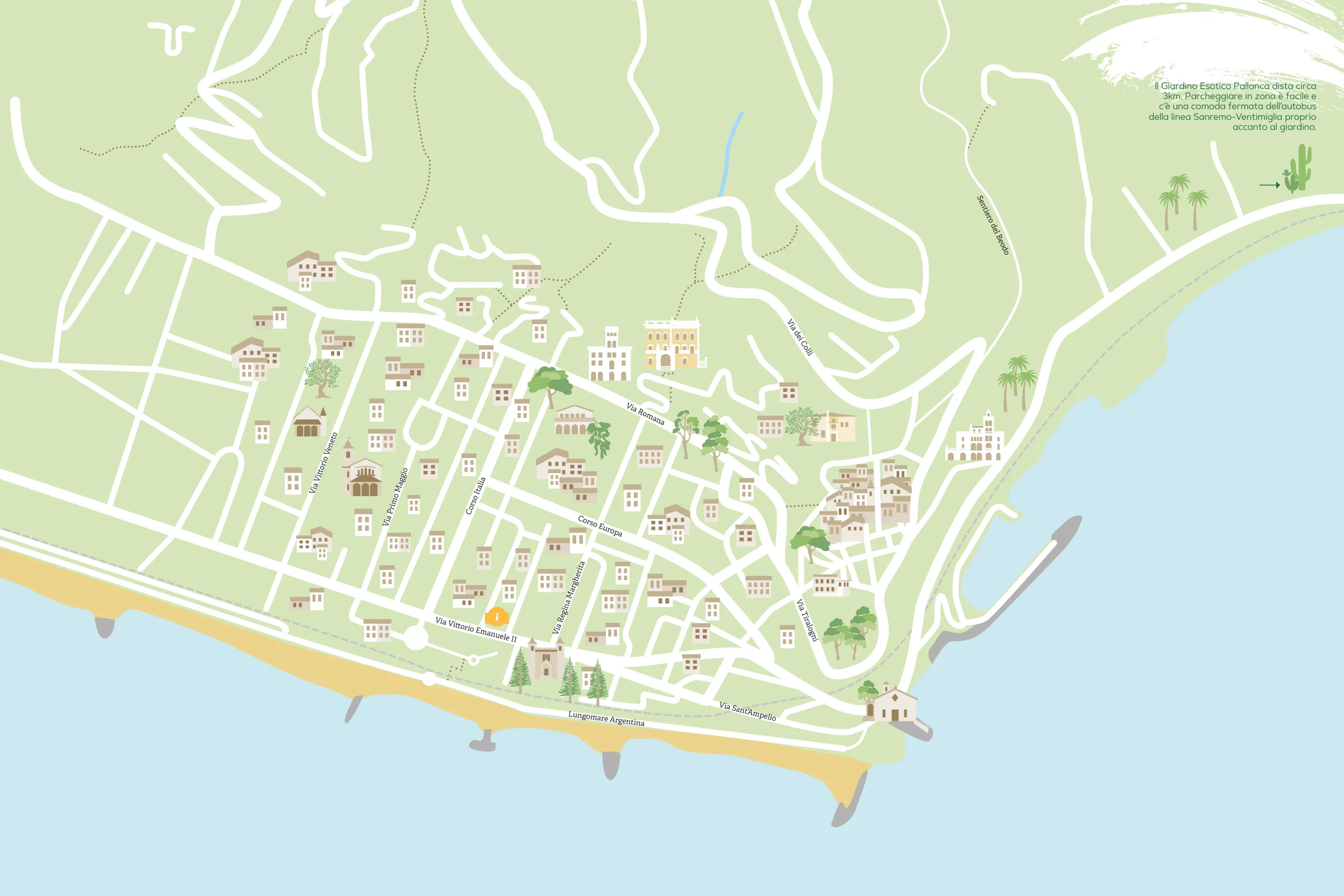


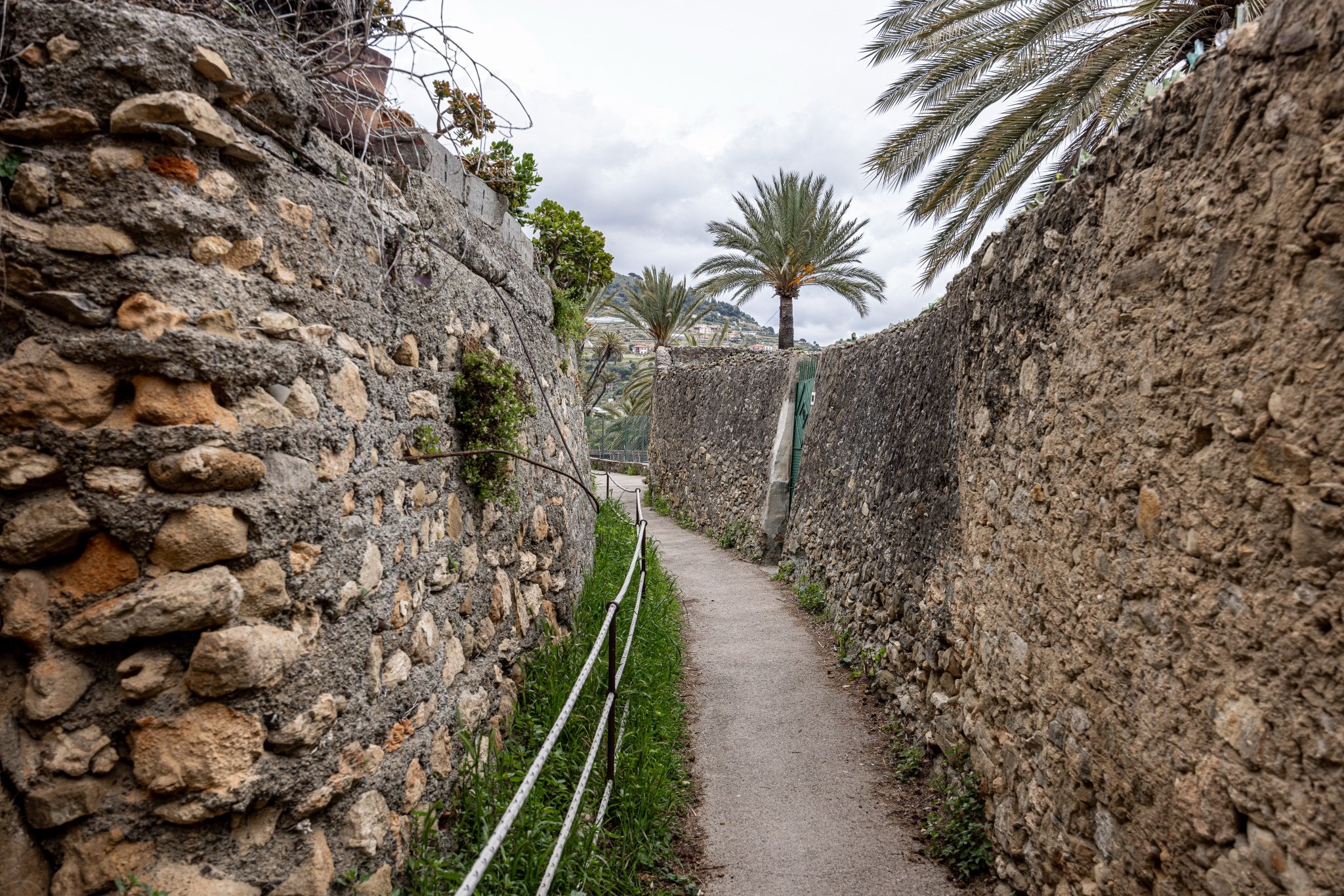
Running along the old aqueduct channel, the Sentiero del Beodo is a perfect vantage point for admiring nature: centuries-old trees, palm groves, the Sasso valley and the coast. Just outside the walls of Bordighera Alta, an almost level path enters the valley among palms, olive trees and terraces held up by dry-stone walls.
Monet too used this route to venture into the valley, towards its wildest spots. It is one of the easiest and most evocative walks in town: within a few minutes of the historic centre you are surrounded by greenery. You can come back along the same path, continue on the loop or climb up to the village of Sasso.
Bordighera’s first aqueduct
Some call it a path, some a mule track, but the Beodo, u biu in dialect, is above all an aqueduct: the first in old Bordighera. The channel collected water from the Sasso stream and carried it towards the village, running halfway up the side of the valley. The name says as much: its root means a channel that carries water.
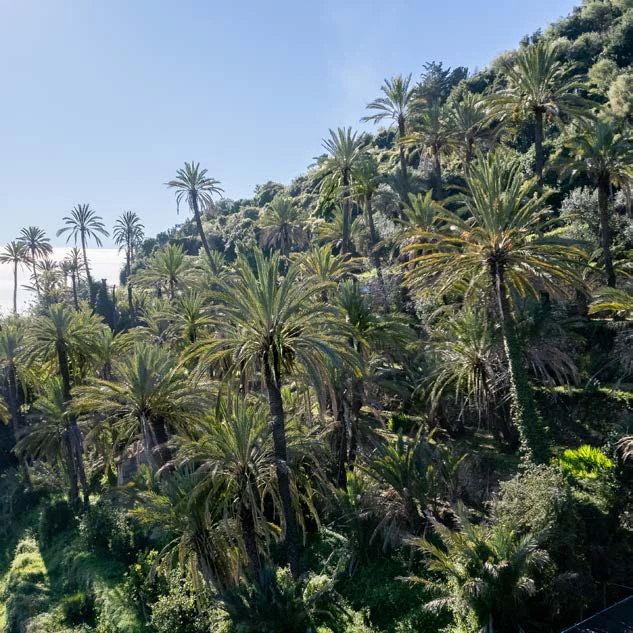
With the water of the Beodo the inhabitants watered their vegetable plots and gardens, turned the millstones of small family mills and olive presses, and supplied fountains and wash houses. Drinking water, which the locals called “water of health”, reached the village in terracotta pipes as far as the Magiargè fountain. For more than five centuries the channel has shaped the landscape of the valley, and the architect Charles Garnier, who built his villa in Bordighera, considered it one of the most thrilling walks in town.
What to see along the Beodo
The tunnel, gateway to the valley
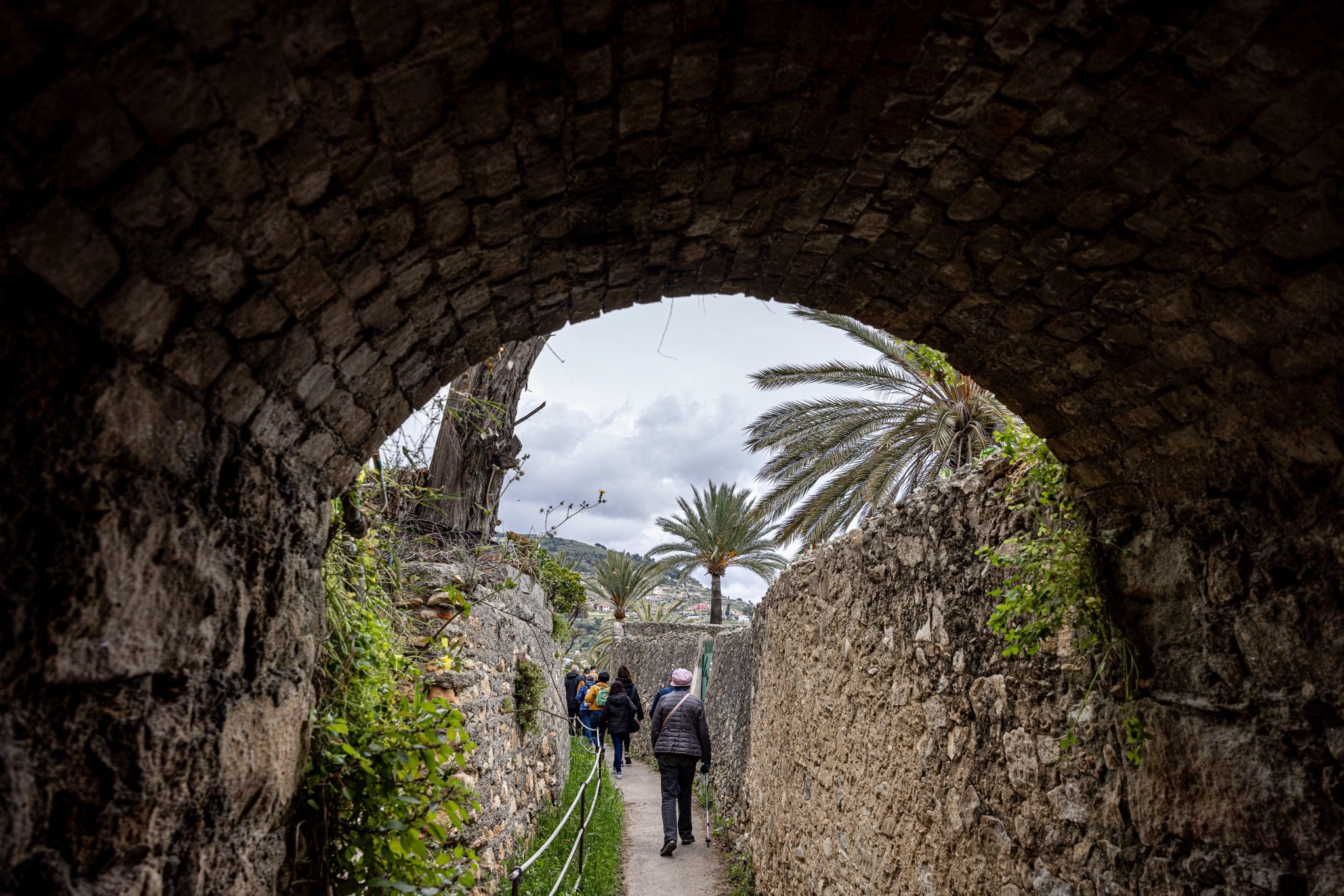
The Beodo begins behind the church of Santa Maria Maddalena. From Via Pompeo Mariani you walk up Via Madonnetta to Via del Beodo, where you turn right. After a short stretch between the houses you pass through a small, level tunnel: this is the real gateway to the Beodo. On the other side the town disappears and the valley begins.

The historic palm grove
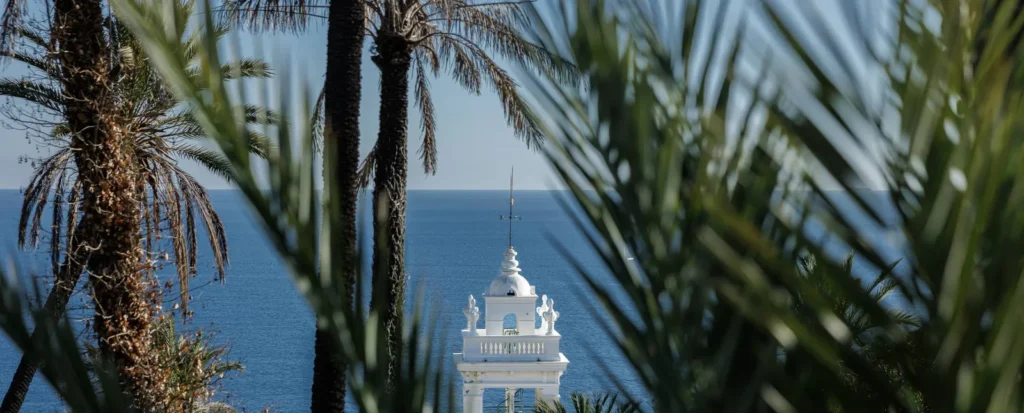
A few minutes after the tunnel the path enters Bordighera’s most famous palm grove, considered the northernmost date palm grove in Europe, with Phoenix dactylifera palms growing at a latitude far from their natural range. Tradition has it that they were brought from Egypt by Sant’Ampelio, the town’s patron saint.
This is where the parmurà worked, the growers who climbed to the top of the palms to tie up their crowns so that the new leaves would grow pale. Those leaves are still woven into the parmureli for Palm Sunday. Today the association A Cumpagnia d’à Parmura looks after the palm grove and a small nursery of young palms that keeps it renewing itself.
The olive tree of San Giuseppe and the dry-stone walls
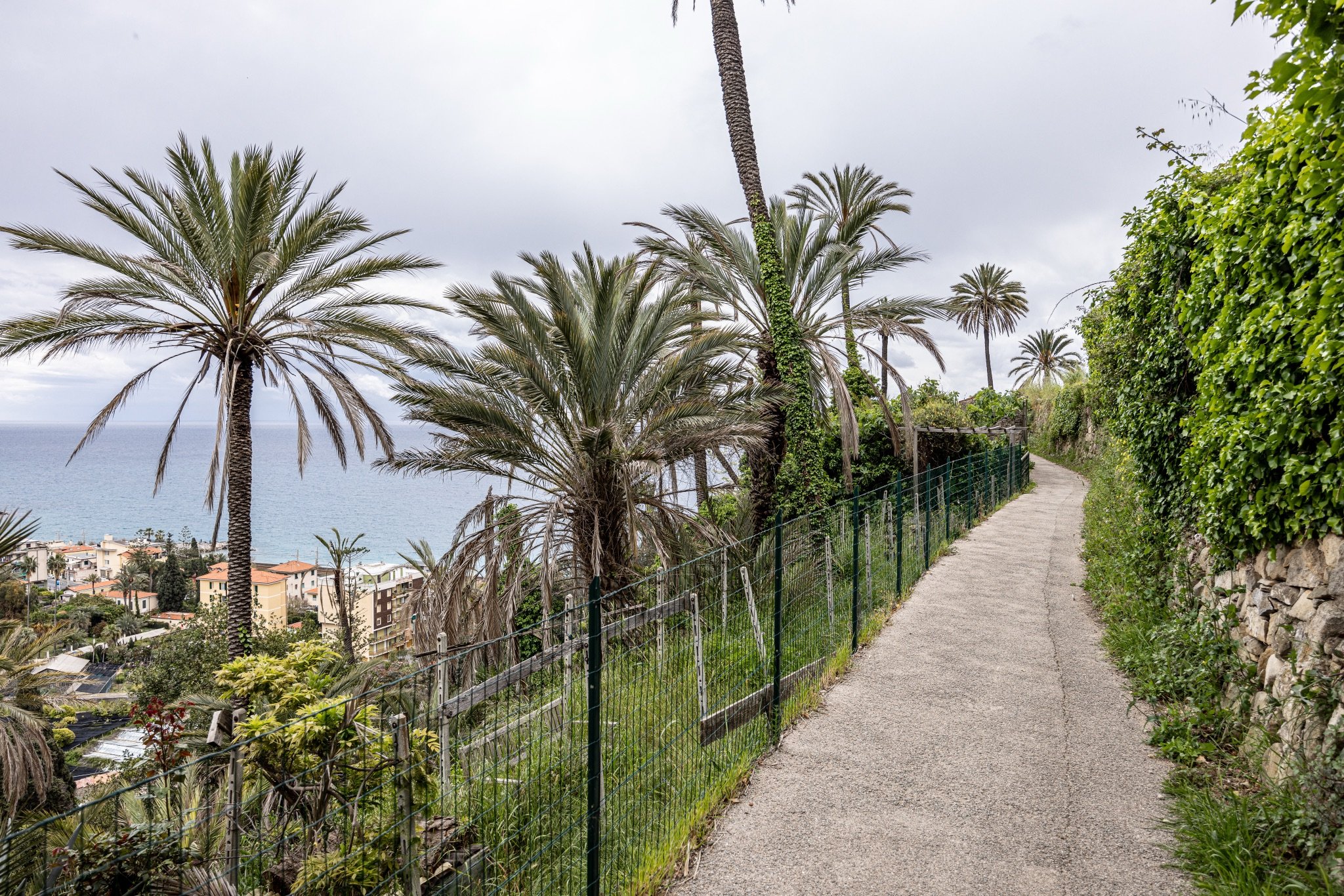
Further on, from a raised terrace, the centuries-old olive tree of San Giuseppe dominates the path. All around, the valley is built in terraces: dry-stone walls support strips of olive trees, mimosas, broom and citrus, among pergolas and glimpses of the sea and the coast.
The Sasso valley painted by Monet
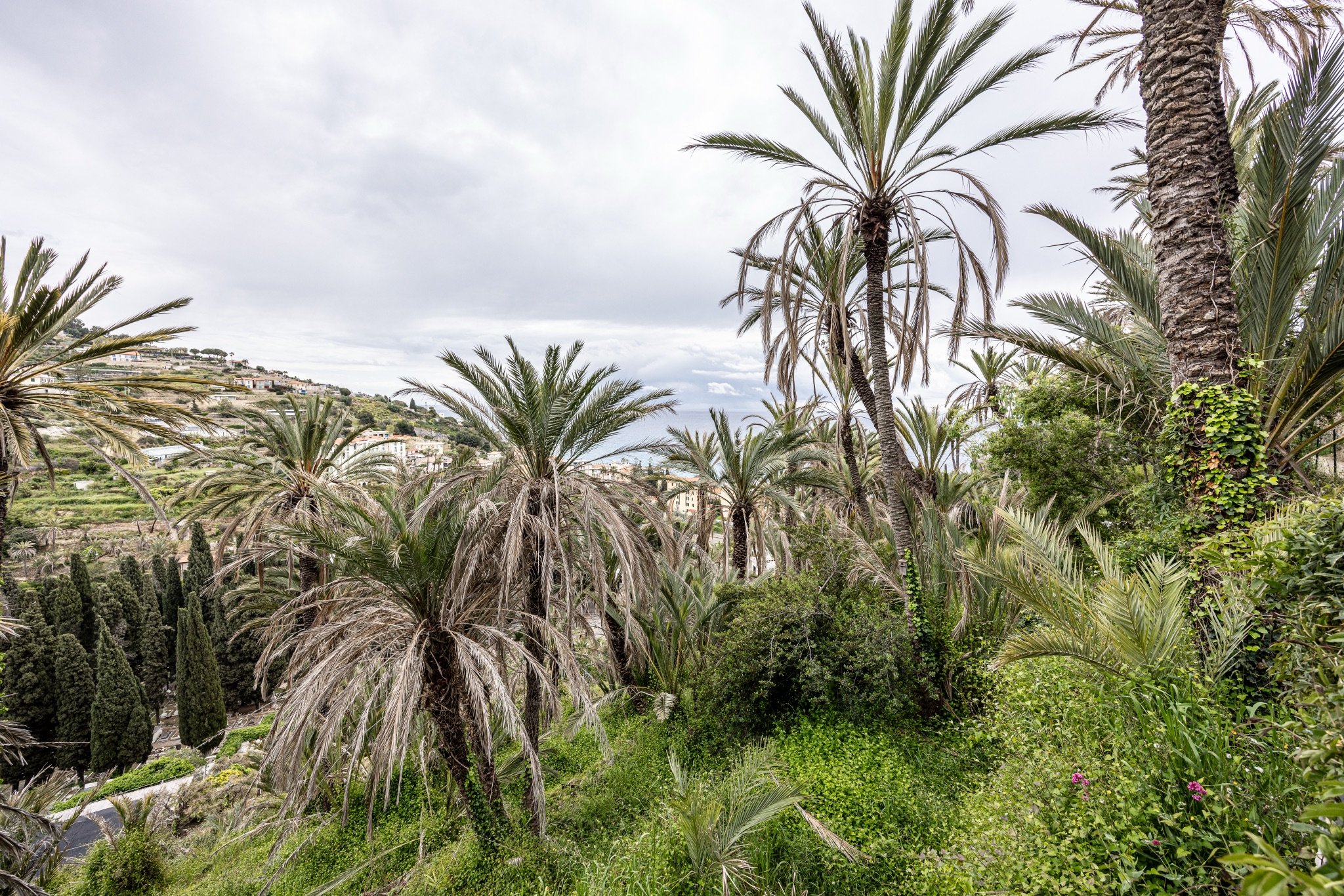
In the first months of 1884 Claude Monet, a guest at the Pension Anglaise, walked along the Beodo to reach the wildest part of the valley. Here he painted several canvases of the Sasso valley, with the palm grove, the olive groves and the citrus trees bathed in intense light. The landscape has changed, as the red palm weevil has struck many palms and houses have crept up the slopes, but the view of the valley is still recognisable. The Beodo is one of the stops on the itinerary In Monet’s footsteps.
The Sasso stream, the mills and the waterfall
After about twenty minutes’ walk the path reaches a narrow bridge over the Sasso stream, where the classic walk ends. If you carry on inland, below the village of Sasso, you will find a small waterfall, a few fords and the ruins of the old mills that the water of the Beodo used to turn.
The route
- Start: Piazza del Popolo in Bordighera Alta. Walk up Via Pompeo Mariani and Via Madonnetta to Via del Beodo, then turn right.
- Classic walk: to the bridge over the Sasso stream and back along the same path. About an hour there and back, 30 metres of ascent, suitable for everyone.
- Beodo loop: after the valley floor you climb back up and return to Bordighera Alta via Via degli Inglesi. About 5.5 km in 2 hours, with 120 metres of ascent and a short steep climb on the way back.
- Towards Sasso and Seborga: roads and mule tracks climb from the valley to the village of Sasso and on to Seborga. To get back, there is a regular bus to Bordighera.
- Towards Monte Nero: for fit hikers the Beodo is also the start of the climb to Monte Nero, about four and a half hours there and back, with some stretches of path eroded by water.
Tips for your visit
- How long you need: an hour is enough for the walk to the Sasso stream; half a day if you do the loop or climb to Sasso.
- When to go: all year round. In spring the valley is in bloom; in summer choose early morning or late afternoon.
- What to wear: comfortable shoes with a good sole. After heavy rain some stretches of the paving can be uneven and the tunnel may be wet.
- Accessibility: the path is not suitable for wheelchairs or people with reduced mobility.
- Respect: the Beodo crosses cultivated terraces and private property. Stay on the path and do not pick fruit or palm leaves.
- Combine it with: a visit to Bordighera Alta, with its caruggi and the church of Santa Maria Maddalena, before or after the walk.
Frequently asked questions
What is Bordighera’s Beodo?
It is the old channel that brought water from the Sasso stream to Bordighera, the town’s first aqueduct. It was used to irrigate vegetable plots and gardens and to drive mills and olive presses. Alongside the channel runs the path that is now one of the town’s best-loved walks.
Where does the Sentiero del Beodo start?
In Bordighera Alta. From the square of the church of Santa Maria Maddalena, walk up Via Pompeo Mariani and Via Madonnetta to Via del Beodo, where you turn right.
How long is it and how much time do you need?
The classic walk to the bridge over the Sasso stream takes about twenty minutes each way. The loop returning via Via degli Inglesi is about 5.5 km and takes a couple of hours.
Is the Sentiero del Beodo difficult?
No, the stretch along the channel is almost level and suitable for families too. The loop, which has a short steep climb, and the hikes towards Sasso, Seborga and Monte Nero are more demanding.
Do you have to pay to walk it?
No, the path is always open and free. It is not, however, suitable for wheelchairs or pushchairs.