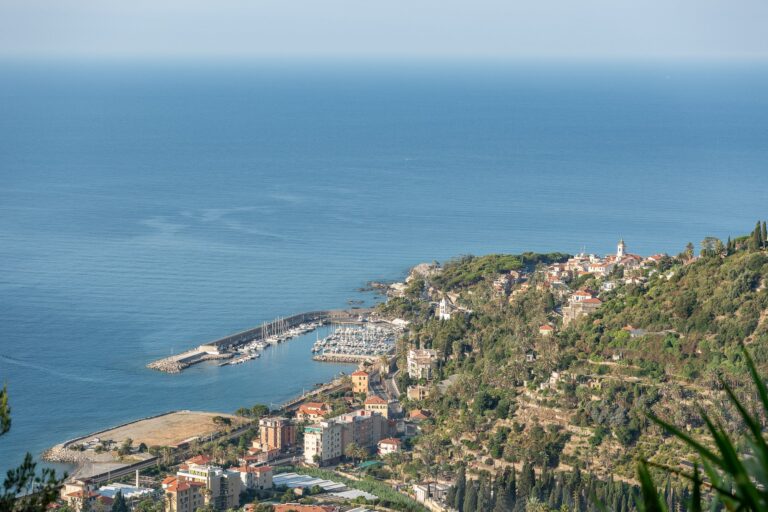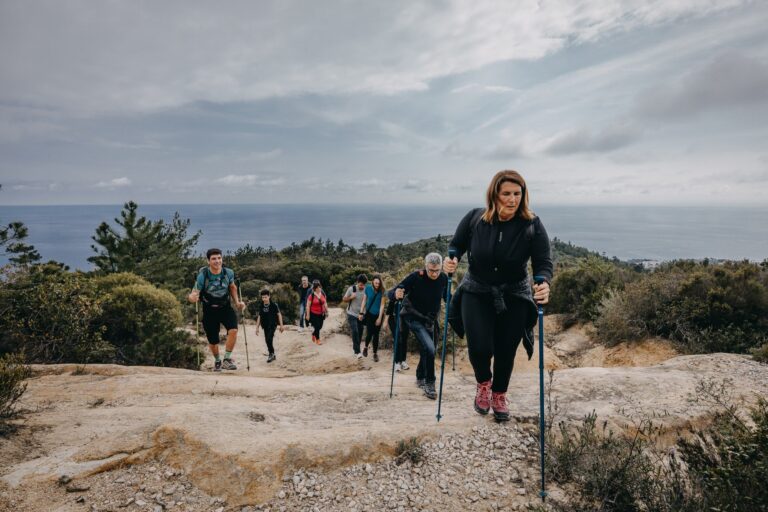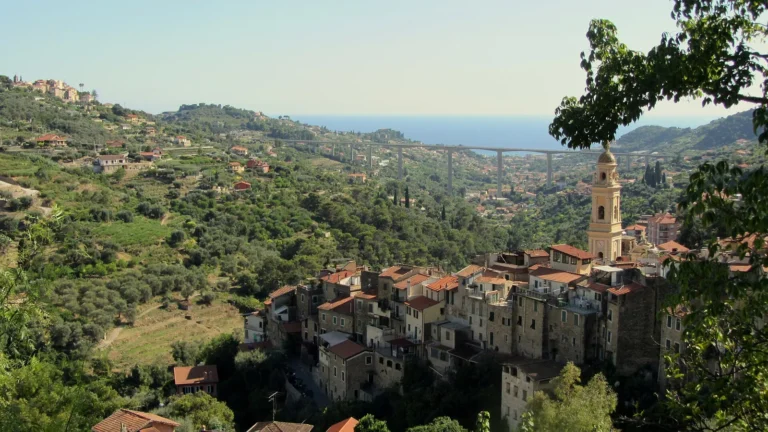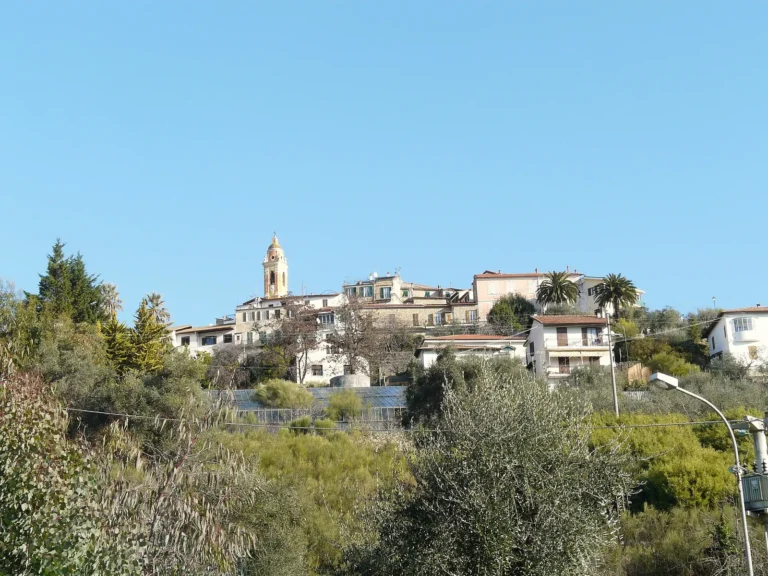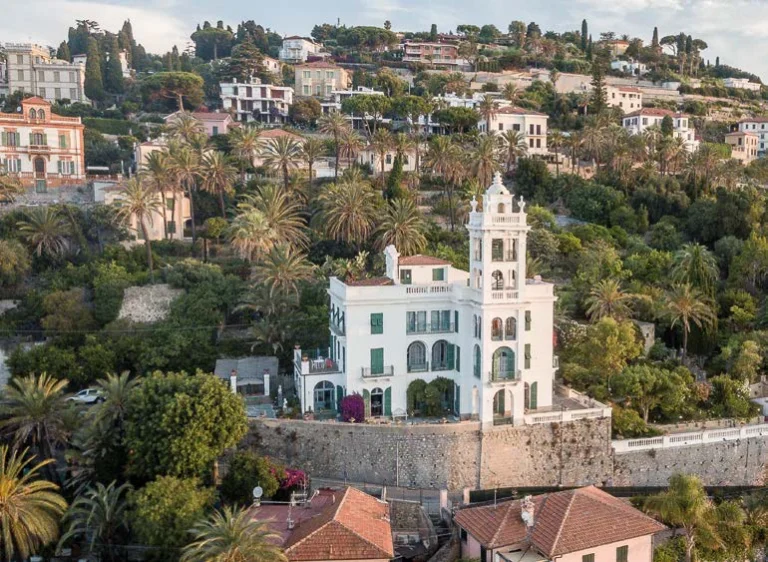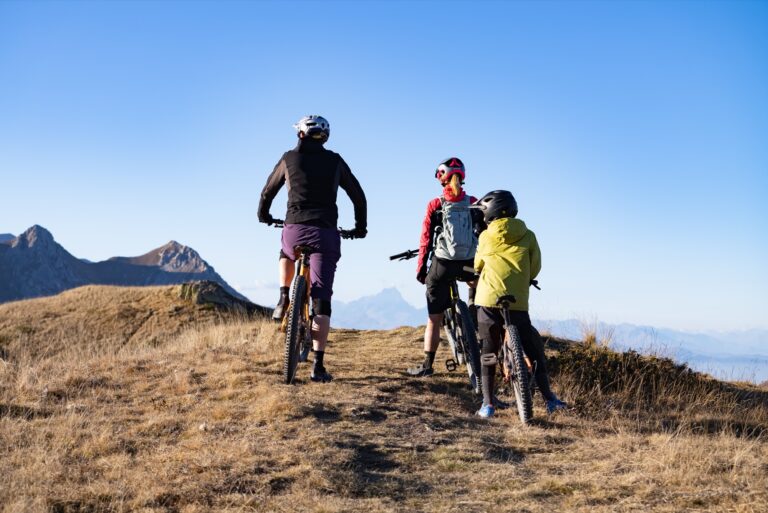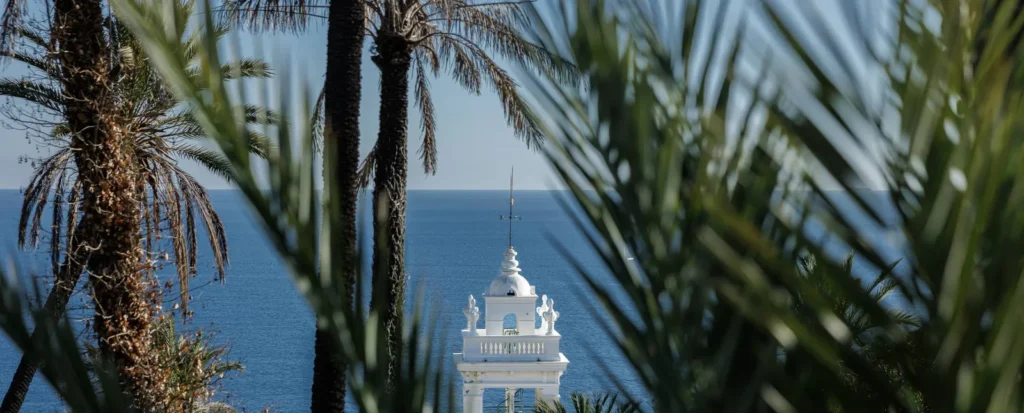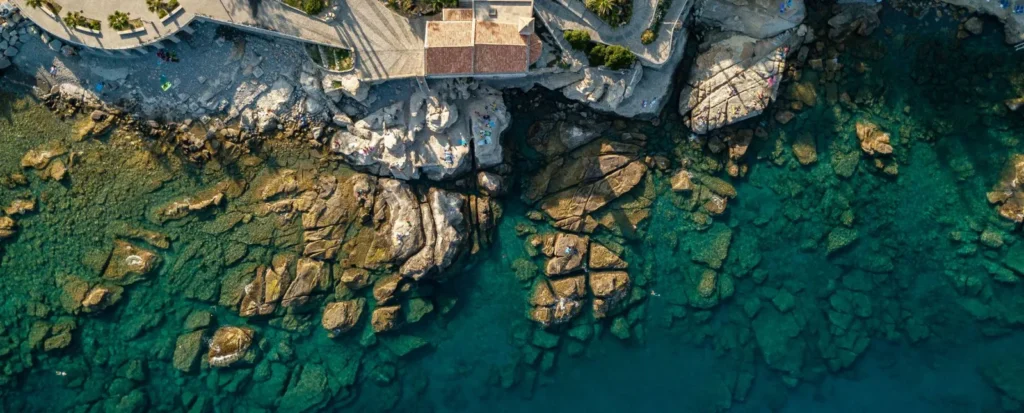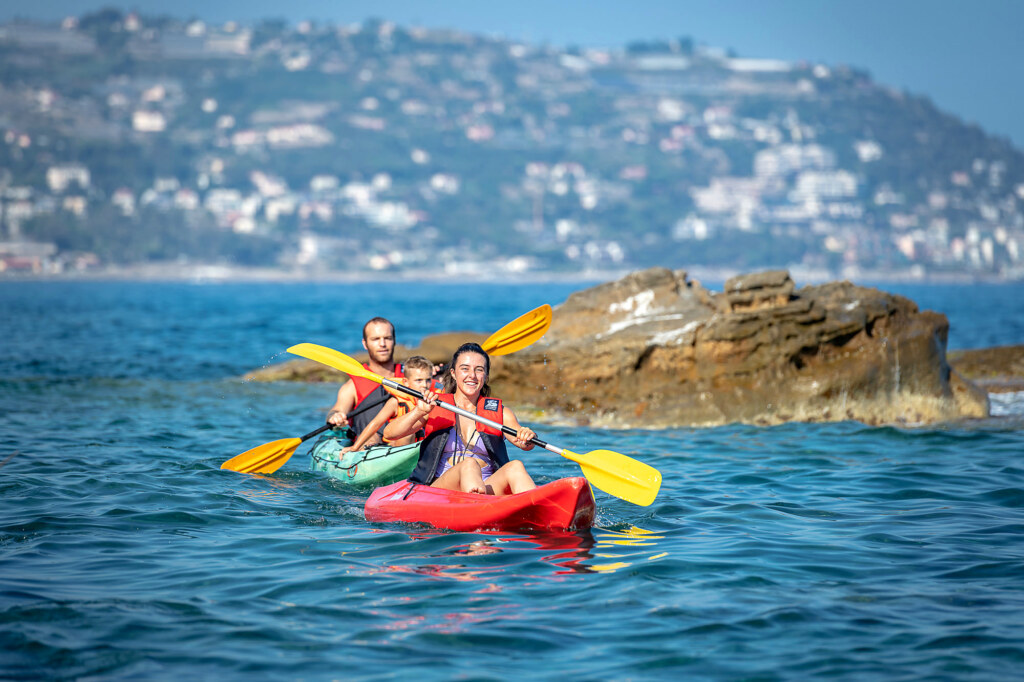


The Bicknell Cycle Route is a loop of about 150 km that starts by the sea in Bordighera and climbs into the Maritime and Ligurian Alps, between Italy and France. It is not a route to rush: it is a journey through space and time, in the footsteps of Clarence Bicknell, the English botanist who made Bordighera his home and spent his life exploring these mountains.
You take the train up the Valle Roya to Tenda, then ride past the rock engravings of the Valle delle Meraviglie, the frescoes of Notre-Dame des Fontaines, the villages of Triora and Bajardo and the woods of Monte Nero, all the way back to the sea. It takes two days, or better three if you are less fit.
Who was Clarence Bicknell
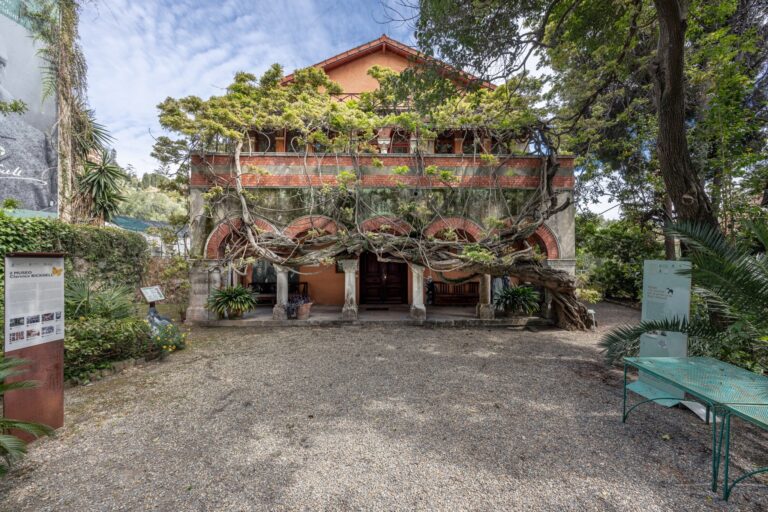
Clarence Bicknell (Herne Hill, 1842 – Casterino, 1918) arrived in Bordighera in 1878 as a minister of the Anglican church, after a long journey around the world. The place won him over: he gave up his post and devoted himself to his passions – botany, painting and archaeology. Mathematician, clergyman, traveller, botanist, archaeologist, Esperantist: a curious dreamer who drew his inspiration from nature.
His explorations took him ever more often into the Ligurian and French hinterland in search of flowers and insects. While looking for the very rare Saxifraga florulenta he came across the rock engravings of the Valle delle Meraviglie, on Monte Bego, and was so struck by them that he documented thousands. To be closer to those valleys he had a house built in Casterino, Casa Fontanalba, where he died in 1918.
“More than a classic route, a true journey through space and time, through the places visited and described by this eclectic scientist.”
In Bordighera you can visit the Museo Bicknell, the house-museum he had built in 1888 on Via Romana: the ideal starting point for the journey.
The route
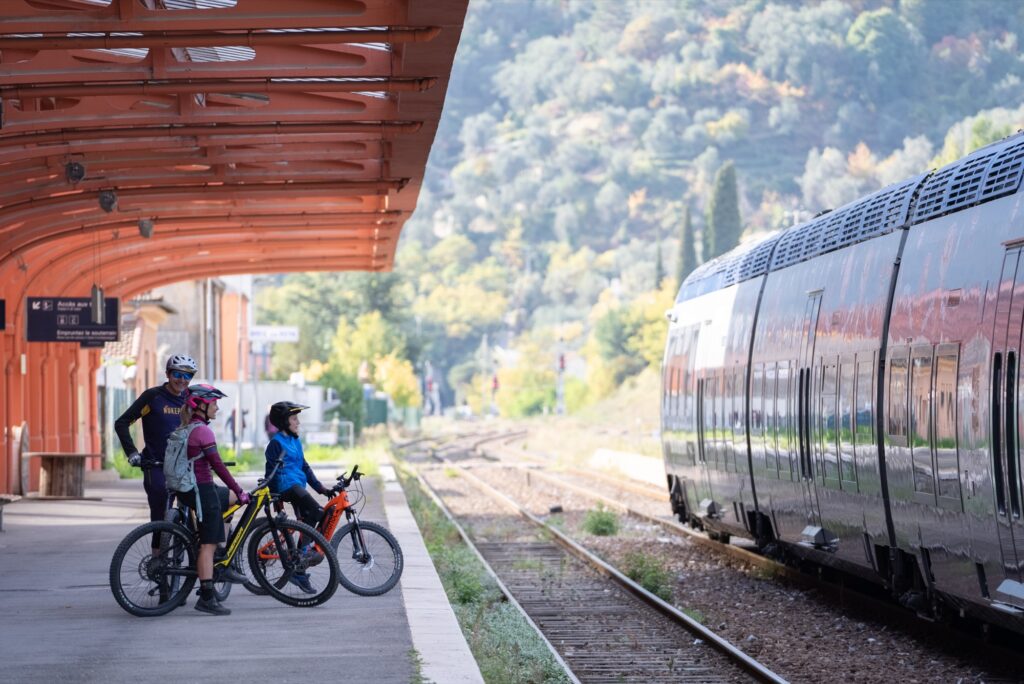
The route is a loop that starts and finishes in Bordighera. The first stretch is by train, with your bike on board, on the Ventimiglia – Breil-sur-Roya – Tenda line; from Tenda you ride towards Casterino and the Valle delle Meraviglie, then La Brigue, the Cima di Marta ridge, Triora and Molini di Triora, Monte Ceppo, Bajardo, the hills above Sanremo and finally the trails of Monte Nero, down to the sea.

Download the GPX track · Brochure (Italian, PDF) · Brochure (English, PDF)
The GPX track is indicative: it has been reconstructed from the official route map. It opens in apps such as Komoot, OsmAnd or Wikiloc. Always check the route and trail conditions before setting off.
There is also a shorter variant: from Passo Sanson it links to Colla Langan on a more winding route along the flanks of Monte Pietravecchia, Monte Toraggio and Cima Marta, avoiding the descent towards Triora and the Valle Argentina.
The journey, stage by stage
Bordighera and the Valle Roya train
Episodes 1 and 2 of the video series. You set off from the seafront in Bordighera, among the palms, and from the Museo Bicknell. Then the bike goes on the train: the Valle Roya line climbs through gorges and over viaducts, with the spectacular spiral tunnels of Saorge, up to Tenda, at the foot of the Maritime Alps.
Tenda, Casterino and the Valle delle Meraviglie
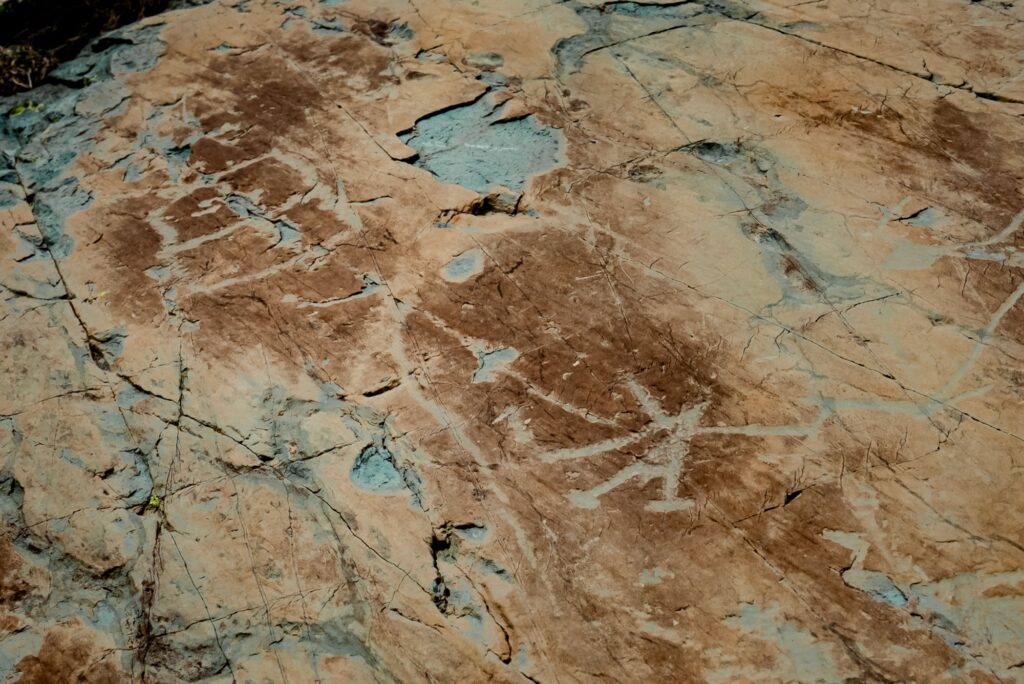
Episodes 4 and 5 of the video series. From Tenda you climb towards Casterino, where Bicknell spent his summers at Casa Fontanalba, and reach the Fontanalba valley, the gateway to the Valle delle Meraviglie. Here, on the smooth rocks of Monte Bego, Bronze Age peoples carved more than 40,000 signs: the very ones Bicknell copied for years. At the Musée des Merveilles in Tenda you can trace their story.
La Brigue and Notre-Dame des Fontaines
Episode 6 of the video series. From the village of La Brigue a detour leads to the sanctuary of Notre-Dame des Fontaines, the “Sistine Chapel of the Alps”: the interior is entirely frescoed by the Piedmontese painter Giovanni Canavesio. Legend has it that the local springs only began to flow again once the chapel was built.

The border ridge and the Valle Argentina
Episode 3 of the video series. This is the highest and wildest stretch: gravel roads and high pastures along the border, below Cima di Marta, with views that reach the sea on clear days. Then comes the long descent into the Valle Argentina.

Triora and Molini di Triora
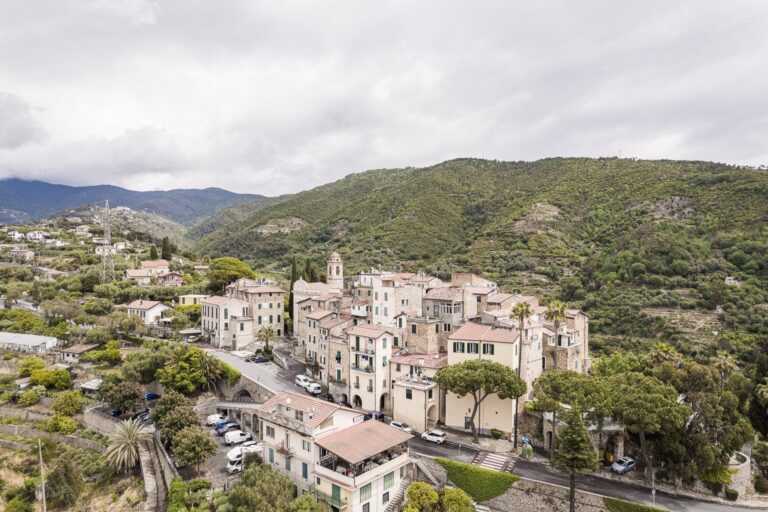
Episode 7 of the video series. In the carruggi (narrow lanes) of Triora, amid plays of shadow and covered passageways, the story of the so-called witches comes back to life: in reality women skilled in herbs and natural remedies, deeply bound to their land. Molini di Triora, on the valley floor, is the ideal overnight stop if you split the journey into three days.

Monte Ceppo and Bajardo
Episode 8 of the video series. You climb again to Monte Ceppo (1,627 m), then descend to Bajardo, the highest village in the area. Here the church of San Nicolò, which tradition says stands on an ancient place of worship, looks out like a window onto the Alps and the sea.

San Romolo, Monte Nero and the return to the sea
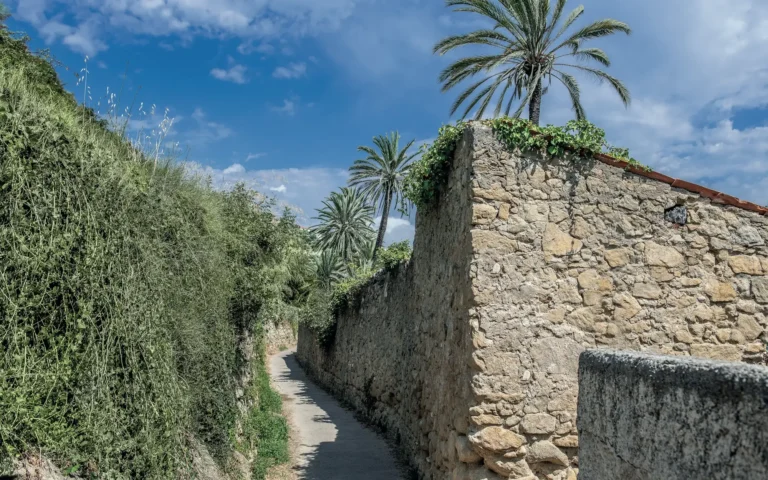
Episodes 9 and 10 of the video series. From the hills above Sanremo you head back towards Bordighera along the network of trails on Monte Nero, whose dark woods of holm, sessile and downy oaks give the mountain its name. The last stretch follows the Sentiero del Beodo, the 15th-century aqueduct, among olive trees, palms and bougainvillea, down to the sea where you started.

The video series
Ten one-minute episodes to discover the route before you go: a bike journey in the footsteps of Clarence Bicknell, from the museum in Bordighera to the Alps and back.
Episode 1 · Who was Clarence Bicknell
Episode 2 · An Englishman in the Ligurian Alps
Episode 3 · From the mountains to the sea
Episode 4 · In search of Saxifraga florulenta
Episode 5 · Monte Bego and the rock engravings
Episode 6 · Notre-Dame des Fontaines, the Sistine Chapel of the Alps
Episode 7 · Triora and its witches
Episode 8 · Bajardo, a journey through time
Episode 9 · The colours of Montenero
Episode 10 · The Sentiero del Beodo and the return to the sea
The sign of the wheel

The symbol of the Bicknell Cycle Route comes from the engravings of Monte Bego: signs traced in the rock 5,000 years ago with quartz points, which Bicknell studied all his life. The wheel, whose starting and finishing points are one and the same, tells of a journey where the experience matters more than the destination. The brand’s values are those of the explorer: practicality, memory, authenticity and spirituality.
Tips for the journey
- Fitness: the route presents no particular difficulties, but it is suited to riders with a fair level of fitness and adequate technical riding skills.
- Which bike: we recommend an e-MTB, a pedal-assist mountain bike; alternatively a traditional mountain bike. It can also be done on a gravel bike, but some stretches are demanding: in that case it is best to take alternative roads.
- How many days: two, with a first night in Tenda or Casterino. If you are less fit, add a second stop in Triora or Molini di Triora.
- With a guide: you can ride the route independently, but a professional cycle-touring guide can help you organise the tour and the cultural visits along the way.
- When to go: from late spring to autumn. At altitude, snow can linger until late spring: check before you set off.
- Documents: the route crosses into France, so bring a valid identity document.
Frequently asked questions
How long is the Bicknell Cycle Route?
The official itinerary is about 150 km, with 4,800 m of ascent and 5,600 m of descent. The first stretch, from Bordighera to Tenda, is done by train.
How many days does it take?
We suggest splitting it into two days, with the first night in Tenda or Casterino. Less fit riders can add a stop in Triora or Molini di Triora.
Can it be done on a gravel bike?
Yes, but some stretches are fairly challenging for this type of bike: it is better to take some alternative roads. The route is designed mainly for mountain bikes: the recommended choice is an e-MTB.
How do I get to Tenda with my bike?
By train from Bordighera or Ventimiglia on the Valle Roya line (Ventimiglia – Breil-sur-Roya – Tenda). Check timetables and bike carriage before you set off.
Who was Clarence Bicknell?
An English botanist and scholar (1842–1918) who lived in Bordighera: he was the first to study the rock engravings of the Valle delle Meraviglie in depth. The Museo Bicknell in Bordighera is dedicated to him.
For information: IAT tourist office, Via Vittorio Emanuele II 172, in the gardens of the Palazzo del Parco – tel. +39 0184 262882, iat@bordighera.it, turismo@bordighera.it.
Safety notes: Mountain route, partly in French territory: bring a valid ID, water, clothing for high altitude and a repair kit. At altitude, snow can linger until late spring. The GPX track is indicative: always check the route and trail conditions before setting off.